Elevate your local knowledge
Sign up for the iNFOnews newsletter today!
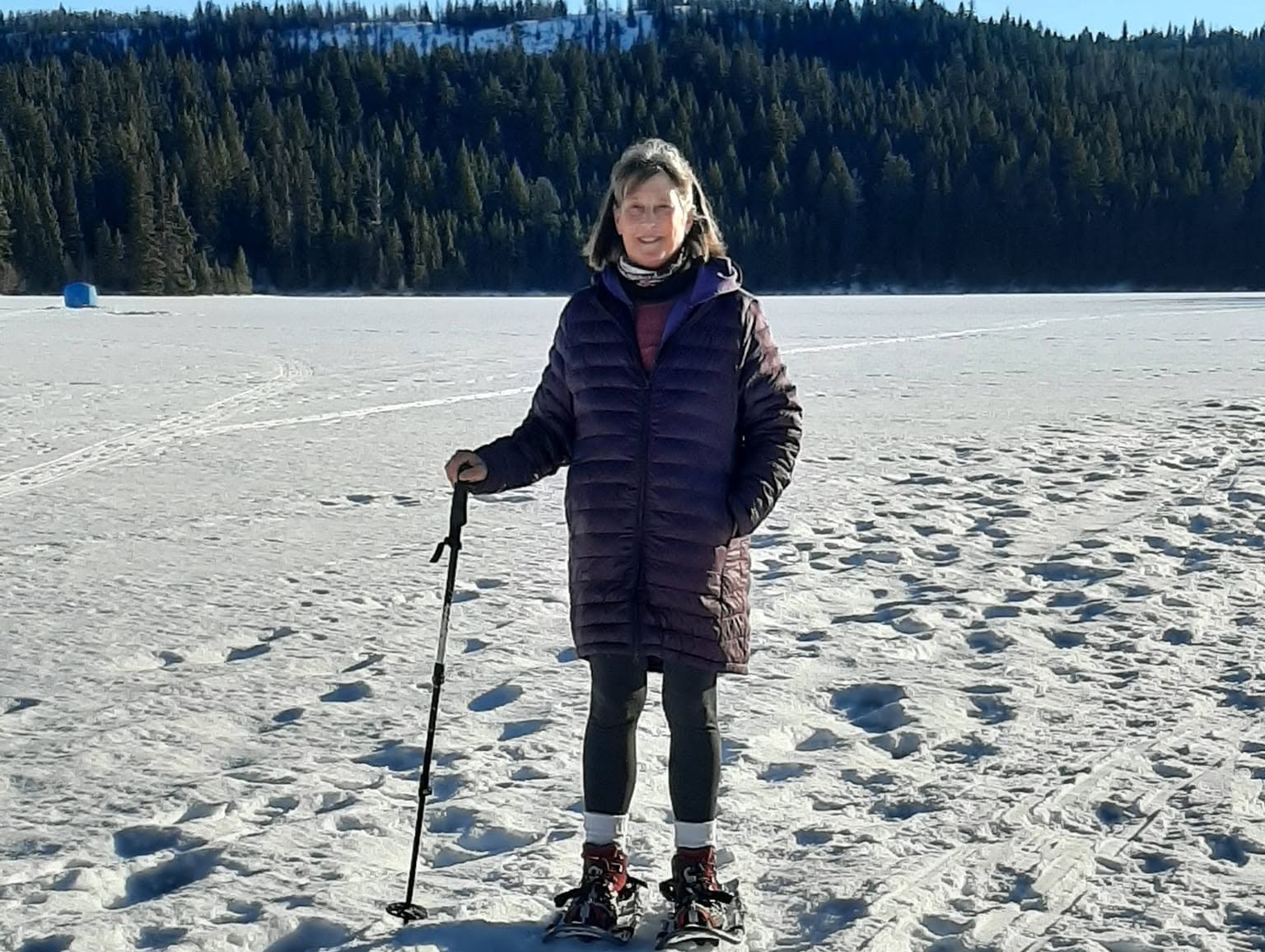
Gerri Hall is finally feeling improvement in her health after decades of struggling with undiagnosed disease but her specific way of getting help is now being threatened, as is her progress.
Hall spent the majority of her adult life in Kamloops cycling through gradually worsening symptom clusters of fatigue, headaches, gastro-intestinal issues, brain fog and other life-limiting symptoms while raising a family and working in the education field.
For decades she was repeatedly dismissed by healthcare professionals, and unable to get a diagnosis or a treatment plan to better manage her symptoms.
“I’d go to bed, start to feel better, start to do stuff and then go through the cycle again,” she said. “I’d be back in bed for two or three days, unable to cook or look after my family.
“I never knew why I didn’t feel well. I’d go to doctors and say something is wrong and describe this list of symptoms that would flare up and they’d ignore me or tell me I had anxiety.”
Now 68, she is slowly gaining more good health days than bad ones since becoming a patient at the BC Centre for Long COVID, ME/CFS & Fibromyalgia 18 months ago.
“It’s the first time in my life I feel validated by the medical community,” she said. “Being constantly dismissed is a soul-snatching thing, done by people who have authority who are supposed to know what they’re doing.
“I think every patient at this clinic has been demoralized by being dismissed, but this model is so excellent because it comes in community. Healing comes from being in community and learning from others with similar diseases. I owe my life and future to the way this clinic treats my disease.”
Located in Vancouver, the clinic treats roughly 8,500 patients suffering with complex chronic illnesses in BC through virtual Telehealth Group Medical Visits.
On September 24, the province changed how clinics can bill patients in group medical virtual visits and the new rules came into effect Nov. 1. The Vancouver clinic had been billing virtual groups of 50 patients but the new rules cap that number at 30 patients with a 25% reduction in fees. It means there is no longer enough money coming in to subcontract allied health specialists the clinic relies on.
Hall has been relying on the virtual group model.
“In the virtual appointments, you sit in with a doctor, and there are so many allied health specialists involved. They talk about a certain part of the disease and how best to manage it,” she said. “You get to ask questions, and better, you hear the questions asked by the others in the group and you learn.
“You can see other patients, some resting in their beds, and they’re taking it all in. Living in Kamloops, I can’t attend an in-person group meeting in Vancouver. Nor can the people in BC who are bed bound.”
Doctor Lana Dyment is a family physician at the clinic providing specialized care for chronic disease sufferers. Her clientele includes numerous children, who will also be impacted by the new legislation.
When she first came to work at the clinic a few years ago, she found no one was seeing chronically ill kids, so she developed a pediatric program and has been seeing kids since February.
“We’re the only clinic in the country treating ME/CFS and fibromyalgia that looks after children,” she said. “There are some individual practitioners of course, but no other multi-disciplinary clinic.
“We haven’t had to advertise. The kids are just coming. People are desperately looking for care for these kids.”
Dyment sees the majority of her paediatric patients and their parents virtually.
“Most of my children are too sick to have an in-person consult,” she said. “They’ll have already seen other physicians who didn’t know what was wrong and referred them to our clinic. Sometimes I’ve seen kids individually but now I have too many so I need to see them in groups.”
Working with the kids and families allows Dyment to provide them with a diagnosis, manage medication, and provide tools to manage symptoms. She creates individualized learning plans for kids’ schools and helps families with paperwork to access supports like disability benefits.
“Some kids are terrified but with a proper diagnosis and support, their whole demeanor changes,” she said.
Now that fewer patients can be seen at one time, the waitlists are getting longer. The cuts have created fear among Dyment’s paediatric patients.

Dyment runs a drop-in virtual youth group with sick kids where she addresses their medical issues with support from a psychologist, until she lost funding.
“Last meeting I was there along with them, dealing with fear the whole time,” she said. “The fear of loss of care and loss of support. These kids are mostly homebound, we’re their lifeline.”
Dyment said the decision by the provincial government to reduce funding to the clinic makes no scientific or financial sense, and can only be political.
“You have old guard at the top of Doctors of BC and the top of government withdrawing funding from the most affected individuals in our province and the only clinic in the country that gives care to children.
“Our medical field is still being run by the old guard, making decisions based on old ideas. They’re not looking at new science or if virtual medicine works, or what the social economic barriers are for patients.”
Dyment said those suffering with these chronic illnesses have been ignored for a long time.
“Patients with chronic fatigue have been banging on doors and getting nowhere for a century,” she said. “These patients never had science or clinics or support. These are patients who can’t travel for care and get gaslit in the ER.”
Telehealth Group Medical Visits have been targeted by the Ministry of Health and MSP as fiscally irresponsible, not meaningful, and lacking in individualized care, according to the Lifeline BC group advocating for complex care patients.
A consulting firm published the results of a Social Return on Investment analysis for the clinic, revealing that the clinic saves MSP more money than it spends by keeping patients out of ERs and other specialists’ offices, with fewer visits to family physicians.
The report showed the clinic achieves world-leading results in patient improvement with 17% being able to return to work.
Hall points to the clinic’s whole-person approach to care for its successful outcomes, including her own.
“Healing needs a physical, social, emotional and spiritual approach,” she said. “Specialists for all these things are brought together to treat the whole person. It’s the way medicine ought to be.
“Going to see a family physician for a ten-minute appointment isn’t working.”
Hall was referred to the Vancouver clinic by a health clinic in Kamloops a few years ago after a battle with breast cancer knocked her health down.
Her symptoms increased to the point she had to quit her job she loved, working as a CEA of middle school students with autism.
“It wasn’t until the clinic I found out why I wasn’t getting better,” she said. “My chronic illness was overwhelmed by the added stress of having cancer so it kicked into high gear.”
She discovered all her symptoms are connected to something called nervous system dysautonomia, a group of disorders where the autonomic nervous system malfunctions affecting heart rate, blood pressure, digestion, temperature regulation and breathing.
While there isn’t a cure, symptoms can be managed and improved with medication and lifestyle adjustments.
Hall is now left with fewer virtual care appointments and less access to specialized care.
“It’s discrimination,” she said. “They’ve cut my access to medical treatment. It’s one thing to not have an answer, but when you have an answer and the powers that be slash it, it’s incredibly frustrating.”
The Ministry of Health is not able to provide comment due to the provincial election interregnum period.
News from © iNFOnews.ca, . All rights reserved.
This material may not be published, broadcast, rewritten or redistributed.

This site is protected by reCAPTCHA and the Google Privacy Policy and Terms of Service apply.
Want to share your thoughts, add context, or connect with others in your community?
You must be logged in to post a comment.