Elevate your local knowledge
Sign up for the iNFOnews newsletter today!
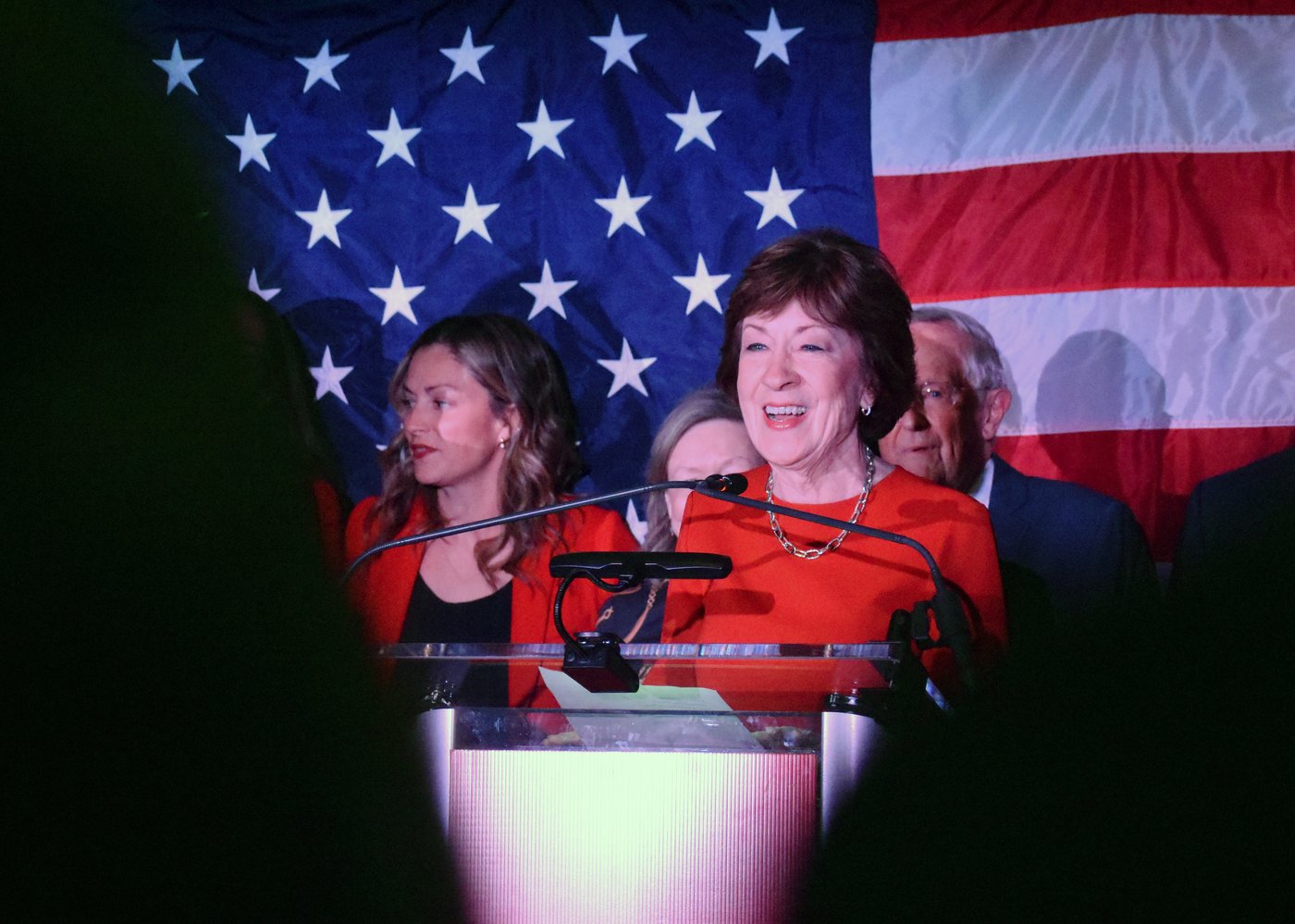
BANGOR — Maine’s longtime senator Susan Collins, the Republican incumbent of a state hard hit by the Canada-U.S. trade war, made just one mention of her northern neighbour in brief remarks thanking supporters before results started to pour in late Tuesday.
At a hotel ballroom in Bangor, Collins thanked her husband Tom Daffron and quipped that he’d be able to watch local television again.
“And now that the campaign is finally over, he can watch television without throwing the remote control at it — or switching to the Canadian network,” she said to laughter.
Collins is hoping to hold off Democrat challenger Troy Jackson, a local politician and former logger from northern Maine. It’s a crucial race that could determine if President Donald Trump’s Republicans hold on to the U.S. legislature’s upper chamber.
The economic impact of the trade war has become a key obstacle for Collins, who asked Maine voters to return her to the upper chamber of Congress for a sixth term.
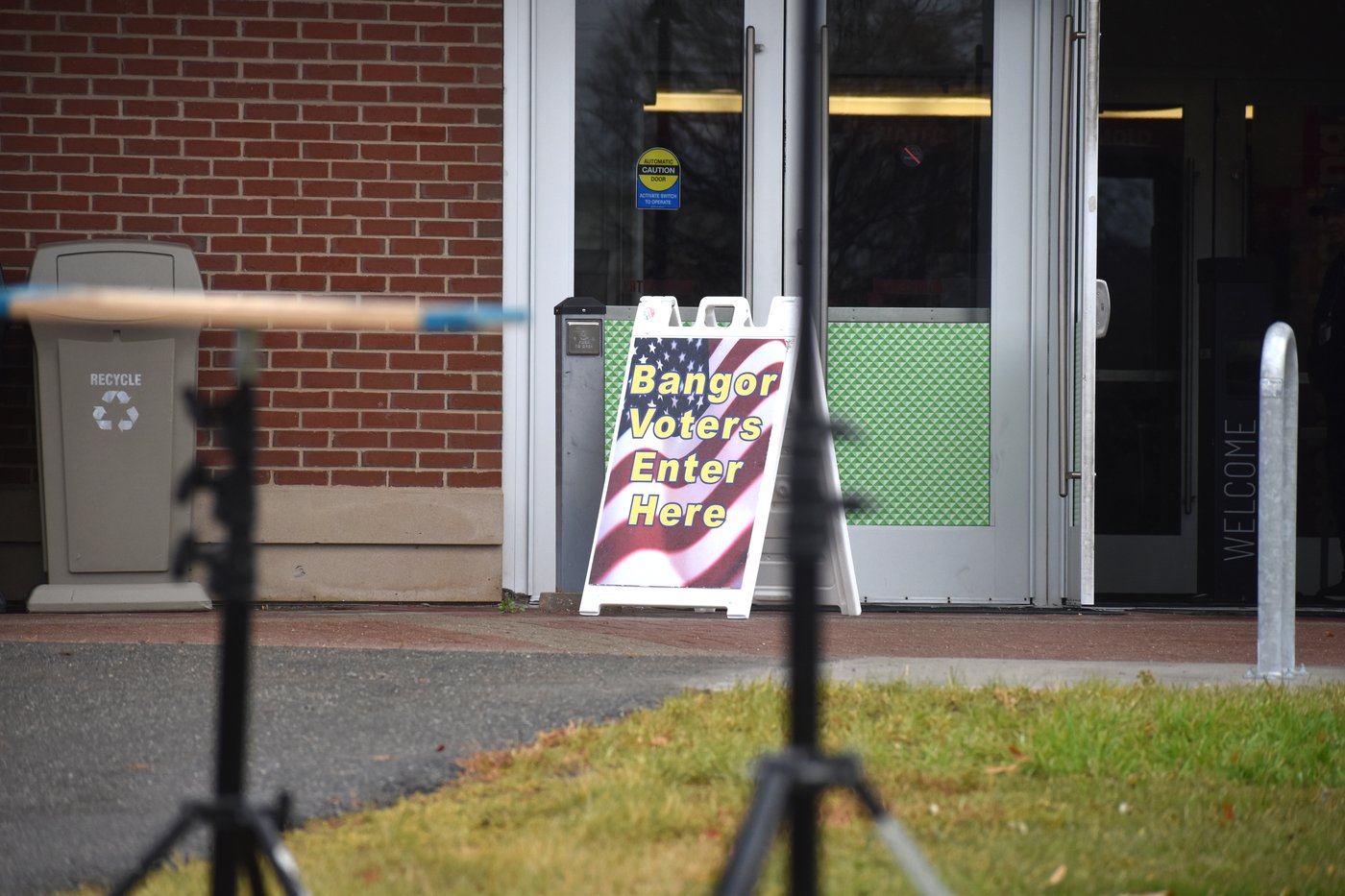
Collins has publicly opposed Trump’s tariffs on Canada and successfully lobbied for some exemptions, though political opponents have said she hadn’t done enough to fight the president’s broader tariff regime.
Polling shows many voters in Maine are unhappy with Trump policies that have pushed up energy prices and caused Canadian tourism to plummet.
Many voters who spoke to The Canadian Press on Tuesday hoped for an end to the tariff skirmish between the two countries that Trump started after coming into office last year.
Sydney Olson said she doesn’t see why the United States would wage a trade war with Canada. She said the economy played into her vote for Jackson.
“There’s hardly any Americans who want Canadians to be antagonized and want to be in a trade war with Canada,” Olson said outside a Bangor polling station.
“We have no problem with Canada. We love Canada. Why bother?”
Michael Furrow, a retired military officer, said he voted for Collins because of her ability to get federal backing for projects critical to Maine’s economy.
But the 23-year-old said he also wanted to see an end to Trump’s tariffs on Canadian imports.
“Trade needs to be open and free across the border,” Furrow said outside the arena where he voted Tuesday.
“We got two great countries. Work together and I think we can do wonderful things.”
“Canada’s our friend and neighbour. Why should we be treating them like we’re treating them?” Dan O’Connell asked as he headed into a polling station in Brewer, Maine.
While he voted for Collins in the past, O’Connell said this year he was ready to back her opponent, in part so a Democrat-controlled Senate could rein in Trump’s tariffs.
Some Republican voters on Tuesday said they want the levies on Canadian imports to remain, at least to some extent.
“I’d like to see a level playing field,” Mark McPherson said after marking his ballot for Collins.
McPherson said he agreed with Trump’s claim that the U.S. has been “ripped off” through global trade.
A few voters said Canada was top of mind at the ballot box.
Donna Twombly, who was born in Maine, said her grandparents were Danish citizens who immigrated to Canada before settling in the U.S.
Twombly said she was angry when Trump imposed his first wave of levies on Canada and other countries last year.
“I went out and bought a Canadian flag,” she said.
“I only found a small one when I went shopping but I put it up on my home.”

Maine, a Northeastern U.S. state bordering both Quebec and New Brunswick by land, relies heavily on Canadian trade.
Federal government figures show the state imports $4.1 billion in goods from Canada each year, making it Maine’s largest trading partner.
That includes $2 billion in heating oil, more than half a billion dollars in forestry products and $263 million in electricity from New Brunswick.
In a column earlier this year, Maine Gov. Janet Mills said the state’s forest product exports to Canada had dropped 20 per cent since Trump started his trade war, causing job losses.
The number of trips by Canadians to Maine dipped sharply last year, according to an analysis of border data by the Maine Center for Economic Policy.
U.S. tariffs have strained New Brunswick’s forestry sector and manufacturing base and have cut into the bottom lines of breweries.
Political watchers say it’s not clear which result would offer a win for Canada, or whether a win was even likely.
Collins pitched herself as an independent not afraid of breaking from her party and voting against Trump on tariffs she has long opposed.
Jackson, meanwhile, said Collins hadn’t done enough as a Republican to push back against the levies that have disrupted Maine’s forestry, seafood and tourism industries.
At a debate last month, Collins said she successfully lobbied the White House to get Canadian concrete, pulp and road salt removed from the tariff list.
Jackson snapped back, saying, “We can’t eat road salt.”
The exchange went viral and spurred the sharing of “let them eat road salt” memes among progressives.
And less than two weeks before the midterm elections, Collins announced the U.S. would lift tariffs on nine categories of Canadian goods she said are crucial to Maine’s hard-hit agricultural industries.
It was seen as an attempt by Trump — who did not campaign in Maine this election cycle — to help Collins keep her seat.
But in the same executive order lifting some tariffs, Trump imposed levies on dozens of new categories, such as cocoa powder, paints and varnishes, shampoos, vinyl flooring, archery equipment and carpets.
Lori Turnbull, a political-science professor at Dalhousie University, said there wasn’t a way for Canada to win, despite being at least partly on the ballot in Maine.
Turnbull noted Trump relies on his presidential powers to impose tariffs, going around the legislative branch of the U.S. government.
“I don’t think that any midterm outcome is a guaranteed win for Canada,” she said by phone. “I think we could still get screwed either way.”
Trump’s levies on a swath of countries triggered retaliatory tariffs by Ottawa and a trade war that has damaged industries and raised costs on both sides of the border.
The previous round of trade talks between the two sides broke down in August, though Trump said Sunday that Canada and the United States were close to reaching a “very good” trade deal.
Prime Minister Mark Carney said Canada has since started “more intense” trade negotiations with the United States after speaking with Trump over the weekend.
“We’ve made progress but we haven’t finished,” he told reporters Tuesday during a trip to Antigua and Barbuda.
This report by The Canadian Press was first published Nov. 3, 2026.
— With files from Kelly Geraldine Malone in Washington and The Associated Press
News from © The Canadian Press, . All rights reserved.
This material may not be published, broadcast, rewritten or redistributed.

This site is protected by reCAPTCHA and the Google Privacy Policy and Terms of Service apply.
Want to share your thoughts, add context, or connect with others in your community?
You must be logged in to post a comment.