Elevate your local knowledge
Sign up for the iNFOnews newsletter today!
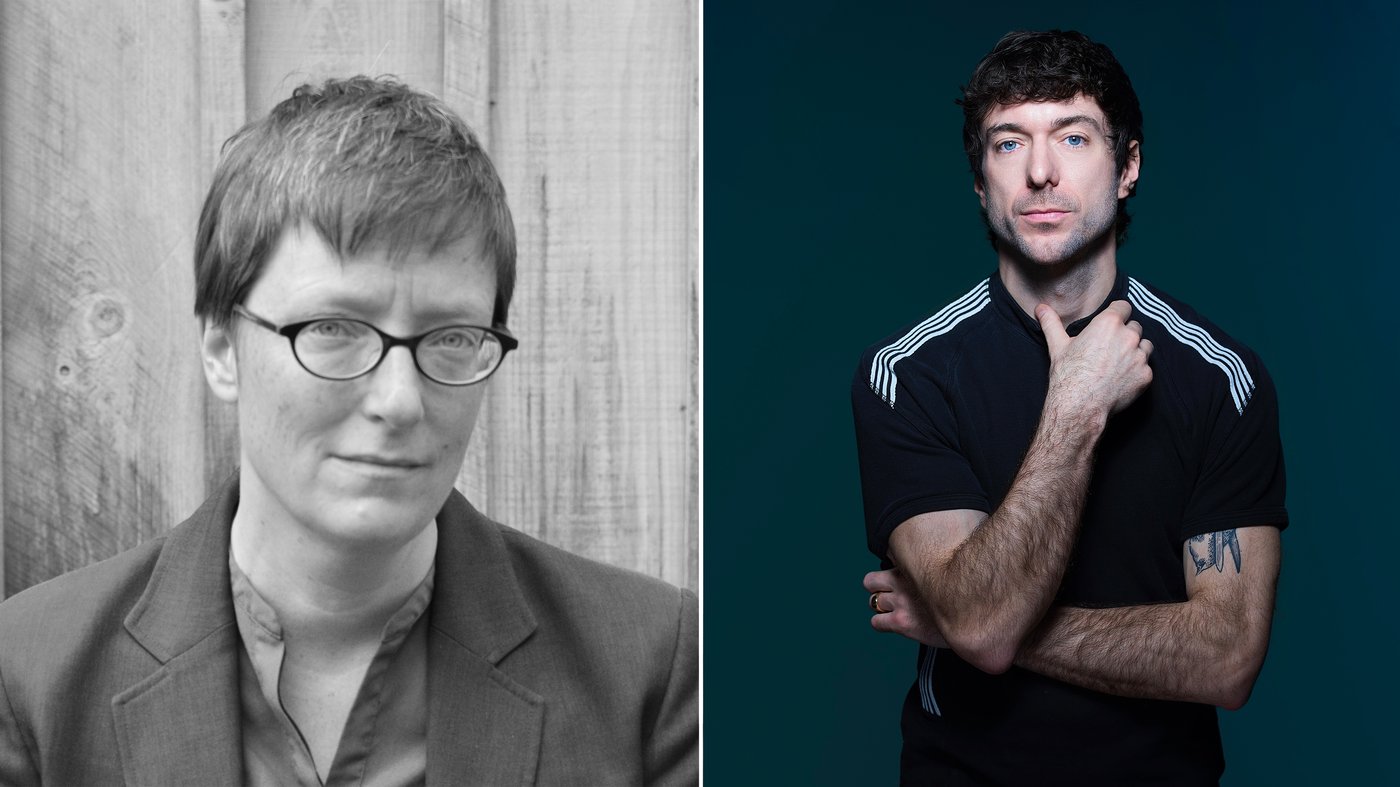
TORONTO — Works about a gentrifying neighbourhood struck by tragedy and a provocative fictionalization of a member of the Royal Family are among the Governor General’s Literary Award winners.
Toronto author Kate Cayley’s debut novel “Property” received the fiction prize. The book follows characters living in the city’s west end during a spring day as their lives become increasingly interconnected following a death.
The Canada Council for the Arts announced the 14 English and French winners this morning, each of whom receive $25,000.
Cayley says the prize feels like finding yourself “in one of your own daydreams.”
The non-fiction winner is Trina Moyles for her memoir “Black Bear: A Story of Siblinghood and Survival,” in which she writes about her evolving attitudes toward the animal alongside her relationship with her late brother.

The drama award goes to playwright Jordan Tannahill for his play set in a future where Prince George, the eldest son of the Prince and Princess of Wales, is a gay man. This is the third Governor General’s Literary Award for the 38-year-old playwright, who also won the drama prize in 2014 and 2018.
The poetry award goes to Gillian Sze for “An Orange, A Syllable” while “Together by the Sea” by Katia Grubisic won the French-to-English translation award. “Touching Grass” by Kristy Jackson took home the young people’s text award, while Matthew Forsythe received the young people’s illustrated books category for “Aggie and the Ghost.”
There are separate French-language categories for francophone writing.
Cayley, who is also a poet and playwright, says she feels “incredibly lucky and grateful” to be recognized by one of the country’s oldest and most prestigious literary awards.
“These kinds of awards mean that you keep writing,” she says. “That you feel both supported in your writing, recognized by your peers, and also that the fact that it’s monetary means that you can kind of just keep going.”
“Property” was inspired by Virginia Woolf’s “Mrs. Dalloway,” Cayley says, calling it “almost a rewriting” of the classic stream-of-consciousness novel.
“I kind of wanted to write a novel in which you are really feeling the weight of the kind of ordinary interior,” says Cayley, who began writing the novel in 2022 during a COVID-19 lockdown. “You’re having the same thoughts over again. You are sort of half-thinking about a fight with your partner and half-thinking about your grocery list.

“But we as the reader are hovering above it knowing that something is going to happen to one of these people and we sort of see it coming, and I like to think that when it does come, it’s not quite what we expected.”
The honour is the second of the week for Cayley’s “Property,” which also took home the $20,000 Toronto Book Award, presented by the City of Toronto and the Toronto Public Library. Indeed, Cayley calls it a “very Toronto book” and says it was inspired “partly by a rat infestation in my house.”
“Rats are a big part of this novel,” said Cayley who calls the city’s west end home.
Meanwhile, Tannahill says winning another Governor General’s Literary prize is a “profound honour.”
“I’m in a different place in my life now than when I won it back in 2018 or 2014,” he says of his wins for plays “Age of Minority” and “Botticelli in the Fire.”
“It sort of feels like it’s a kind of really profound validation from my peers, from the theatre community, about what I’m up to at this moment in time in my writing.”
The play, “Prince Faggot,” which Tannahill wrote in 2020 while living in London, was initially inspired by a 2017 photograph of a young Prince George smiling with his hands resting on his face, which Tannahill says reminded him of pictures of himself as a child.
Tannahill says the photos were a jumping off point to “meditate on this idea of queer childhood” and “give language to this, particularly at a time in which the very idea of this is such a kind of volatile, politically volatile discourse.”
The photos also led to a bold thought experiment that created a fictionalized narrative of the heir to the British throne identifying as a gay man that “really resembled very much my own (life) and very much the struggle that I went through as a gay man,” Tannahill says.
As for the play’s title, Tannahill says it came to him very early in the creation process. He referred to its name as an invitation “for an audience to consider their relationship with that word,” he says.
“And I’m not offended if people say the title and I also understand if they don’t,” he says.
This report by The Canadian Press was first published Nov. 12, 2027.
News from © The Canadian Press, . All rights reserved.
This material may not be published, broadcast, rewritten or redistributed.

This site is protected by reCAPTCHA and the Google Privacy Policy and Terms of Service apply.
Want to share your thoughts, add context, or connect with others in your community?
You must be logged in to post a comment.