Elevate your local knowledge
Sign up for the iNFOnews newsletter today!
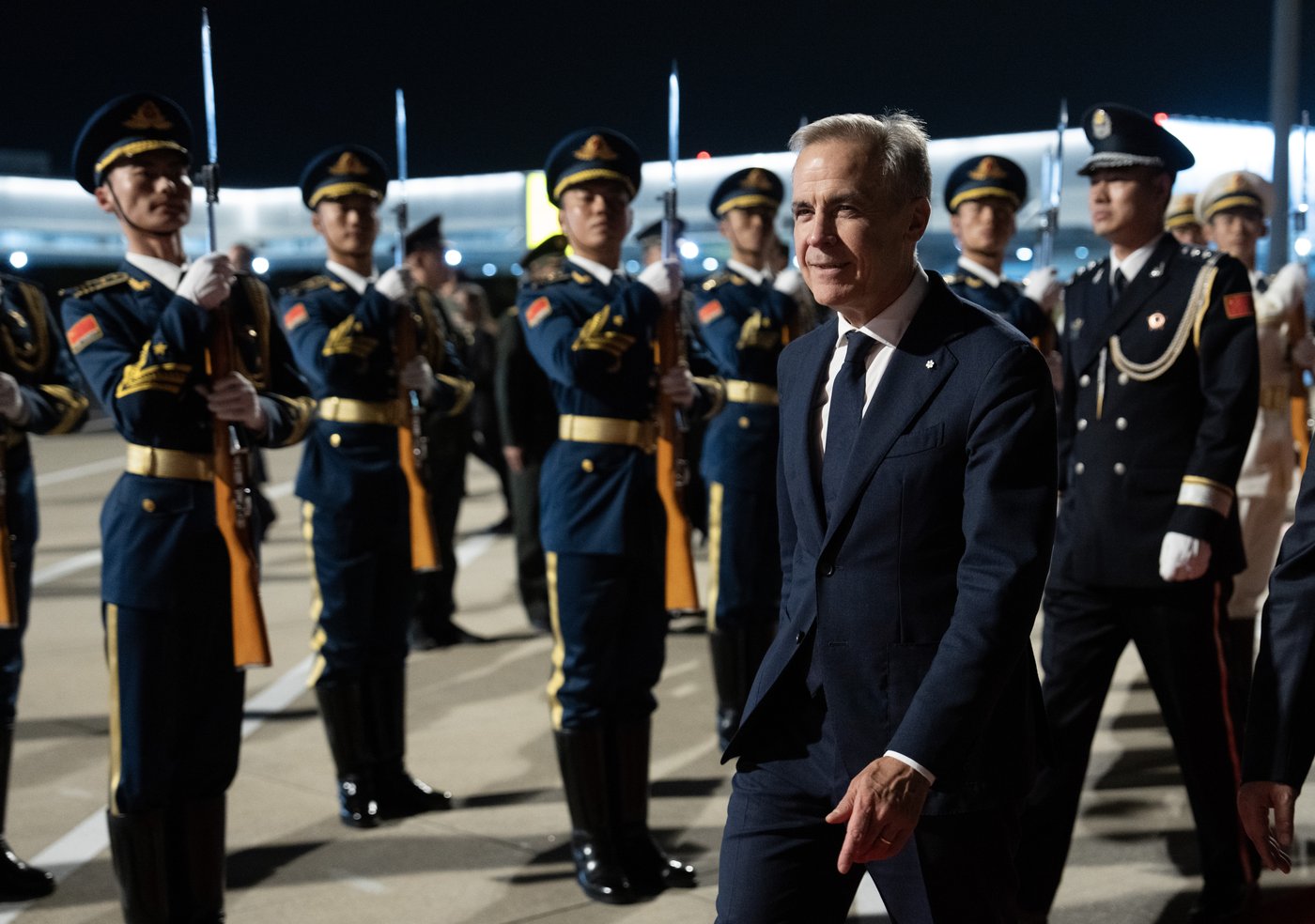
SHENZHEN — Prime Minister Mark Carney and Chinese President Xi Jinping agreed to drop trade restrictions on more goods at a bilateral meeting in Shenzhen, China, as Carney seeks to expand trade with the world’s second-largest economy on everything from agriculture and energy to financial services and autos.
The meeting took place mid-morning on Tuesday in the high-tech hub in the Pearl River Delta megacity region of southeast China, where Xi will host the APEC leaders summit.
It was the second in-person meeting the two have held in China this year. In January, Carney travelled to Beijing for a meeting with Xi, marking the first trip to China by a Canadian prime minister in more than eight years.
“Much has been achieved since my visit,” Carney said in opening remarks given publicly before the two entered into a private conversation.
Canadian trade data suggests exports to China surged 40 per cent since that first meeting in January, with increases in oil, canola and peas among the affected products.
A summary of Xi’s remarks provided by Carney’s office says the Chinese president told Carney their relationship began to turn around when the two met on the sidelines of the APEC summit a year ago in South Korea, and that it now has completely resumed.
The relationship between Canada and China had soured during the tenure of former prime minister Justin Trudeau, largely over accusations from Canada about foreign interference by China.
Before leaving Canada, Carney said he would raise foreign interference with Xi. A Chinese government spokesperson has denied any such activities taking place.
At the January meeting, Beijing and Ottawa agreed to provide Chinese market access to Canadian imports such as canola meal and crab, in exchange for Canadian market access for Chinese steel and aluminum. The agreement was to expire at the end of this year.
Earlier this month, the two extended that agreement until late 2028.
In Tuesday’s meeting, the leaders agreed to expand the goods under that extension, which would remove a 25 per cent Chinese tariff on Canadian exports of frozen pork cuts and frozen cold-water shrimp. Greenland halibut, some mollusks and sea cucumber were also included on that list.
Carney’s spokesperson said this represents approximately $400 million in Canadian exports annually.
In exchange, Ottawa said it would expand what is called remissions coverage to 32 more steel and aluminum items from China. That includes 23 steel items and nine aluminum goods for which the supply in Canada is either insufficient or unavailable.
They agreed to open market access for Canadian fava beans, chickpeas and lentils to China, and would work toward an agreement on pet food and wild aquatic products by the end of the year.
Canada would also send a “major trade mission to China” in 2027 and both countries have declared next year a “year of e-commerce” with work to increase small and medium enterprise trade through e-commerce platforms. Ottawa hopes that can unlock more exports to China through the apps that many Chinese consumers use to buy everyday products such as Alibaba.
The two are also renewing funding for projects on environmental policies and university exchanges.

Before the meeting, Carney said there were “clear guardrails” about what was on the table with China and that discussions around the auto sector were also dependent on ongoing trade talks with the United States.
Canada’s turn to China comes in part because of its turn away from the United States, which under President Donald Trump has imposed wide-ranging tariffs and even threatened to annex Canada through economic coercion.
On Wednesday, Carney is to attend the first of two days of the summit for leaders from the Asia-Pacific Economic Co-operation group, known as APEC.
It is part of a nine-day overseas tour that included stops in Dublin for a European Political Community meeting, Manila for the Association of Southeast Asian Nations, and Cambodia for the Francophonie summit.
Before Tuesday’s meeting, Carney said he expected to speak with Xi about “the evolution of the international system, China’s role in that and Canadian priorities.”
Chinese investments in Canada’s auto sector were also expected to play a major role in discussions. In January, Carney agreed to drop a 100 per cent tariff on Chinese EVs to 6.1 per cent for up to 49,000 vehicles, and in exchange China lowered tariffs on Canadian canola.
Background information provided by Carney’s office said 16,211 Chinese EVs have been imported into Canada since March, about half of which had a price of $35,000 or less.
BYD, China’s biggest EV maker, has begun selling cars in Canada. Geely, the second biggest, announced in October it expects to begin selling EVs in Canada next year.
The Canadian document said this month that “a second original equipment manufacturer” from China had fulfilled Transport Canada requirements but did not name the company.
“Canada expects that this arrangement will catalyze considerable new Chinese joint venture investment in Canada with trusted partners to protect and create new auto manufacturing jobs for Canadian workers and ensure a robust build-out of Canada’s EV supply chain,” the document says.
Carney has said he wants Chinese carmakers to set up shop, but only if they provide decent jobs, saying he was wary of plants where workers assemble cars using components mostly made in China. Canada has already said no to that as an option for the shuttered Stellantis plant in Brampton, Ont.
On Sunday, Carney also said trade talks with Washington would shape how Canada approaches Chinese investment, and that Canada could turn to Chinese automakers if Trump trade talks fail.
Those comments saw pushback from Trump trade adviser Peter Navarro.
“Are u really threatening to play China off the U.S,” Navarro posted on X on Monday. “This is offensive in the extreme. You should be far more worried China is going to eat Canada alive — as it is already doing.”
Navarro went on to say Vancouver was not British Columbia, but rather “PRC” or People’s Republic of China.
This report by The Canadian Press was first published Nov. 17, 2026.
News from © The Canadian Press, . All rights reserved.
This material may not be published, broadcast, rewritten or redistributed.

This site is protected by reCAPTCHA and the Google Privacy Policy and Terms of Service apply.
Want to share your thoughts, add context, or connect with others in your community?
You must be logged in to post a comment.