Elevate your local knowledge
Sign up for the iNFOnews newsletter today!
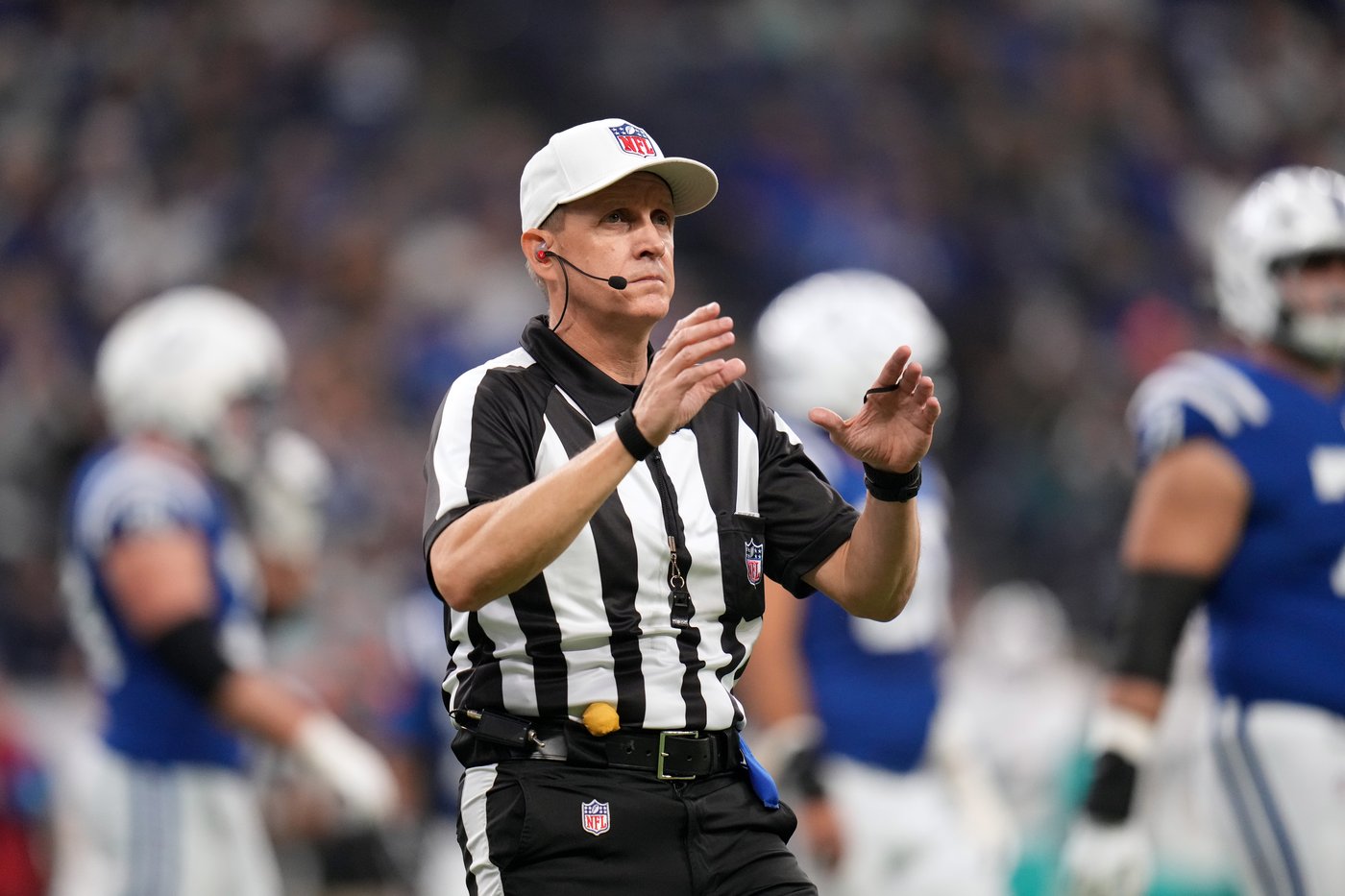
Baseball has Ernie Banks’ catchphrase “let’s play two!” Now, the NFL has “let’s call two!” for its officials who pulled double duty in Week 10, something everyone involved hopes is a “one off.”
The FAA’s decision to ground all flights Friday sent professional and college sports teams nationwide scrambling for new travel accommodations and resulted in the Mississippi-Oklahoma game getting moved to Sunday, a day that’s traditionally reserved for professional football.
The nationwide ground stoppage also forced the NFL to shuffle officiating crews and resulted in longtime side judge Don Willard refereeing two games in one day.
Willard was the referee Sunday afternoon for the Miami Dolphins’ game against the Colts in Indianapolis, before he and three other members of his makeshift crew took the 114-mile trip to work the prime-time game in Cincinnati between the Pittsburgh Steelers and the Bengals.
NFL officials audibled by reassigning game officials for Week 10’s matchups to stadiums closer to cities where they reside so they could drive, and Willard was asked to take over as the lead ref for the two games.
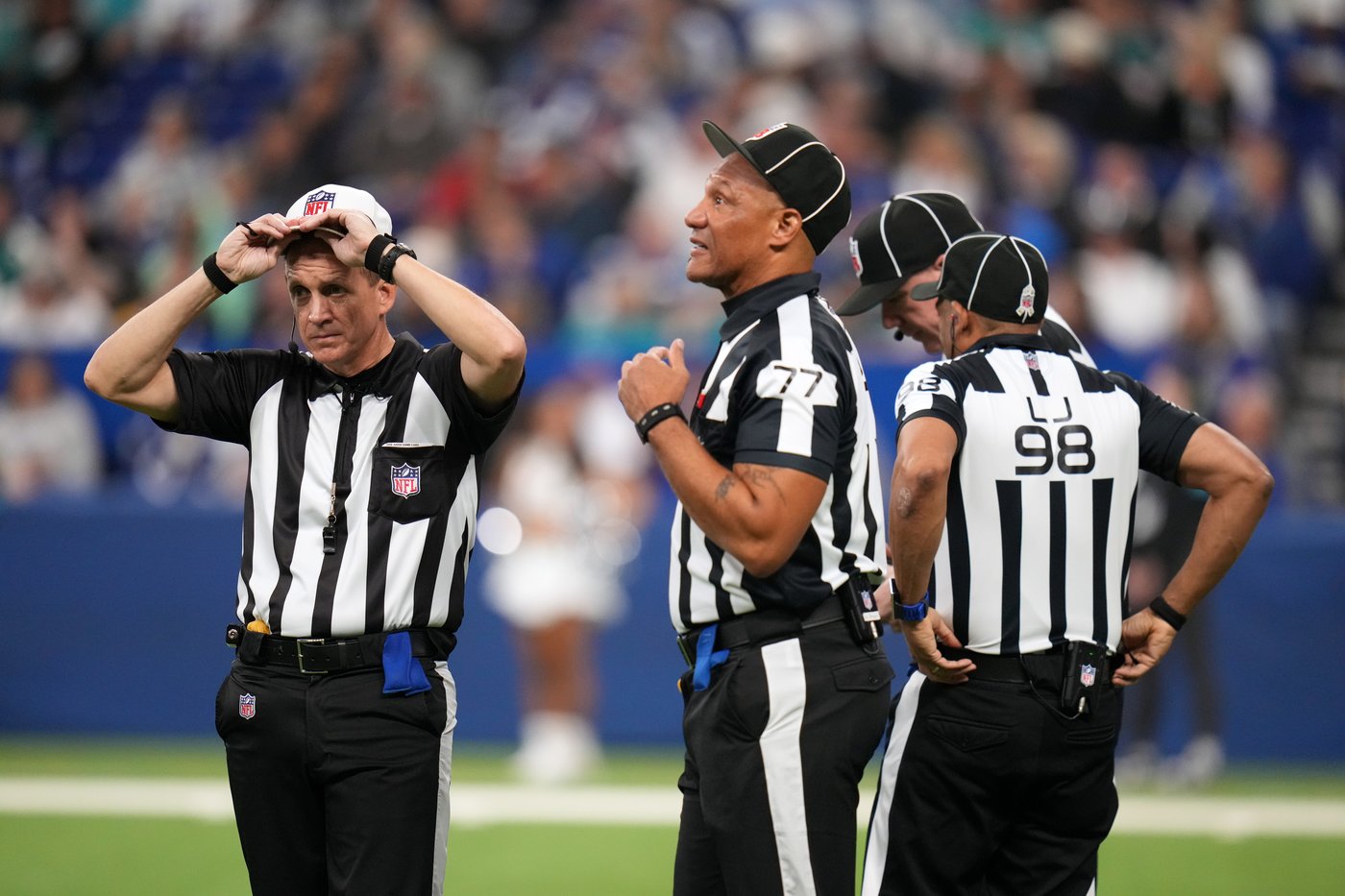
Willard usually works NFL games as a side judge. About an hour before kickoff in Indianapolis, he did the traditional microphone check and then he handled the coin toss — duties typically reserved for referees.
Afterward, Willard, umpire Terry Killens, field judge Jabir Walker and side judge Justin Larrew jumped in a minibus and made the two-hour drive down Interstate 74 to work the game in Cincinnati. It’s the first time this officiating crew has worked together.
The four officials arrived in Cincinnati at 6:39 p.m., giving them some time to prepare before the 8:20 p.m. kickoff.
There were no real issues with the officiating in the first game of Willard’s doubleheader. In the nightcap, there were two instant replay reversals during the first half. A 23-yard completion to Pittsburgh’s Germie Bernard was overturned when replay showed that Bernard’s toe was just out of bounds. An interception by Cincinnati’s Jordan Battle was also reversed when a second look showed the ball hit the ground.
The crew called a dozen accepted penalties in the game, eight on Cincinnati and four on Pittsburgh. That’s the exact number called on average in this matchup over the last five seasons, down from 14.2 flags per game the previous five years when the rivalry was more heated.
“I thought they did a great job managing a very difficult game, very testy game, obviously by both sides,” Bengals coach Zac Taylor said. “So hats off to those guys for what they pulled off today. I know it was a long day for them.”
And not very easy, suggested NBC Sports rules analyst Terry McAulay, who said during Sunday night’s “Football Night in America” pregame show that what the crew did was extraordinarily challenging.
“At a high level, it’s a brand new crew working together to work this game tonight that did not have at all the normal preparation — studying tendencies, studying formation style of play, and especially for this game, studying matchups on both sides of the ball. AFC North divisional games are brutal to officiate,” McAulay said. “Just working one NFL football game for three hours is incredibly mentally exhausting. When it’s done, you’re mentally drained. These guys have to do it now twice in one day. They don’t have the normal recovery time. I know when I did it, my recovery time was never less than four hours.”
Umpire Barry Anderson served as the referee in the Jaguars-Titans game and Tennessee coach Robert Saleh had a couple of issues with calls from his crew.
He didn’t like a roughing-the-passer penalty on John Franklin-Myers and argued a pick should have been called on a touchdown pass by Jacksonville in the third quarter.

“The pick damn near happened in the end zone,” Saleh said. “They said it was within one yard and it wasn’t.”
Saleh bristled, however, when asked if an umpire officiating as a referee made for some inherently curious calls: “No. I thought the refs overall did a good job. Obviously, that was a — it was a missed call. Then as far as the roughing the passer, I still don’t understand what that was.”
A loophole pothole
Denver coach Sean Payton took exception to division rival and Chargers counterpart Jim Harbaugh suggesting last week that the Broncos took advantage of a loophole to scuttle their trade for inside linebacker Daiyan Henley.
“There’s no loophole. It’s just part of the trade process, every step of the way,” Payton said Monday in the team’s first comments on the deal gone bad.
Payton declined to elaborate on why the Broncos backed off the deal, which would have sent a fourth- and a fifth-rounder to Los Angeles for the fourth-year pro. “I’m not going to get into specifics. He’s a prospect we thought — and still do — very highly of. It just didn’t work out. It’s not uncommon with trades.”
A stand-up sit-down
Fernando Mendoza’s mother, Elsa, was diagnosed with multiple sclerosis in 2008 and uses a wheelchair. So, when her son scored his first NFL touchdown Sunday, thousands of Raiders fans celebrated with her by staying seated.
“I’m super grateful to the silver and black for doing that,” the rookie QB and No. 1 draft pick said. “It means a lot to my family and I just can’t thank you guys enough. On a dark day (with the 21-13 loss to Seattle) it brings a smile to my face, so I really thank everybody respecting my family and appreciate all the support.”
___
With contributions from AP freelancer Teresa M. Walker.
___
Behind the Call analyzes decisions week-to-week in the NFL whether consequential, controversial or just plain curious.
——
News from © The Associated Press, . All rights reserved.
This material may not be published, broadcast, rewritten or redistributed.

This site is protected by reCAPTCHA and the Google Privacy Policy and Terms of Service apply.
Want to share your thoughts, add context, or connect with others in your community?
You must be logged in to post a comment.