Elevate your local knowledge
Sign up for the iNFOnews newsletter today!
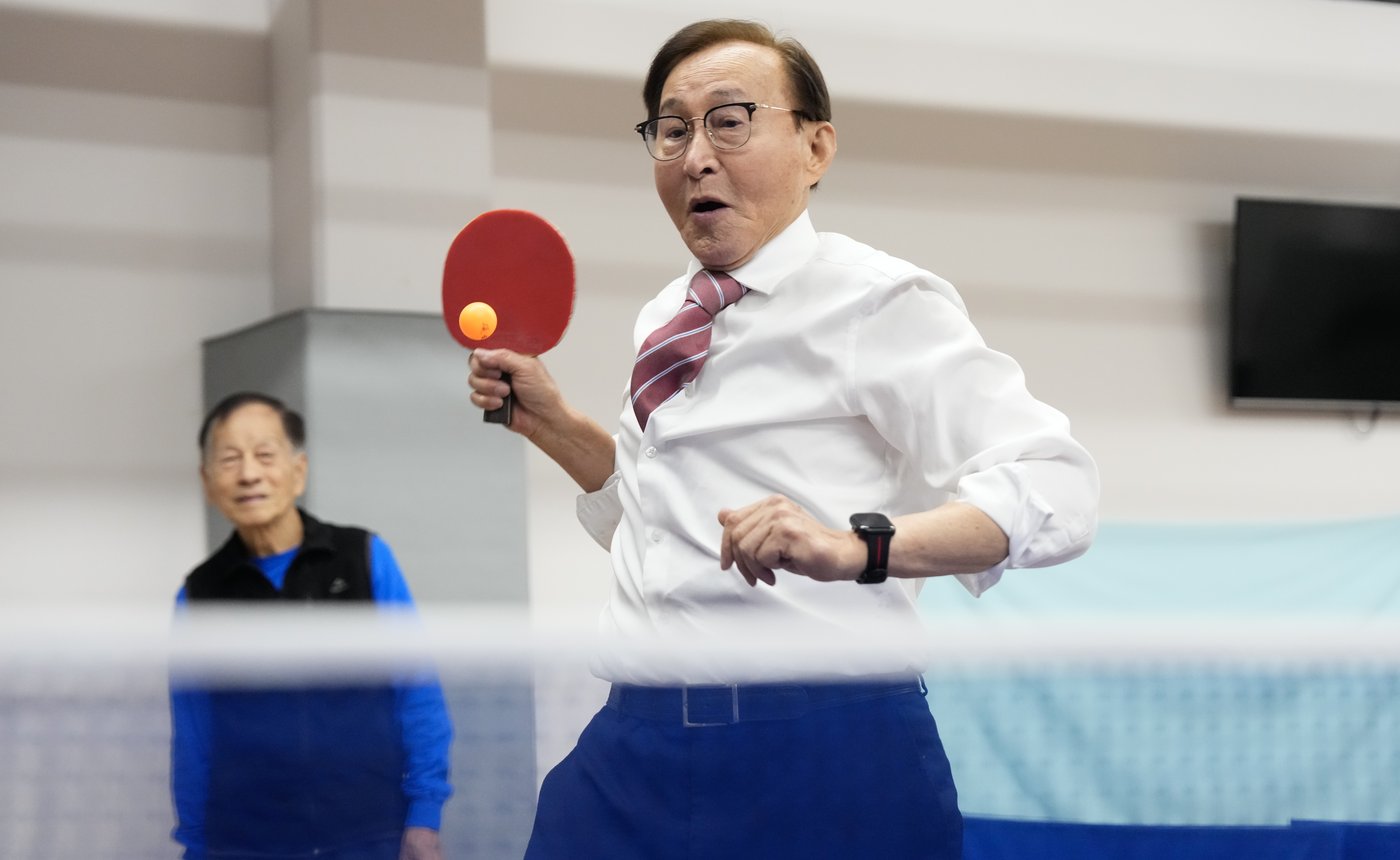
TORONTO — On a recent Friday in the far eastern reaches of Toronto, Raymond Cho deftly serves a table tennis ball against a new rival, a reporter about half his age from The Canadian Press.
The ball crosses the net in the basement of a community centre and takes a 90-degree turn, spinning furiously. The reporter, surprised at the ball movement, stretches far to the side of the table and makes a miraculous return before an unrepentant Cho smashes the ball to the opposite corner to win the point. The reporter tweaks a hamstring in the process.
Cho, Ontario’s minister for seniors and accessibility, turned 90 earlier this week. With each passing day he sets a new record as the oldest Ontario provincial politician in history. He intends to keep breaking records. Will he run in the 2030 Ontario election?
“Definitely,” Cho says without skipping a beat. “As long as I can make contributions, I keep running.”
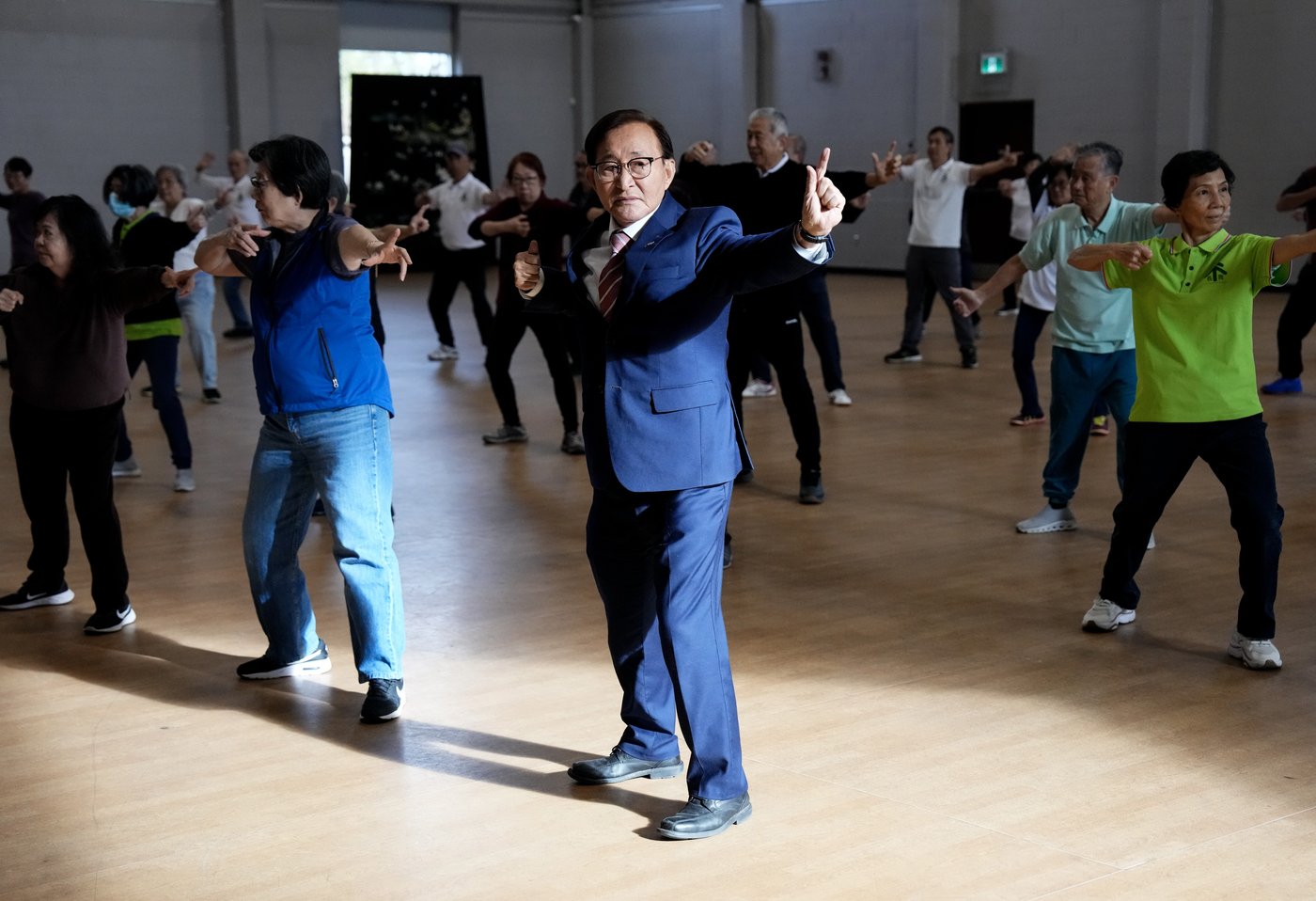
On a recent Friday at the Chinese Cultural Centre of Greater Toronto in Scarborough, an institution he helped build and expand over the last several decades, Cho reveals the secrets of his 90 years on Earth.
MOTHER KNOWS BEST
They often come in threes, but one dominates all others: his mother.
“The most important person in my life is my mother,” Cho says.
Boon Young Kah raised Cho and his seven siblings in Korea with little help. His father, whom he says he has “no respect for,” left to start a new family when Cho was young.
She was born in rural Korea to farmers in 1900 and was not allowed to attend school.

“She didn’t have any contact with learned people, but she was full of wisdom,” Cho says.
She taught him three lessons he holds to this day.
The first: “Greet people warmly and respectfully.”
Later in life when he was studying counselling in a doctoral program at the University of Toronto, he learned that’s the first step to establishing a personal relationship with a patient.
“The second thing she advised me, when somebody come and ask your help, please help them,” he says.
She instructed her boy to thank everyone who helps, even in small ways.
The third: “Don’t argue over small things,” he recalls. “If you keep arguing over small things, you become small yourself.”
CHO, THE FIGHTER
He also learned lessons from his childhood nemesis, Johnny. In Grade 1, Cho says Johnny was relentless: Poking him, throwing water on him, and making fun of him. One day, Cho had enough.
“Johnny, you bug me so much, let’s have a fight,” he recalls telling his bully.
Students gathered to watch. Cho let loose a flurry of punches to Johnny’s face.
“I’m not a strong boy, but I really mustered all the power to keep punching him in the face,” Cho says, adding Johnny never bothered him again.
“When you’re strong, people respect you.”
In Grade 7, he caught tuberculosis, often a death sentence in those days. He focused on eating better as he tried to recover. He spent a lot of time at the beach in Incheon, swimming and walking and digging out oysters at low tide.
“After one year, I overcame tuberculosis,” he says.
Cho saw firsthand the ravages of the Korean War. He can still picture North Korean tanks and soldiers rolling into Incheon as a teenager in the 1950s.
“I dug trenches with North Korean soldiers, communist soldiers, and only then did they give a ticket to get rice from the ration station,” Cho says.
He was there for the Battle of Incheon, where Allied forces bombed the city. He can still see the American B-29 Superfortress bombers as they pummeled North Korean forces in and around the coastal city he grew up in.
“Every time I hear the sound of the airplane, I follow the airplane to see how the bomb exploded,” he says. “I was really stupid — good thing I didn’t get killed.”
He’d later survive several other near misses.
JOURNEY TO CANADA
By the end of high school, Cho hoped to attend Seoul National University — “like Harvard in the USA,” he says — but he failed the entrance exam.
That brought him great shame.
“I said to myself, I’m going to make my mother the happiest person,” he says. “How I can make her happy? Only if I become successful.”
A year later, he got into Hankuk University of Foreign Studies in Seoul. He set a strict studying schedule where he slept from 10 p.m. to midnight, woke up and studied until 5 a.m., slept for a few more hours then went to class for the day.
After graduating, he got a job at the American embassy in Seoul, which was like “catching a star in the sky.”
One day in the 1960s, he got a call from his stepbrother, who was just discharged from the Republic of Korea Navy, who wanted to go to Canada. Cho helped arrange an interview for him with a Canadian immigrant officer and stepped in to be his brother’s interpreter.
They both filled out applications. Cho got in, his stepbrother didn’t.
“If I didn’t come to Canada, I could never become a minister in Korea and probably by now I’m a dead man because those days, Korea, they just drink too much and if I get a job then I have to drink a lot for the company to make business,” he says.
His younger and older brothers died of liver cancer related to their drinking, he says. Consequently, Cho does not drink alcohol.
In 1967, at 30 years old, Cho left for Vancouver.
On the plane trip over, somewhere in the middle of the Pacific Ocean, Cho envisioned his future. He had big dreams for a big life with a big job in Canada.
“I’m going to be a big hunter,” he thought. “I will catch polar bears, grizzly bears, moose, and big animals and I will become a millionaire and then go back to Korea.”
CHO, THE ACADEMIC
He worked as a dishwasher at his first job in Canada. He worked at an asbestos mine, as a waiter and a janitor, all while attempting to complete an MBA at the University of British Columbia.
He also bought a Bible, the New Testament, and began reading it as a way to learn English. That sparked his love of Jesus Christ.
“That was a major turning point in my life,” he says. He soon became Christian.
It would help him when the dark moments came.
It was in his early days in Canada, while he was cleaning dishes at a restaurant, that he decided to marry the love of his life, SoonOk, who was a teaching assistant at the Ewha Womans University in Seoul.
“I proposed to her to marry me as a dishwasher and she folded her dream to be president of the university and she came over to Canada to marry me,” he says.
Cho struggled at UBC, largely because of the frenetic pace he kept between work and class.
“I was scared,” he said. “And I said, ‘I don’t think I could finish.'”
He thought about a trip around the world before returning to Korea. But friends he met in Vancouver who moved to Toronto encouraged him to come east where they said he’d find better work.
So he ditched school and boarded a train. Three days later he arrived in Toronto.
“I started out way at the bottom of life,” Cho says.
He found work as a janitor at the Toronto General Hospital, but he couldn’t get thoughts of going to university out of his mind. So he got another job to save money as a worm picker.
He lived through discrimination when he came to Canada, first in Vancouver and then again in Toronto.
But he soon grew to make his way in Toronto, becoming tight with the Korean Christian community.
He also went back to school and completed a masters of social work and education and then went on to complete his doctorate in counselling psychology at the University of Toronto.
That would lead to a career as a social worker with several organizations, including the Toronto Board of Education and the Catholic Children’s Aid Society.
CHO, THE ACTIVIST
By the 1980s, Cho morphed into a community activist for Korean human rights.
Back then, Japan had a law that required Koreans 14 years or older who lived there to be fingerprinted.
Koreans around the world rose up — along with some non-Koreans. Cho took up the cause and organized rallies against the Consulate General of Japan, taking up the mantle as a community leader.
Then he found his way to Japan alongside Rev. Jesse Jackson, the famous African-American civil rights activist, who joined the fight in Japan. It came with risks as violent riots broke out. Despite having three young boys at home, he forged ahead to Japan.

The pair were vocal in their critiques of the Japanese government, especially after Koreans were being arrested for refusing to be fingerprinted.
“This is nonsense,” he recalls Jackson saying over lunch, “we cannot let it happen.”
Cho was impressed with Jackson.
“He’s not even Korean, but he was fighting for Koreans, he was fighting for human rights and principles,” Cho says.
PUBLIC OFFICE
Cho worked for years as a social worker, but the federal NDP came calling in the late 1980s.
He wasn’t interested initially, but eventually gave in to run for Ed Broadbent’s party in 1988.
He lost.
But he worked hard during the campaign and began to make a name for himself. The NDP pushed him to run for Metropolitan Toronto Council.
“I said I will run, but I’m not going to run as NDP, NDP is least popular, I will run my own campaign,” Cho says.
He ran and won as an independent in 1991, but soon became a member of the federal Liberal party.
His reign as a Scarborough councillor lasted until 2014, though there were a few attempts at federal and provincial politics in between.
He had long championed immigrants and was stepping up his activism to help the Korean community, which had dominated convenience stores, particularly in Toronto. They were suffering after American giants like Walmart, Costco and Amazon came to Canada.
The Korean Business Association said one way to survive is to allow convenience stores to sell booze. Former Progressive Conservative leader Tim Hudak told Cho he would do just that if they formed government.
So Cho told Hudak to appoint him — Cho says he did not want to waste time and money to go through a nomination process. So he was on the ballot, now as a Progressive Conservative.
“Then Tim Hudak made a terrible mistake, like political suicide,” Cho says.
Hudak announced late in the 2014 provincial campaign he’d lay off 100,000 civil servants. Throngs of locals who were set to support Cho pivoted.
Cho lost. As did the Conservatives.
After Patrick Brown took over as leader, he sought out Cho to run again. A byelection was coming up in 2016 and Brown believed Cho could win the Liberal stronghold of Scarborough North.
Brown was relentless, but Cho was unsure of another run. He was 80 years old, but still full of energy.
Cho had also become friends with Rob and Doug Ford during his time on Toronto’s city council. The current premier managed Cho’s campaign in the 2016 byelection and he won.
When Ford became leader of the Conservatives, he pledged, like Hudak, to bring booze to convenience stores, a promise he would fulfil in 2024.
After Ford won the 2018 election, he made Cho the minister for seniors and accessibility.
But before that, Cho had a scare. Shortly after winning, Cho was out driving to churches to thank them for their help and support during his campaign.
His voice became slow, his speech unclear. His assistant called his wife, who rushed over and then called an ambulance once she saw him. Paramedics rushed him to Sunnybrook hospital.
Cho was having a stroke.
Ford rushed over, the first visitor. He leaned in, hugged him and said, “Raymond, don’t worry, you’ll be fine.”
“I’ll never forget,” Cho says, “and I was fine.”
The stroke did leave him with hearing and balance troubles, though that has not slowed him down.
At Cho’s birthday bash last week with 650 friends, Ford praised his minister.
“You’ll have that job forever,” Ford said. “And you’ll outlive everyone in this room anyways. We’ll be here celebrating your 100th birthday.”
Ford and Cho are close friends, Cho being in many ways the party’s conscience.
“I love you more than anything in the world and I appreciate you,” Ford said.
Cho says he also nearly died last year on a family vacation in the Dominican Republic. He waded into the ocean, but soon found himself sucked out to deeper water, where he was flailing. He managed to get out, but was disoriented after choking down a bunch of water.
He spent three days in a Dominican intensive care unit, his three sons — “two doctors and a teacher!” — by his side.
“Somebody up there really loves me,” he says.
‘EVERYBODY LOVES RAYMOND’
He also has lots of love inside cabinet.
Finance Minister Peter Bethlenfalvy has long called Cho his “best friend forever.” He connects with Cho because he is the son of two Hungarian immigrants who fought for a better life in Canada.
“You come with nothing but the shirt on your back, like my parents, and you can build a career and you can give back, you can succeed,” he says. “And he’s just a perfect example of that.”
The reason the two are BFFs, Bethlenfalvy explains, comes from a cabinet meeting. The finance minister put forward an idea to cabinet — he won’t say what in order not to betray cabinet confidence — and the idea fell flat.
No one liked it, he says, except Cho. Bethlenfalvy appreciated the backing and told him they were now BFFs.
“I did see him a few other times going out and saying to another one, ‘you’re my favourite cabinet minister,'” Bethlenfalvy says with a big laugh.
“I’m sitting right here, Raymond! I thought I was your favourite cabinet minister. He is so charming, he is smart, and he’s got so much wisdom.”
Energy and Mines Minister Stephen Lecce says Cho is an elder statesmen who provides sage advice to younger colleagues. Lecce turned to him a decade ago when he was weighing whether to run for public office.
Cho’s advice: just do it.
“His story, for me, is inspiring,” Lecce says. “Like many immigrants to Canada, he left persecution, he survived the Korean War, understands the consequences of authoritarianism and communism and came here to make our country and our democracy better and stronger.”
“Quite literally, everybody loves Raymond,” says Economic Development Minister Vic Fedeli. It’s an oft-running line within the caucus and an ode to an old sitcom. He helped him knock on doors back in 2016.
“He would run from door to door and I’m thinking, holy crackers, I’ve knocked on doors for 20 years … You chat a little bit and you walk along with the staff and the volunteers.”
Not Cho, he said. “He ran.”
Fedeli had a hard time keeping up.
But the love isn’t universal.
He has critics among seniors and disability advocates who say he has not done nearly enough, especially on accessibility issues.
Cho says progress has been slow in some areas, but he says he will keep working to improve life for “those who built this country.”
He also apologized during the 2018 campaign after getting into a physical altercation with a Grade 7 student who ripped up campaign literature while Cho handed out pamphlets at a school. He said he “lightly touched” the student’s head after telling him to pick up the litter.
CHO’S FINAL SECRET
Cho has another secret.
He says his Chinese doctor has told him he’ll live to be 105 years old. He told Cho his reasoning, in three parts.
First, he is happy. Cho agreed.
Second, he is fit and active. Cho agreed.
“I love golf and have had two holes in one!” he says with a smile.
Third, he helps others.
“Happy, exercise, help others,” he says. “That’s the secret of my long, strong, happy life.”
Every day he wakes up, Raymond Cho thanks the Lord for three things: “My mother, Canada, and my beautiful wife.”
This report by The Canadian Press was first published Nov. 22, 2026.
News from © The Canadian Press, . All rights reserved.
This material may not be published, broadcast, rewritten or redistributed.

This site is protected by reCAPTCHA and the Google Privacy Policy and Terms of Service apply.
Want to share your thoughts, add context, or connect with others in your community?
You must be logged in to post a comment.