Elevate your local knowledge
Sign up for the iNFOnews newsletter today!
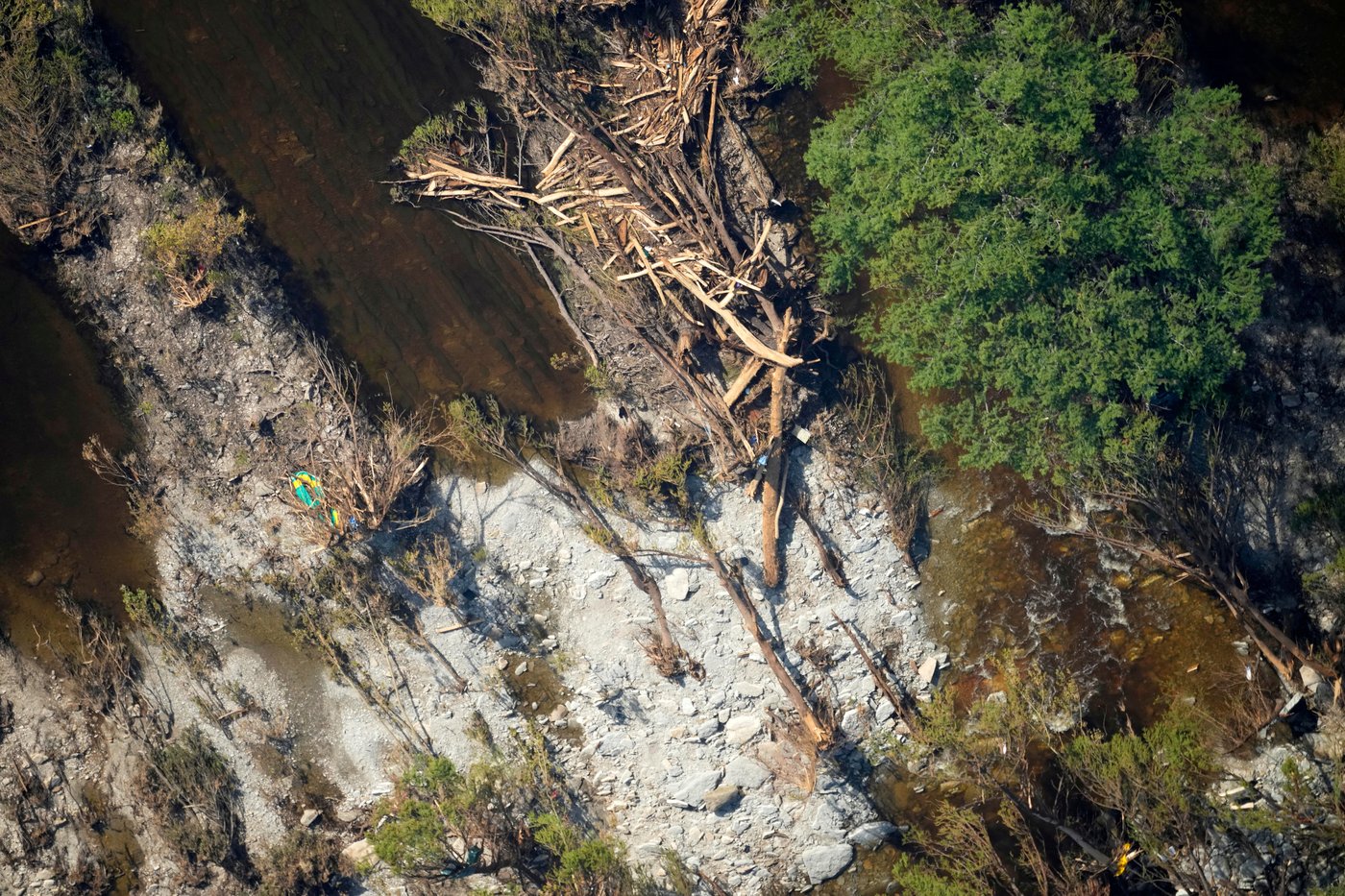
Along the Guadalupe River in Kerr County, the mighty cypress trees that defined the area are bent, broken and missing.
Last year, the river became a raging monster that killed more than 100 people and tore up the riverbanks. Then machines scraped away more plants and earth as workers searched for bodies and hauled off debris. The river rose again to disastrous levels this July.
People who live in Kerr County or visit often describe the landscape left behind as a moonscape. To them, the gorgeous river that drew so many now looks barren, ravaged and unrecognizable.
But a sliver of hope appears if one looks closely along the river’s edge.
Amid the devastation, spindly baby cypress trees stand a foot or two tall. Plant experts under the leadership of the San Antonio Botanical Garden grew them over the past year in nurseries across the state, starting with seeds collected in this region. The cypress trees here are so unique they might even be their own species. Volunteers started planting them this month. Their goal is to plant 50,000 trees over the next two years.
The river could heal on its own, but those involved in this massive effort say they’re jump-starting the process of regrowth, giving the traumatized and battered region a boost. They’re aiming to beat out invasive plant species that try to take over after disasters. They’re seeking to rehabilitate an ecological landscape they say was already out of whack before the floods.
“Will the river recover? Yes,” said Erin Davis, program coordinator for Texas Resilient Landscapes at the Texas A&M Forest Service, which has supported the project. “But I think we do have an important role to play where we can direct how that restoration goes.”
The effort isn’t just a landscaping project, leaders at the botanical garden say. It’s about building a resilient ecosystem. Organizations replanting the river are educating people about the roles of native plants in providing habitat and stabilizing the banks. The plantings also allow volunteers to do something tangible to help restore the iconic trees.
In the most profound way, planting the trees requires believing in the future: The garden has collected more than 850,000 seeds, which volunteers sorted by hand. Only a third of the cypress seeds actually germinated. Raised with periodic water, wind and nutrient stress in hopes of making them heartier, the plants still might not survive hungry deer or future droughts once they’re in the ground.
Cypress trees take decades to reach their full height, so adults planting them today might not get to sit in the shade of those that do make it. But the attempt offers a step toward healing, for the river and community.
“We’re grieving,” said Ryan McGillicuddy, watershed and conservation team leader for the Texas Parks and Wildlife Department, another river supporter. “Just like there are these steps that nature has to go through to heal, we’re going through it in tandem, and so we can look to nature as a source of healing for ourselves.”
“A foundation for us all”
Cypress trees make up part of Kerr County’s identity. People described them as majestic, grandfatherly and statuesque. Where their limbs arch over the water, they’re likened to cathedrals.
The cypress drew early settlers to the area in the mid-1800s, who cut them down to make shingles. By the 1920s, kids spent idyllic summer weeks at camps by the river. The trees anchored generations of memories and stoked a sense of wonder. Some trees lost in the flood were hundreds of years old, with giant trunks too big to even wrap one’s arms around.
The trees were part of the soul of the place, says artist Carol Arnold, who captured the pre-flood landscapes in her pastels. She studied the greens and blues of the water beneath the trees, and the way the roots wove among the rocks. In these scenes, she saw quiet and peace.
“It’s like the roots of the cypress trees were a foundation for us all,” said Arnold, who grew up in Dallas and went to camp on the river, then raised her family in Kerrville. “It was emotional, spiritual — more than just roots to a tree, they meant something to everyone that lives in the community.”
Cypress trees mattered for the river’s health, keeping aquatic life cool in their shade and holding soil in place with their roots. They provided habitat for insects, birds and mammals. The trees slowed water, causing soil to drop around them, forming even more habitat.
And the pristine river supported the area’s economy, built on tourism and health. Busy summers with family reunions, fishing trips and vacations gave way to visitors coming to hunt deer, get married or see the cypress needles turn russet in the fall. People picnicked, relaxed and cleared their heads amid the comfort of the trees.
“The river system is not just a pretty thing to look at,” said Jeremy Walther, 47, who owns a local brewery and started the Kerr County River Foundation after the July 4 flood. “Becoming an economic hub … all of that is built on the river.”
The immense volume and velocity of the July 4 flood tore the landscape apart as it ripped up homes, carried away cars and forced an untold number of people to fight the debris-filled current for their lives. Some survived by clinging to trees.
The ravaged landscape left a stark reminder of what happened. People remarked how they could see clear across the water in many places once hidden by thick tree canopy. Roughly half of the vegetation along a 30-mile stretch of the river was lost, according to an analysis by the Bandera County River Authority and Groundwater District.
Mindy Wendele, president and CEO of the Kerrville Area Chamber of Commerce, held hope for the recovery but for now wasn’t sure she would ever get used to the trees bent sideways instead of stretching upright, or the huge amounts of rock now along the riverbanks.
“That part is sad, because it’s different,” said Wendele, who is the fourth generation of her family in Kerr County. Her eyes glistened. She added later: “It’s kind of an assault on what we’ve grown up with.”
An idea germinates
Michael Eason, vice president of conservation for the San Antonio Botanical Garden, rode in a car with several other garden leaders shortly after the July 4 flood. He’d seen the area’s surreal landscape. “My landmarks were trees, and those were just gone,” Eason said. “It was just wiped clean.”
In the car, they came up with an idea: What if they helped grow trees from local seeds to help restore the river?
Eason contacted Becky Etzler, executive director of Riverside Nature Center in Kerrville, which serves as an education center for all sorts of plant-focused groups. The property sits along the Guadalupe, with trails meandering through native plant gardens. It flooded in the disaster.

Wow, this is ambitious, she thought when Eason shared his idea. This is a huge project. She felt daunted by it but excited by the resources and expertise of the people involved. Etzler and others were still focused on cleaning up and rebuilding. Heavy machinery scraped away beneficial plant matter and compacted the soil.
“It’s understandable: They’re looking for loss of life. They’re trying to recover bodies,” Etzler said. “We’re trying to recover banks, so there was a priority there.”
Rather than buy cypress trees grown in, say, Louisiana or Florida, the botanical garden started collecting cones from multiple local properties where plants were already adapted to the Hill Country climate and limestone soils, and would preserve the local tree genetics. One collection site was Camp Stewart, which sits on the North Fork of the Guadalupe River, where the river didn’t reach the same devastating heights as on the river’s South Fork before it pushed through Kerrville. At Camp Stewart, the trees still stand proud.
“It just makes me happy that we’re helping reforest our neighbors on the South Fork,” said camp matriarch Kathy Ragsdale, whose daughter, Jane, grew up at Camp Stewart, dreamed of being a camp director and died on July 4 at the Heart O’ the Hills camp, which she ran on the South Fork not far from Camp Mystic.
San Antonio Botanical Garden staff dried the gathered cones in trays and bags in a walk-in refrigerator before volunteers broke them apart and sorted out the seeds. They shipped some to about a dozen nurseries in the state that volunteered to grow plants for the effort. It wasn’t just cypress, but also willows, pecans, oaks and sycamores.
While the trees grew, other restoration groups focused on different ways to help. The Hill Country Alliance started meeting with landowners about how to support them and answering questions. They gave away bags of seeds for people to grow back grasses and forbs and passed out plants such as sedges at giveaway events, complete with demos on how and where to plant them.
The alliance and its partners told property owners they didn’t have to clean up their land to be like it was before the flood — that actually leaving the downed trees and branches would help stabilize the banks until new plants grew back.
“It all takes time,” said Daniel Oppenheimer, land program director for the alliance. “Time and grace and hope.”
Then the second flood this July tore through a community still in mourning.
Some of what they’d planted was ripped away, but some survived. The botanical garden prepared to start getting its trees in the ground.
“Throwing your hands up in frustration is not an option,” said Matt Welch, the garden’s director of conservation and collections.
Planting for the future
Oil painter and master naturalist Nancy Huffman still noticed the debris in the trees, and the trees stripped of bark. But the Hunt resident also illustrated in her journal the little bits of beauty she noticed coming back yet again. Flowers poked up amid the rubble. She included her journal in a small exhibit of paintings of the river — most depicting it before the floods — she coordinated at the Heart of the Hills Heritage Center in Kerrville.
“Life returns,” she remarked. “It may not be the cypresses all at once, but life is returning.”
Other landowners pursued their own efforts toward healing. Don and Carolyn White planted a cypress sapling from a local nursery on their family land in Center Point. Both age 77, they navigated down their neighbors’ steps to get to the bottom of their steep riverbank, using walking sticks to keep their balance.
They planted the tree as close to the water’s edge as possible, protecting it with metal wiring and covering its base with mulch, sticks and leaves. They watered it regularly and scattered seeds that grew into grass on their scraped-away banks. They righted their tree after the second July flood knocked it over but didn’t uproot it entirely.
“It’s growing,” Carolyn White said. “That’s to us the best sign you could have.”
Not far away, 50-year-old Northern Hendricks left the mighty fallen trees on her property, which she’s been restoring from its former use as a hay farm. Even lying on their sides, some sprouted green leaves. She found it hard to believe the water moved these giant, ancient trees at all. She abided by the philosophy: “Give it time.”
“One person can’t fix the whole river,” said Jonathan Letz, a rancher, landscaper and former Kerr County commissioner who is helping coordinate restoration efforts as part of the area’s long-term recovery organization, “but you can fix that little piece of the river.”
The botanical garden hosted its first planting on Nov. 5, mirroring the natural time of year that seeds drop into soil. Staff have continued with plantings every week since, relying on volunteers. On a recent Thursday, their helpers included those who lived locally in Kerr County — including one whose home flooded twice — and others who drove from Austin and San Antonio. Some had family connections here or went to camp here.
“It’s going to make a difference, maybe not to us but to our grandkids or our great-grandkids,” said Hollis Uecker, a 64-year-old retired elementary school teacher who lives in Kerrville, working alongside her husband Wayne, who ran a railing company. “But that’s our responsibility: to make it better.”
The botanical garden could extend its work with more funding. In addition to its own fundraising, it received a $2 million grant from the Community Foundation of the Texas Hill Country, which has pledged to match every additional dollar donated to the effort by April 15, up to $1 million.
Volunteer Lisa Andrews, 56, who moved to Kerrville from Austin after her kids left for college, patted the wet, rocky earth around the sapling she planted.
“Grow, little tree,” she told it.
__
This story was originally published by The Texas Tribune and distributed through a partnership with The Associated Press.
News from © The Associated Press, . All rights reserved.
This material may not be published, broadcast, rewritten or redistributed.

This site is protected by reCAPTCHA and the Google Privacy Policy and Terms of Service apply.
Want to share your thoughts, add context, or connect with others in your community?
You must be logged in to post a comment.