Elevate your local knowledge
Sign up for the iNFOnews newsletter today!
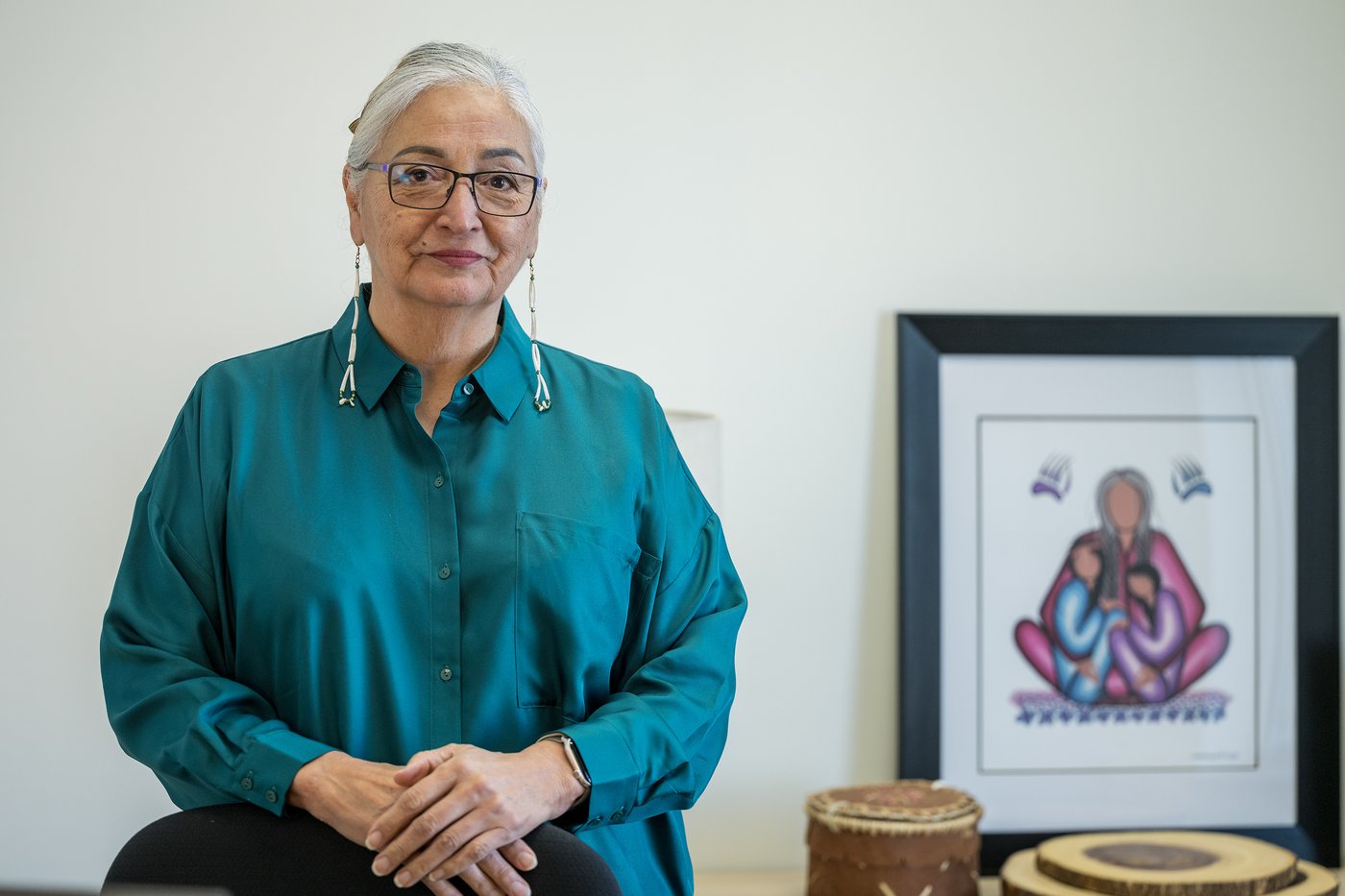
OTTAWA — When Dorothy Myo attended her first English-speaking school at age five, she struggled to understand the differences between “farm” and “barn,” “nowhere” and “now here.”
Her parents didn’t speak English. Neither did she. Her childhood home in Saulteaux First Nation was filled with the sounds of Cree and Saulteaux, a dialect of Anishinaabemowin.
“At times my mother would speak Saulteaux when she didn’t want us to understand,” Myo, a member of Pelican Lake First Nation, told The Canadian Press. “We totally understood.”
Experiences like Myo’s are less common these days, as the number of first-language speakers of Indigenous languages in Canada continues to decline. UNESCO considers nearly all Indigenous languages spoken in Canada to be at risk or endangered.
That’s due in large part to the legacy of residential schools, where Indigenous children were barred from speaking their own languages.
In her new role as commissioner of Indigenous languages, Myo is trying to change that. She takes on the role after decades of serving Indigenous communities, documenting oral histories, collecting stories and researching treaties.
Her own mother signed the Treaty 6 adhesion in 1954 with an “X” because she couldn’t read or write.
“All of this work is so very personal to me,” Myo said from her office in Saskatoon.
It’s personal for a lot of people. For former residential school students relearning the languages that were taken from them, it’s a personal struggle against grim memories of church-run facilities that were often rife with abuse.
For the teachers trying to pass these languages on to young people, it’s a battle against the passage of time and the loss of elders who grew up steeped in Indigenous languages.
In 2021, roughly 240,000 Indigenous people told Statistics Canada that they could speak conversationally in an Indigenous language — a drop of about four per cent since 2016.
In British Columbia, many Indigenous languages had fewer than 1,000 speakers. Tlingit, for example, was spoken by just 20 people.
When The Canadian Press reported earlier this year that the federal government had ordered a financial audit of the arm’s-length Office of the Commissioner of Indigenous Languages, some questioned whether the office was needed at all.
Anishinaabemowin speaker and teacher Patricia Ningewance suggested that the money now going to the commission could be used more efficiently elsewhere to train people in Indigenous languages.
The passage of the Indigenous Languages Act in 2019 paved the way for the creation of the Office of the Commissioner of Indigenous Languages two years later. The office is tasked with supporting efforts to reclaim, revitalize, maintain and strengthen Indigenous languages.
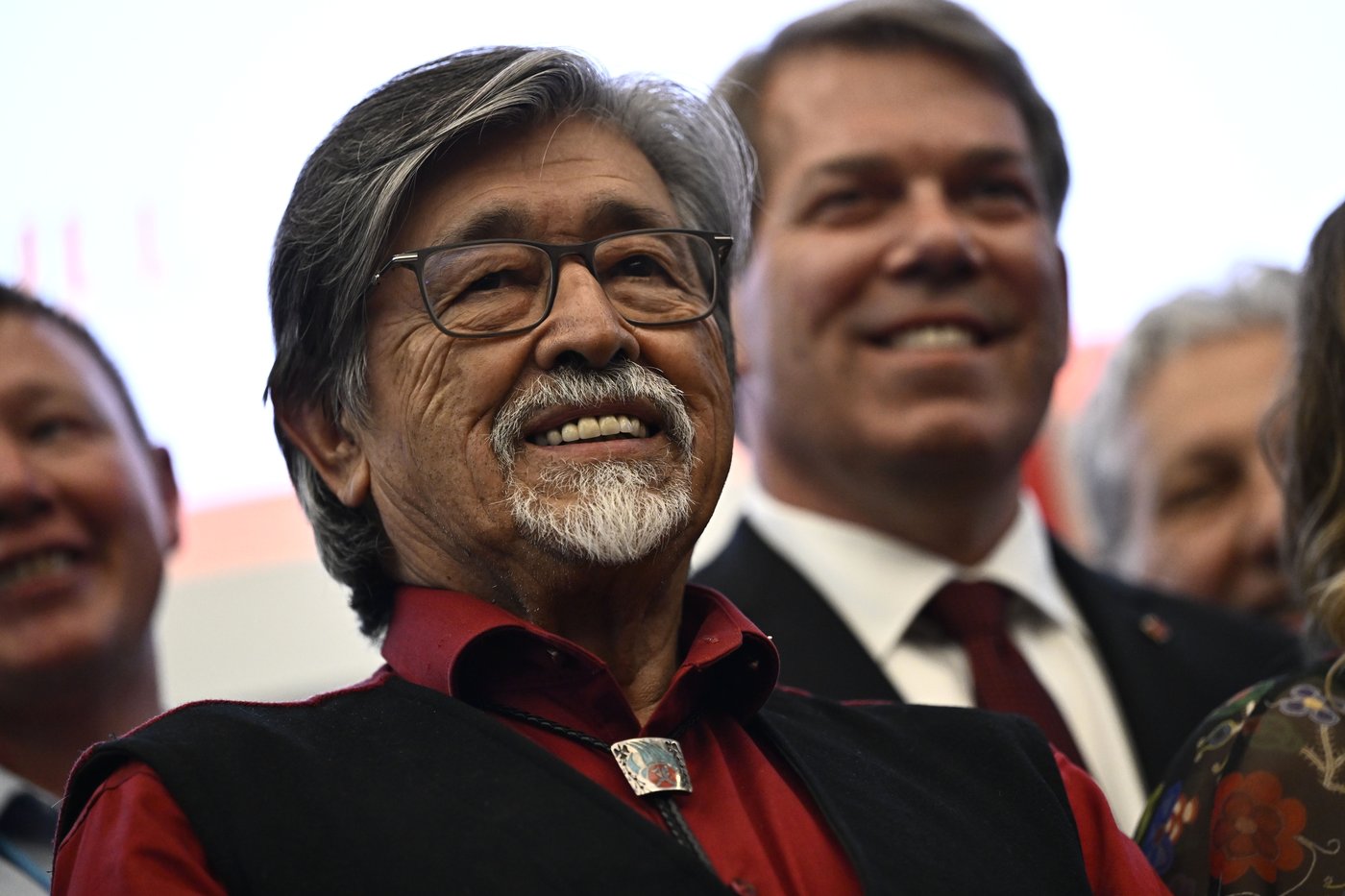
Half a dozen sources, including former employees, told The Canadian Press that the commissioner’s office has failed to move the needle on strengthening Indigenous languages and supporting research. Instead, they said, the office focused on extensive travel and hosting one big conference that cost $10 million.
Audio recordings and documents obtained by The Canadian Press indicate Myo’s predecessor Ronald Ignace, the commission’s directors and other senior officials were told several times by former employees about the organization’s allegedly flawed human resources processes.
The documents allege harassment claims went unresolved and staff perpetuated a toxic workplace by micromanaging and undermining junior employees and workplace investigations.

Ignace’s term of office expired in July, along with those of the office’s directors. Ignace has said that while the office faced challenges, it succeeded in laying the foundations for the work of strengthening Indigenous languages.
The Canadian Heritage department appointed Candice St-Aubin, a former executive with Indigenous Services Canada, as interim commissioner. Myo was named to the role five months after Ignace’s departure. The director positions have yet to be filled.
Myo said she’s keen to meet with Ignace and called him a well-respected language expert and leader in his community.
She said her immediate focus is twofold: to listen to communities and to strengthen the trust and accountability mechanisms within the office. She said she understands the scrutiny of financial management and internal operations.
“Public and community trust is foundational to our mandate, and that is something that I’m committed to having — full transparency, sound stewardship of our resources and ensuring that our internal governance meets the integrity of the languages we serve,” she said.
She said the office is working closely with Canadian Heritage on a review of the Indigenous Languages Act and has completed an external review of policies on human resources and procurement.
There are new policies in place for procurement, including for disclosures of conflicts of interest, she said, and a code of ethics to ensure clear decision-making on financial resources.
“I think that’s something that will be good and will help us maintain that trust with communities and the people that we serve,” she said.
The Office of the Commissioner of Indigenous Languages is based in Ottawa but Myo said the work can’t really be done from there.
Myo said she wants to focus on the basic problem: communities are losing Indigenous-language speakers faster than they’re being trained. She said she sees the office working more on teacher training and immersion, and helping to supply teachers with the materials they need to pass on their knowledge.
She said she’s looking abroad for models. Olelo Hawaiʻi, the Indigenous language of the Hawaiian Islands, was revitalized through early learning and elementary and high school immersion programs. Similar programs are being used for the te reo Maori language in New Zealand.
Myo said that while the Indigenous Languages Act could be a starting point for similar revitalization efforts here, that work has been held back by the fact that Indigenous languages are not protected in Canada the same way French and English are.
“We need to get there, and funding and resources are certainly a major part of that,” she said.
Myo said she’s looking forward to speaking with First Nations, Métis and Inuit organizations about the work they want to see the office undertake, and that she will do what she can to advocate for their needs and interests.
“Our languages carry our laws, our history and our identity as peoples. When an Indigenous language is spoken, a nation is standing tall,” she said.
“My commitment is to ensure every generation has the support to speak their truth in their own tongue … This work is sacred work that we’re involved in, and we will approach it in a way that makes sure we give it the respect and the dignity and the work that it deserves.”
This report by The Canadian Press was first published Nov. 28, 2026.
News from © The Canadian Press, . All rights reserved.
This material may not be published, broadcast, rewritten or redistributed.

This site is protected by reCAPTCHA and the Google Privacy Policy and Terms of Service apply.
Want to share your thoughts, add context, or connect with others in your community?
You must be logged in to post a comment.