

North Okanagan farmers may see some relief after drastic water restrictions

Vernon area farmers were hit hard with steep water restrictions this month, but they may be getting some relief.
The rules came in amid a region-wide drought and saw North Okanagan agricultural property owners ordered to reduce their water use by 70 per cent. After meeting with the BC Fruitgrowers’ Association this week, farmers could see a compromise.
Executive director Adrian Arts said the Greater Vernon Water Utility’s cuts would still be in place, but farmers may be able to trade off their allotted limits. Meaning someone who uses less than their allowance can pass it off to someone else.
“The communication has increased quite a bit, but they still have a major water issue that’s not going away in Vernon,” he said.
Arts said he’s still in talks with Vernon area officials about the situation, along with East Kelowna farmers and city officials.
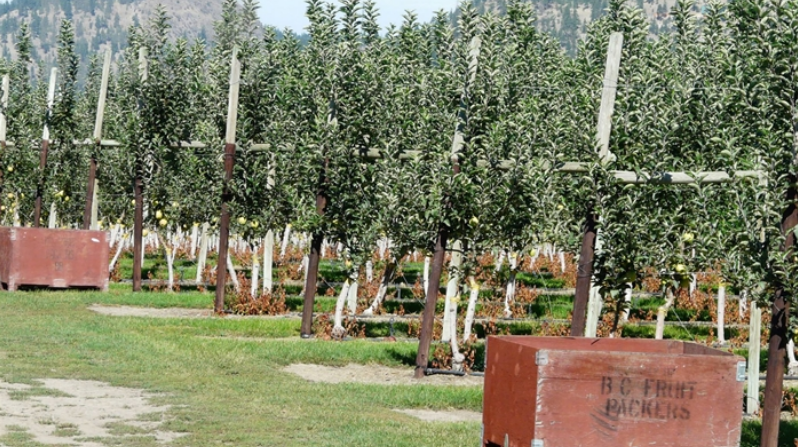
Orchardists weren’t the only ones affected by Vernon’s sweeping restrictions, but the association previously said the cuts wouldn’t just affect this season’s crops, they’ll risk orchard survival.
The North Okanagan region isn’t the only area facing difficult drought conditions, with much of the Okanagan seeing low snowpack levels this spring, but they do have they harshest water restrictions.
“If that was me, I’d have all my pumps on as much as I could, I’d have my wells on as long as I could, just to take the edge off and get a few more acres irrigated, and those systems will recover,” Black Mountain Irrigation District administrator Bob Hrasko said.
Hrasko manages the largest water utility in the region that’s not municipally-owned. The utility manages water services for the Black Mountain community and parts of Rutland in Kelowna.
He said customers will have sufficient water throughout the season with just some restrictions, but that wasn’t without some adjustments, like drawing from wells.
“You just hope these droughts aren’t going to be like what happened in the 1930s, with several years in a row like that,” Hrasko said.
He added that it’s because of Okanagan farmers that the region grew in the first place. They use water systems put in place for orchards a century ago.
“They put that in and then the town grew up on those systems. People forget that,” he said.
“In terms of looking after farmers, tourism doesn’t happen if you don’t have orchards and vineyards. The lake by itself with the dry desert around isn’t the oasis that Kelowna looks like on tourism ads. So, farmers need more respect.”
News from © iNFOnews.ca, . All rights reserved.
This material may not be published, broadcast, rewritten or redistributed.

Join the Conversation!
Want to share your thoughts, add context, or connect with others in your community?
You must be logged in to post a comment.