Elevate your local knowledge
Sign up for the iNFOnews newsletter today!
NEW YORK, N.Y. – Opening statements are ready to begin in the first trial to result from hundreds of federal lawsuits brought against General Motors after faulty ignition switches led to massive recalls.
The attorney for an Oklahoma man hurt in a 2014 crash plans to tell a jury Tuesday that the faulty switch led to his client’s injuries when air bags failed to deploy. The automaker will argue an ignition switch was not to blame for any injuries after the man’s 2003 Saturn Ion was run off the road by another driver.
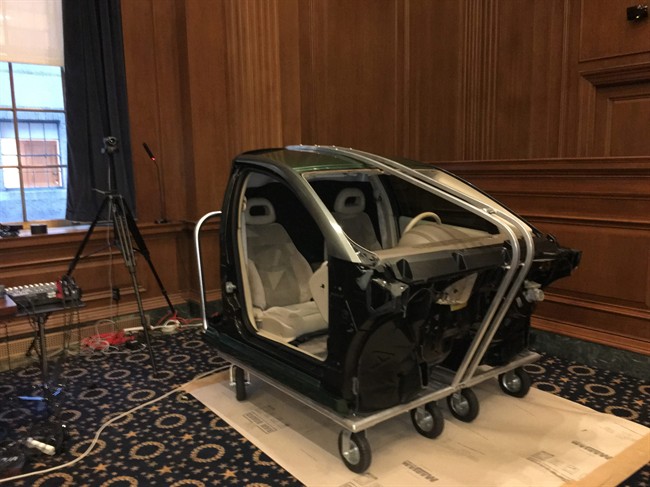
The Manhattan federal court trial is expected to last a month. Although the car in question has been destroyed, a large section of a similar car is resting in the courtroom for demonstration purposes.
The trial is the first of six scheduled throughout this year to narrow legal issues so other cases involving more than 1,000 people can be settled.

It focuses on a May 28, 2014 crash that injured Robert Scheuer after he was run off an Oklahoma highway by another driver.
A decade after learning of the ignition switch defect, the auto company revealed in 2014 that the flaw in Chevy Cobalts and other small cars necessitated an unprecedented recall. The switches can slip out of the “on” position, causing the cars to stall, knocking out power steering and turning off air bags.
In September, GM announced it had reached a deal to settle 1,385 death and injury cases for $275 million and a class-action shareholders’ lawsuit for $300 million.
In 2014, GM issued 84 recalls covering more than 30 million vehicles, including 27 million in the U.S.
News from © The Associated Press, . All rights reserved.
This material may not be published, broadcast, rewritten or redistributed.

This site is protected by reCAPTCHA and the Google Privacy Policy and Terms of Service apply.
Want to share your thoughts, add context, or connect with others in your community?
You must be logged in to post a comment.