Elevate your local knowledge
Sign up for the iNFOnews newsletter today!
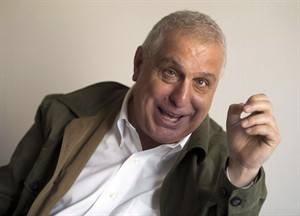
TORONTO – Filmmaker Errol Morris spent more than 30 hours interviewing former U.S. defence secretary Donald Rumsfeld for his new documentary “The Unknown, Known,” over which time Morris struggled mightily to penetrate the career politician’s veneer of non-disclosure.
On the other side, it takes only a few minutes of conversation with Morris for the Academy Award winner to offer up his unvarnished opinion of Rumsfeld, who was instrumental in the United States’ military operations in Afghanistan and Iraq.
Searching for truth in Rumsfeld’s answers was like “looking for deep structure in a bowl of oatmeal,” Morris quips. Making the film left the veteran filmmaker worried, he says, because he realized that “our democracy comes down to a confederacy of dunces.”
Well, he had other reasons to fret.
“We were always worried that we were going to be sent to one of the stands and my toenails would be pulled out with red-hot pincers,” Morris said in an interview during the Toronto International Film Festival.
“I feel guilty. I feel guilty that I’m not in love with the guy. I feel like you can’t spend 30-plus hours of interviews and then simply say that he’s a bad guy — but I don’t know what I’m supposed to do in this instance. I really don’t.”
Morris is conflicted largely because Rumsfeld proved such a persistently elusive interview subject in the new documentary, which opens in Toronto, Vancouver and Calgary on Friday.
The title refers to an elliptical bit of epistemological wordplay meant to explain some of the mistakes of the George W. Bush administration, of which Rumsfeld was an integral part.
Only the 81-year-old doesn’t really acknowledge mistakes. Unlike the subject of Morris’s Oscar-winning doc “The Fog of War” — which captured another Secretary of Defence, Robert McNamara, and his remorse for the Cuban Missile Crisis and Vietnam War — Rumsfeld betrays little regret in his actions regarding Vietnam, Iraq or his time working with Bush.
“I would call his answers Rumsfeldian,” said the 66-year-old Morris. “‘What did you learn from the Vietnam War?’ ‘Some things work out, some things don’t.’ ‘Why did you do the interview?’ ‘That’s a vicious question. I don’t know.’ ‘Maybe we shouldn’t have gone into Iraq?’ ‘Time will tell. Who can say. Que sera, sera. Things happen.’
“It is, as one friend of mine said, a great comic portrait of a lack of self-awareness. If the goal is you make a movie and you’re supposed to come up with deep, insightful, reflective answers, what happens if the person you’re interviewing does not have those deep, insightful, reflective answers?
“Then the movie becomes about something else, but I think something else no less interesting or important or maybe — dare I use the word — profound.”
The film captures Rumsfeld’s semantic mastery, the way he’d twist certain phrases to shape public opinion around governmental policies or redefine arguments in the press.
Morris was left both amazed and terrified by what he saw as Rumsfeld’s craftiness.
“He’s charming. He’s avuncular. He’s well spoken. It would be more palatable if he were just simply, say, an aluminium siding salesman who was trying to convince you to slap aluminium siding on your home,” he said.
“But given that he was in control of the most powerful military apparatus in the history of the world and is working for a president who had the self-awareness of an Airedale, it was indeed worrisome.”
Of course, Morris doesn’t feign objectivity. He vividly recalls the horror he felt when the U.S. invaded Iraq.
“I remember sitting in the Left Bank in a cafe with my wife in Paris at the time of the invasion and I thought, ‘What if some crazy dumbass decides he’s just going to rain weaponry on Paris?’” he said. “Baghdad is a populated area. People live there. It’s a capital of a major country in the Middle East.
“You say, well, we’re going to have these surgical strikes … terrific. Can someone do that?
“It seems to me so crazy and so terrible,” he added. “I remember in the run-up to the war I kept thinking: ‘Oh, he can’t possibly do this. They won’t do this. This has to be a way of just shaking the tree to get concessions. But you’re not really going to go ahead and do this now, are you?’ … It’s all so crazy, it’s all so stupid. History obviously doesn’t count for anything.”
So even though Morris himself acknowledges that he elicited no great revelations from Rumsfeld in his new documentary, he insists the film is relevant.
Meanwhile, he wanted to continue a dialogue with Rumsfeld even after finishing the film, though he hasn’t had much luck.
“I don’t agree with him about a lot of things — I probably never will; I hope I never will — but I think it should be talked about,” he said. “We like to think that OK, Bush is now a dim (memory). Obama has been twice elected to the presidency. It’s all over with, this bad chapter in American history with this kind of nimbus, this cloud, it’s now passed and the sun is shining.
“I don’t think that’s quite right. … There’s still military tribunals, there’s still the Patriot Act, there’s still the detainees at Guantanamo, there’s still surveillance, there’s still an abrogation of some of the basic civil liberties that define (my) country. Those things are still very much in place and they change the whole nature of debate.
“Civil liberties seem to be a cornerstone to me of what was great about America, and if that’s all gone, like, bye-bye, then what? I could just as well be living in Uganda.”
Follow @CP_Patch on Twitter.
News from © The Canadian Press, . All rights reserved.
This material may not be published, broadcast, rewritten or redistributed.

This site is protected by reCAPTCHA and the Google Privacy Policy and Terms of Service apply.
Want to share your thoughts, add context, or connect with others in your community?
You must be logged in to post a comment.