Elevate your local knowledge
Sign up for the iNFOnews newsletter today!
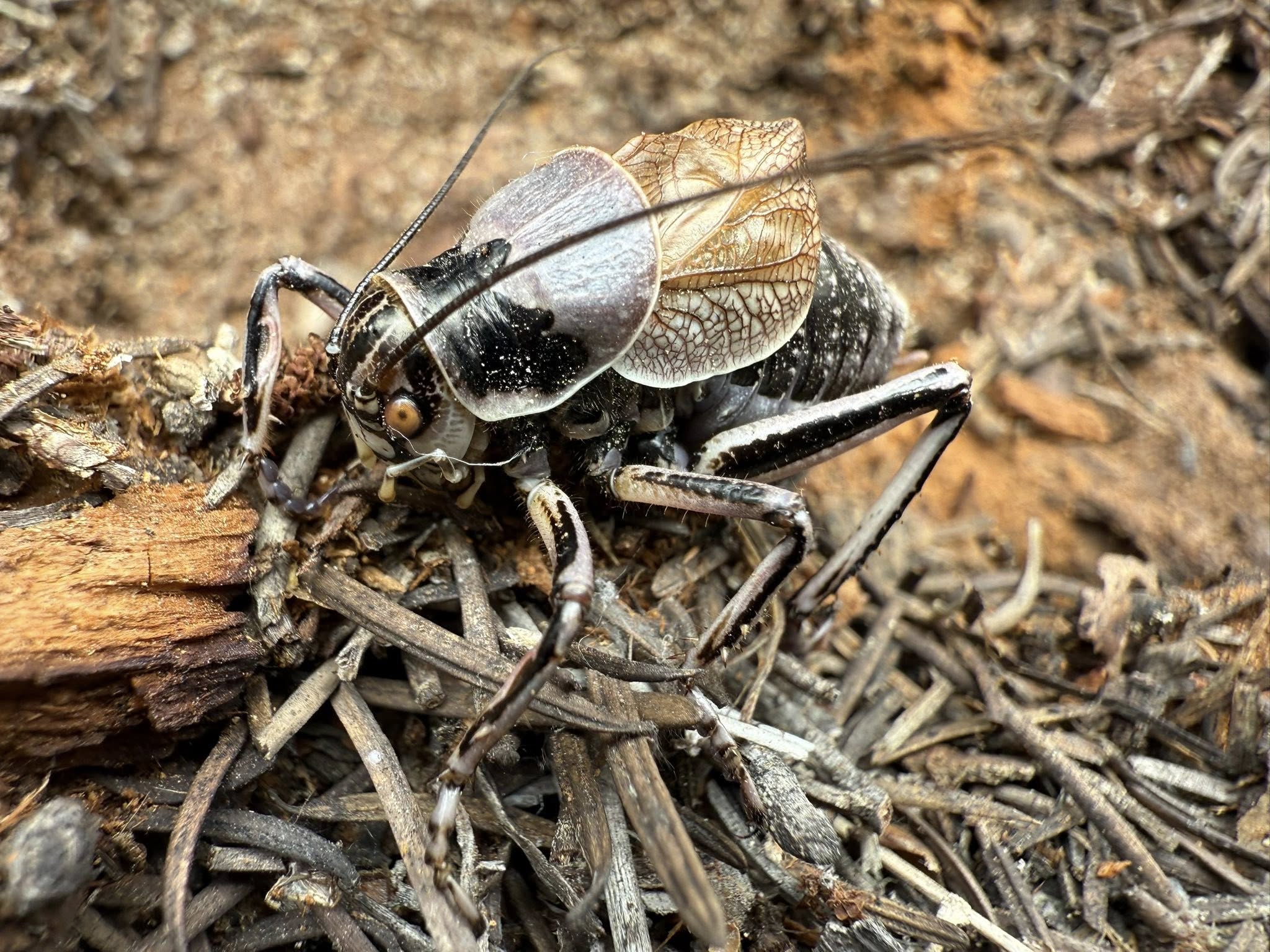
Penticton amateur entomologist Luka Bevanda’s hobby is to explore the hills around the South Okanagan looking for interesting bugs.
This month he discovered a great grig in the Summerland area, a fascinating looking species of cricket he has been looking for since finding one while doing a forestry project in the area a few years ago.
“My coworker was in the bush taking a pee and heard a bug making a weird noise,” Bevanda said. “The grig crawled out of the hole he was peeing on. It was making a loud chirping noise with its wings and looked like an alien.”
He took a picture of the alien-looking critter and posted it on iNaturalist, a free global database where people can share photos of organisms they find to get them identified by naturalists, citizen scientists and biologists.
“A professor out of Alberta who is an expert in the great grig identified it for me and I’ve been obsessed with them since,” Bevanda said. “I’ve spent a lot of time flipping over logs looking for them.”
During his spring break from medical school in May, Bevanda went out looking for the grigs.
“In my experience, great grigs like to hide under logs in flat, cool areas without too much overgrowth,” he said. “I found an area like this in Summerland and think I found at least 11 in one spot after spending three hours looking.”
A species in the cricket family, great grigs are one of three species of hump-winged grigs found in coniferous forests in northwestern North America, according to What’s That Bug. The insects are less than three centimetres in length, with short, flightless wings and humped backs.
The creatures are known for their interesting mating habits, according to iNaturalist, with the males perching on tree trunks rubbing their wings together to make high-pitched mating trills at night. When a female mounts the male, he uses hooks on his back to keep her on. During copulation the female eats the male’s hind wings and drinks his hemolymph, or body fluids, for energy.
Bevanda is moving to Kamloops next week to take the family medicine residency program out of Royal Inland Hospital.
He said he is eager to explore new ecological areas where he hopes to find more great grigs.
News from © iNFOnews.ca, . All rights reserved.
This material may not be published, broadcast, rewritten or redistributed.

This site is protected by reCAPTCHA and the Google Privacy Policy and Terms of Service apply.
Want to share your thoughts, add context, or connect with others in your community?
You must be logged in to post a comment.