Elevate your local knowledge
Sign up for the iNFOnews newsletter today!
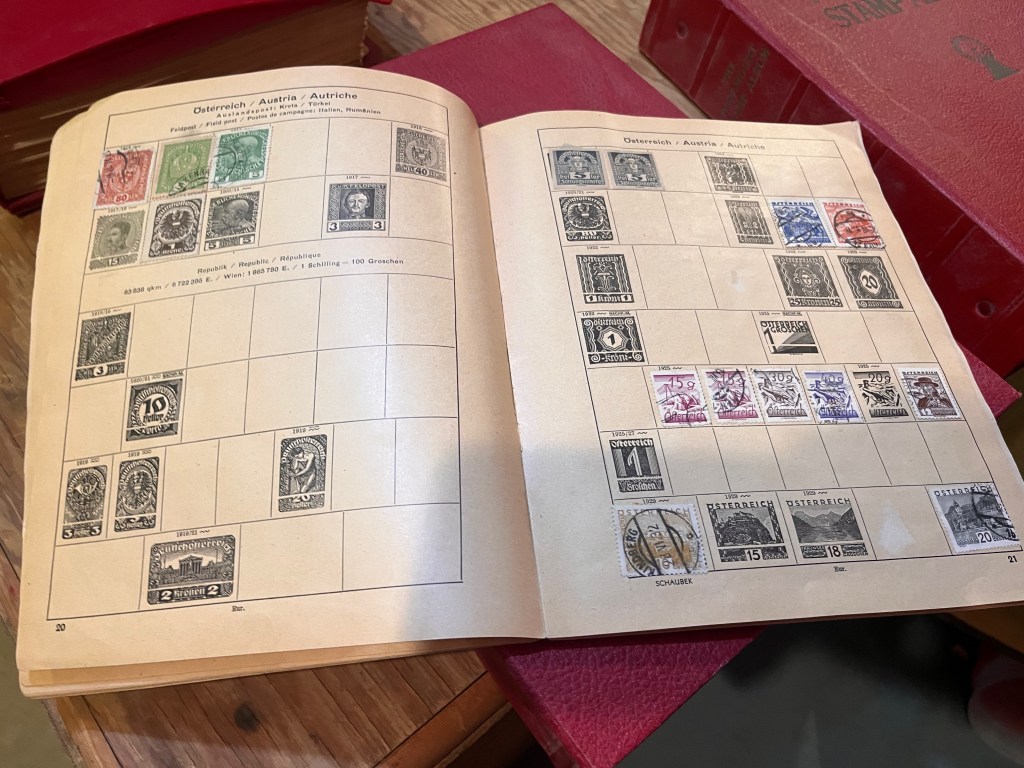
Sitting in a box in the basement of a Coldstream home is a scrapbook of stamps given to the homeowners’ parents by Jewish neighbours when they fled Finland during the Second World War.
The book and the story behind it are a powerful reminder of a traumatic time in world history, but what to do with it as the homeowners clear out a lifetime of possessions isn’t so straightforward.
It’s a question Kelowna resident Jessie Scherle has turned into a business, launching Birdies Estate Services last year.
“It never is just stuff, it’s a story,” Scherle says. “Every item is a story to them, and it’s a connection to their past, and they’ve kept it because it means something.”
Scherle’s job is far more intimate than just clearing out stuff.
She jokes she started the business because her dad bugged her to, but when she ran the idea past a realtor friend who said their clients could certainly use the help, she jumped at it.
With the Okanagan’s aging demographic, many seniors are looking to downsize, and with houses full of a lifetime’s worth of belongings, it can be daunting, overwhelming and very emotional.
“The first question I ask is, what’s your deadline? When do you need to be out of here? And that decision there dictates everything that we do from that point on,” she says.
It’s not an easy question for children to ask their aging parents, but Scherle says having the conversation about what to do with a lifetime of belongings is important.
“Start sooner rather than later,” she says.
As people become attached to their belongings, it can be difficult to let them go.
Scherle says usually when people hire her, they’ve made the decision and are ready to let their stuff go.
“And sometimes they think they’re ready and they’re not,” she says.
And when they’re not ready, she’ll ask them where they’re going to put an item in their new space, and they’ll realize they have no room, they haven’t used it in years, and their kids don’t want it. Then they know it’s time.
“If they’re crying as we’re taking it away, I’m not taking it away,” she says.
However, most people feel relieved when it’s gone.
“My biggest goal through the whole process is that they feel safe, taken care of, and that the process is enjoyable for them,” she said.
Scherle doesn’t just drive up with a truck and take everything away. She and her team individually sort and organize belongings. Clients talk about their lives and the stories behind the belongings they’ve amassed.
As most people in society accumulate a lot of possessions over the years, getting rid of them has become a movement. From the slogan, “reduce, reuse, recycle” to organization expert Marie Kondo who sold millions of books on the subject and had a successful Netflix show about it.
“Decluttering” has become a buzzword of sorts.
But Scherle doesn’t like the term “clutter.”
“I feel like it’s not really honouring… what it is that these people have collected,” she says.
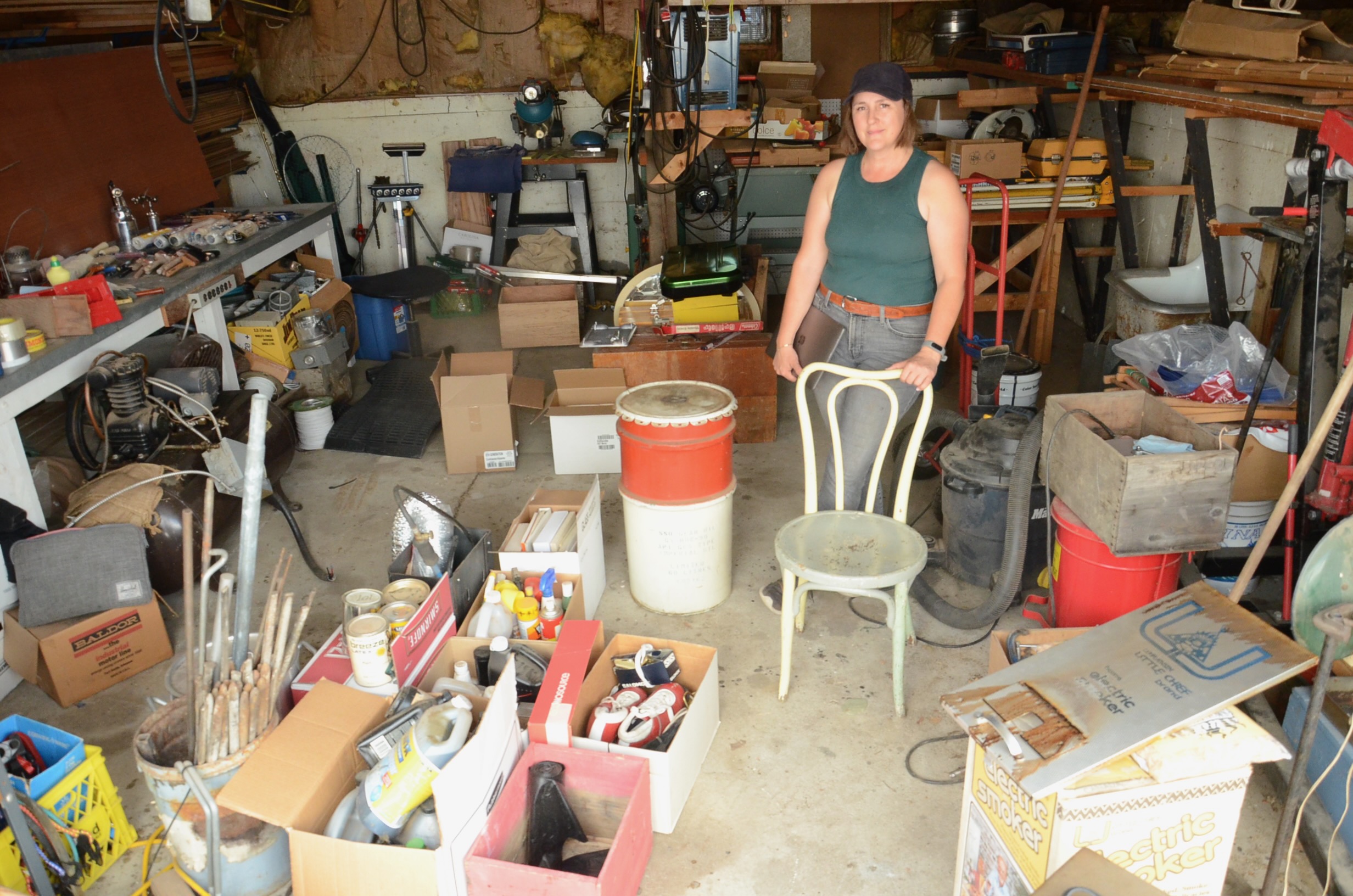
Stepping into the shop and basement of her client’s home in Coldstream, it’s not hard to see why she says that.
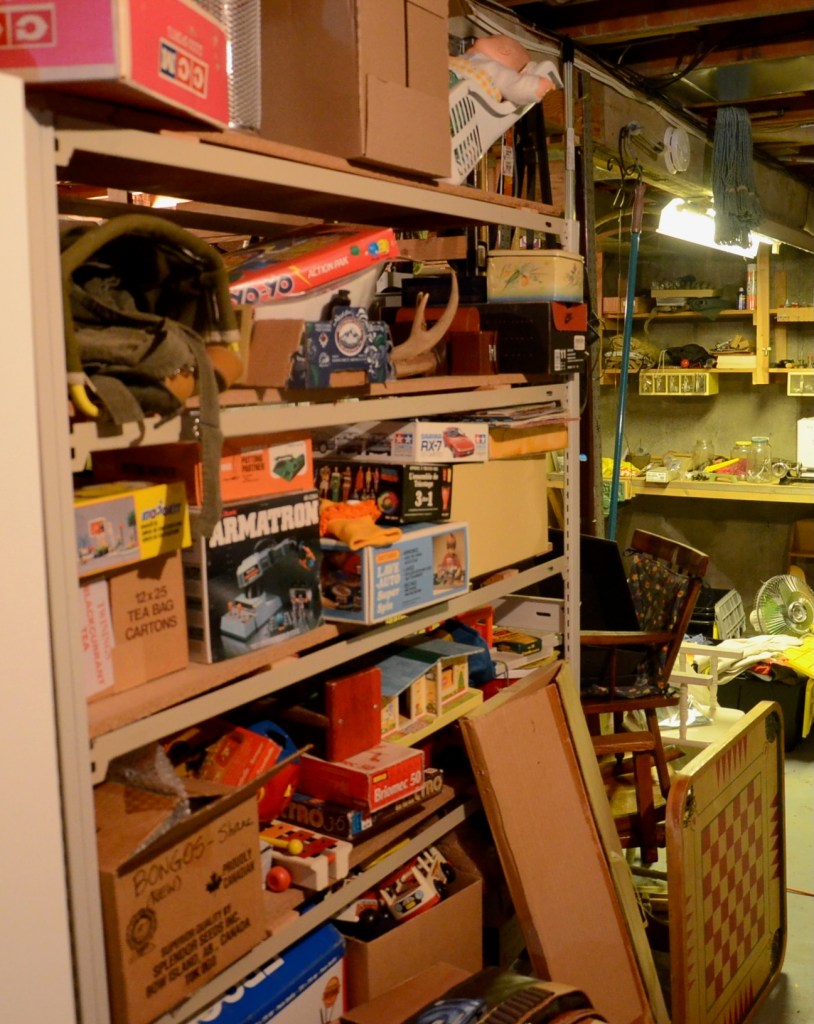
The objects she’s now carefully sorted into themed boxes show a lifetime of hobbies and interests. There’s a whole section dedicated to woodworking, boxes of electrical equipment, lots of painting supplies, and plenty of machinery and tools.
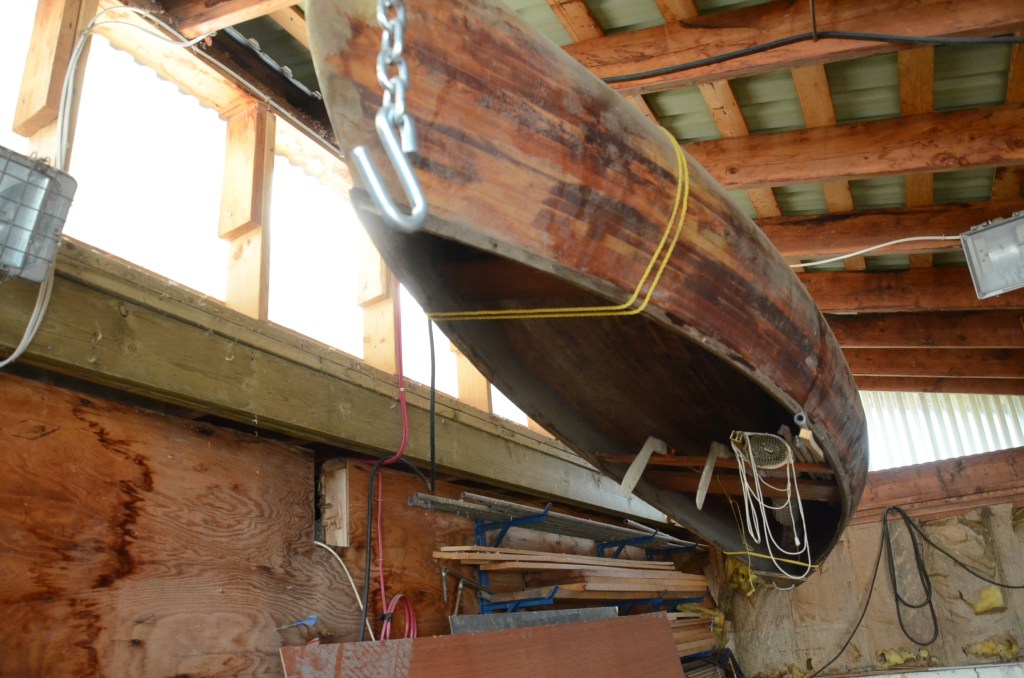
There’s an old wooden canoe hanging from the ceiling and an old wood and iron scale.
Scherle says it’s an orchardist’s scale. “This is handmade ironwork… it’s beautiful.”
Heading through to the basement, the time period changes. There’s an Armatron, a popular early 1980s robot toy still in its box, and lots of 1970s-era Fisher-Price. It’s the sort of room that makes people say, “I remember those” over and over.
While it’s certainly nostalgic, it all looks very overwhelming to try to sort out.
Scherle says she starts by organizing everything into categories and going from there.
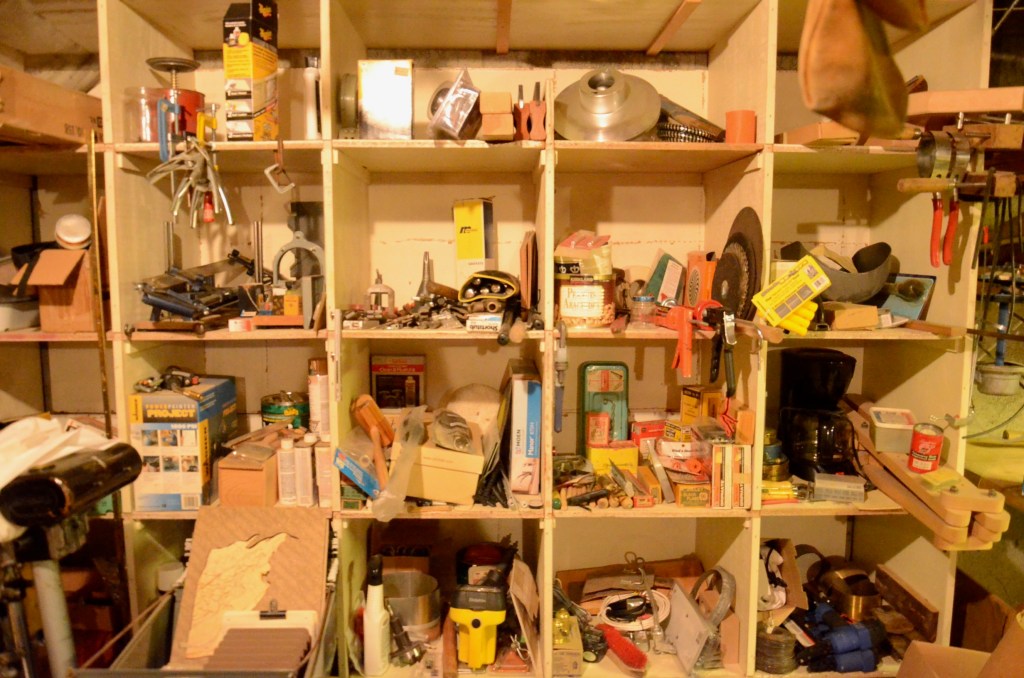
Items worth more than $200 she’ll sell individually, other stuff gets put together as a collection. A few paint brushes are worthless, but an entire set of painting equipment is different.
Over time, she’s made lots of connections for different types of items, and if things don’t sell, they get donated. Very little ends up in the landfill.
She also clearly has an eye for things.
Pulling out a small metal object, she points out it’s an old brass oxyacetylene torch. It works, and she’s sure it’s worth a few hundred dollars.
However, not every little gem is worth money, and people downsizing often have unrealistic expectations about how much their stuff is worth.
“Items go through a cycle of popularity,” Scherle says, and that trend dictates a lot.
A core example is Coca-Cola memorabilia. In the 1980s and 1990s it was very collectible. Coke signs were going for hundreds or thousands of dollars and the company then began to make reproductions to cater to the market that couldn’t afford originals.
“But ironically, it devalued the original because now everybody’s got a Coca-Cola sign in their garage,” she said.
Scherle also only sells in the southern Interior, so the market is far smaller and different from selling across Canada, North America or worldwide.
As can be expected, people often overlook items that do have value.
In the Coldstream basement, the owner put aside a pile of old Carhartt overalls for the thrift store. But they’re not “old” they’re “vintage” and worth a few hundred dollars.
An old sign for the obscure soft drink “Kickapoo Joy Juice” hangs on the wall. It looks worthless, but Scherle says one sold at auction for US$650, and while she won’t get that much, she’s posted it for $200.
While people do care about the money, often people just want to see things go to a good home.
“Connecting with a new buyer is often a part of the experience for them, and it makes them feel really good that the item that they’ve treasured and collected is now going to someone else who will give it a new life,” she said. “They kept it for a while for a reason, and part of it is they wanted to use it, or they thought it was beautiful.”
So why do people become so attached to their possessions?
A 2018 Scientific American article summarizes decades’ worth of psychological studies that show that belongings do many things, from filling emotional needs to being an extension of ourselves. An evolutionary psychologist’s perspective is that humans once kept food for survival, then tools and weapons, so keeping things is part of our evolutionary heritage.
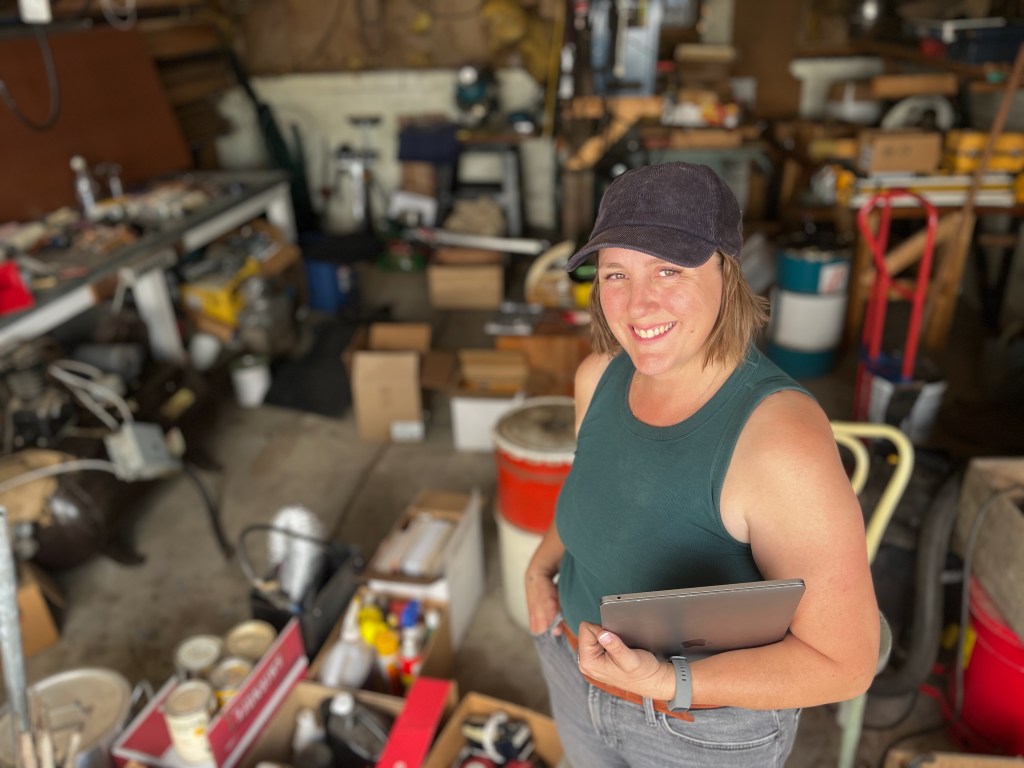
Scherle has a more simplistic viewpoint.
“There’s a time in your life where you’re doing something… and you’ve got this little hobby started,” she says. “And then circumstances change… something happens, life changes.”
People move on to the next thing, always thinking that one day they’ll get back into the original hobby. Then they move on to the next thing, and life changes again.
“I think that people in their lives go through seasons,” Scherle says. “And what I help them with is this specific season.”
For more information about Birdies Estate Sales, go here.
News from © iNFOnews.ca, . All rights reserved.
This material may not be published, broadcast, rewritten or redistributed.

This site is protected by reCAPTCHA and the Google Privacy Policy and Terms of Service apply.
Want to share your thoughts, add context, or connect with others in your community?
You must be logged in to post a comment.












One response
I have to clean out my over stuffed house. I started…to sort into recycling and reusing and tossing. But it isn’t that simple. Selling stuff on marketplace is a nightmare. Giving stuff to thrift shops isn’t fun either. First of all you have to drive to them, not always possible. And then so many times its all refused. And recycling can be a puzzle. Its easier to do what I have a tendency to lean towards…and it’s dead shamefully wrong!!! Stuff massive garbage bags full and when you have those bags stacked up on your deck or basement or spare room…call a private junk man with a pickup and have him haul it all to the dump. So much simpler and faster. But if you have a conscience I don’t recommend this route!