Elevate your local knowledge
Sign up for the iNFOnews newsletter today!
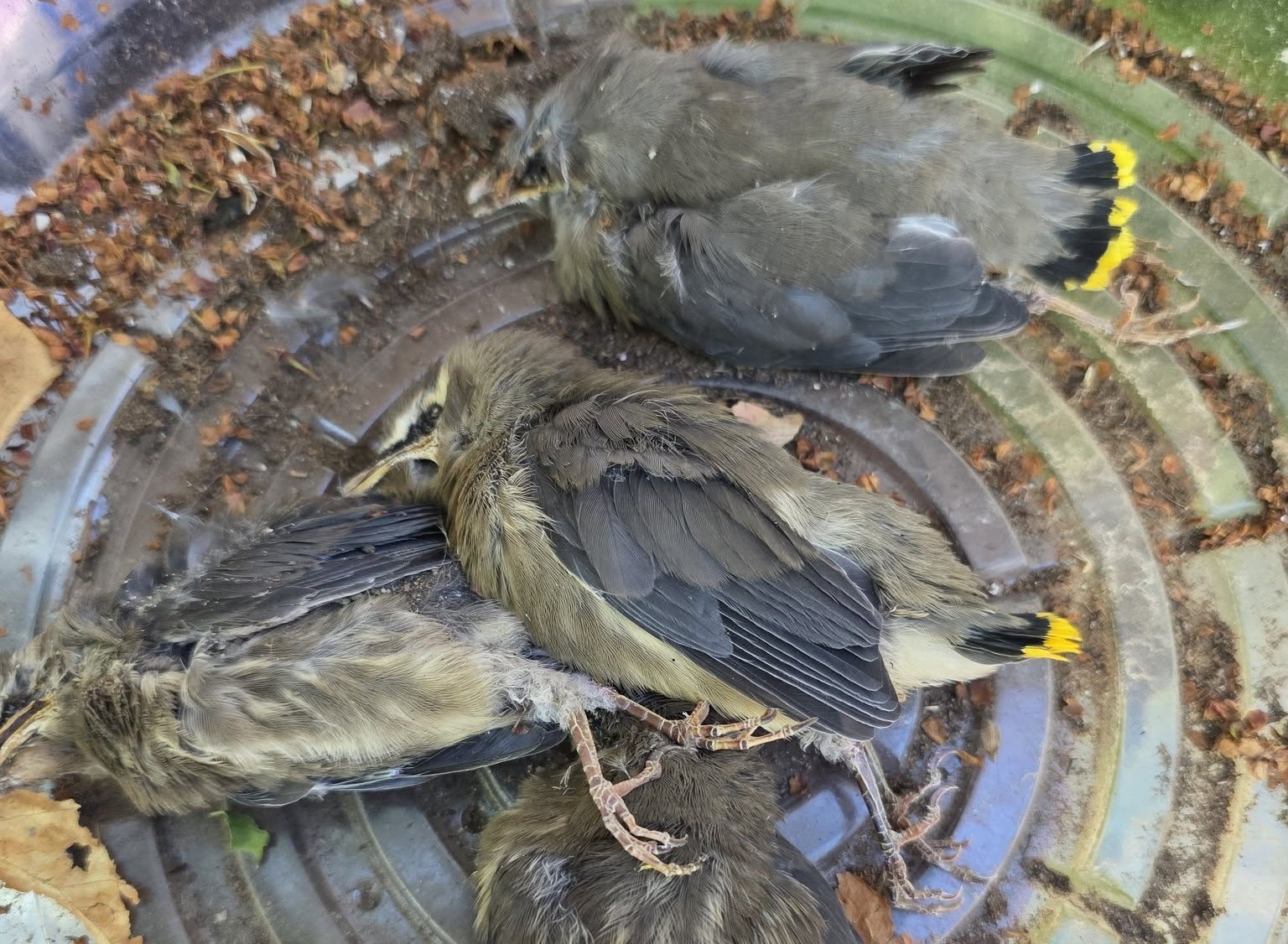
It was early in the morning when West Kelowna resident Laura Egeland went out to her yard to check on her plants and almost stepped on a dead bird.
“I went to go down a step and almost stepped on the first bird, then went to take another step and found three more,” she said. “It was sad. It isn’t often when you find four dead birds all at once.”
Egeland doesn’t have cats around nor a bird bath that could’ve been contaminated and she doesn’t use chemicals on her property. She has two big dogs that keep away rats and animals, and they hadn’t been let out of the house yet that morning on July 10.
“There’s a tree right above where they were lying dead so I was thinking maybe they fell out of a nest,” she said. “It was unusual, I wanted to know what happened to them.”
Concerned, Egeland phoned the City of West Kelowna, who gave her the number for the Wild Avian Mortality Investigation Hotline, part of a provincial interagency program focussed on detecting avian influenza in sick or dead wild birds.
Egeland left a message and later that day was contacted by a Vancouver-based biological technician Xiao Jun Song.
She sent him a photo of the birds that appear to be young cedar waxwings.
“He said he doesn’t think they were attacked and they look like fledglings, they weren’t flying yet,” she said. “He asked if I’d found the mom bird around and was thinking something happened to her. If they’re all dead, chances are they were going through dehydration or hunger so left the nest looking for food and water and died when they hit the ground.”
Egeland was instructed to throw the dead birds in the garbage. She is to keep an eye out for the dead mom or dad bird which would indicate a problem that needs to be tested.
While in this case, the birds appear to have died from natural causes and no further action is required, Xiao said he is happy when the public calls to report these incidents.
“We have biologists all over the province responding to these calls so we can monitor bird health,” he said. “We are tracking diseases like avian flu and salmonellosis, so we like the public to help by reporting if they find something. The most concerning disease is avian flu, so reporting is important.
“In this case, the young birds are nestlings that fell from a tree so we don’t need further testing, we only collect if something abnormal is happening.”
Avian influenza, or H5N1, is a viral infection that harms farmed birds, pet birds and wild birds around the world and there is currently a global outbreak. In Canada, the disease is monitored by the Canadian Food Inspection Agency.
Between December 2021 and July of this year, more than 10 million birds in BC were impacted by avian flu, some of which were domestic birds that died and some that were killed by the agency.
Anyone who finds a sick or dead wild bird is asked to call the Wild Avian Mortality Investigation Hotline at 1-866-431-2473 and leave a detailed message. A biologist will respond and possibly collect the specimen for testing.
Responses are prioritized for reports of three or more dead birds found in the same location, for at risk species, raptors and waterfowl, and for species most susceptible to avian influenza like swans and ducks.
Reports will be recorded and assessed to determine if further investigation is warranted.
“This was a sad thing to find but I was told it happened by no fault of my own,” Egeland said. “I was told to watch my health for the next ten days in case I was exposed to avian flu.”
News from © iNFOnews.ca, . All rights reserved.
This material may not be published, broadcast, rewritten or redistributed.

This site is protected by reCAPTCHA and the Google Privacy Policy and Terms of Service apply.
Want to share your thoughts, add context, or connect with others in your community?
You must be logged in to post a comment.