Elevate your local knowledge
Sign up for the iNFOnews newsletter today!
OTTAWA — Canada’s top trade negotiators remained in Washington Monday for talks as the deadline looms for U.S. President Donald Trump’s latest tariffs to kick in.
Here are some key issues in negotiations.
Supply management
The supply management system that protects Canadian dairy has been cited by the U.S. as a key irritant in trade negotiations and Trump has repeatedly complained about the level of U.S. dairy farmers’ access to Canada’s market.
An annual document published by the Office of the United States Trade Representative in March said U.S. imports above quota levels are subject to “prohibitively high tariffs,” including 245 per cent for cheese and 298 per cent for butter.
Last month, the United States Trade Representative said on social media that “Canada enforces tariff-rate quotas on U.S. cheese that are more restrictive that the tariff-rate quotas imposed on EU cheese into Canada, despite Canada having trade agreements with both the U.S. and EU.”
Prime Minister Mark Carney said this month his government is loyal to the supply management system.
Dairy Farmers of Canada says it’s urging the federal government not to offer any more concessions on dairy or supply management in talks with the United States.
Provincial bans on sales of U.S. alcohol
The annual document from the Office of the United States Trade Representative in March said market access barriers imposed by provincial liquor control boards “greatly hamper” exports of U.S. wine, beer and spirits to Canada.
The document said the U.S. wants its alcohol products to “immediately and permanently” return to all markets.
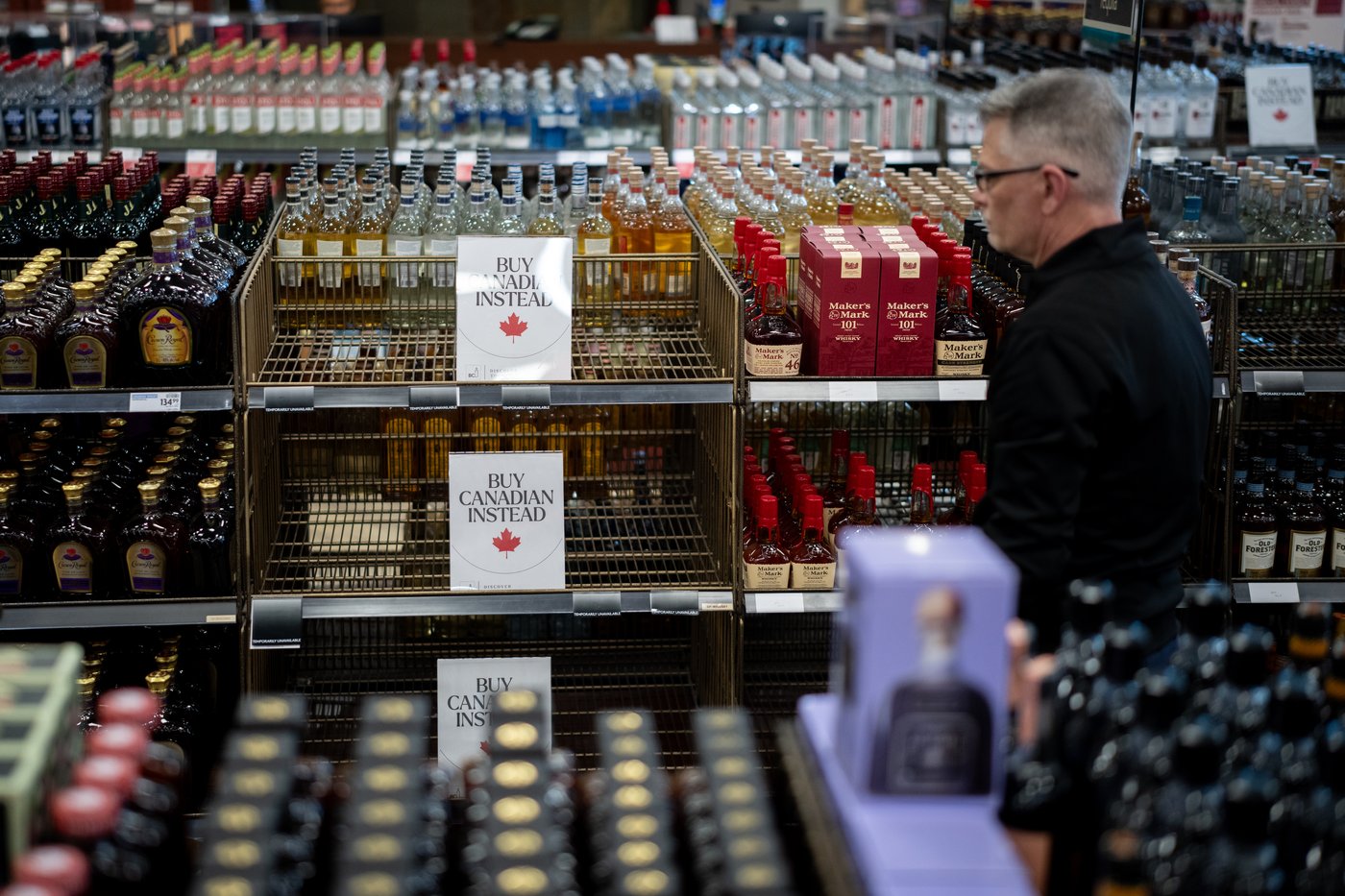
All Canadian provinces pulled American booze from shelves last year after Trump imposed tariffs. Alberta and Saskatchewan have since dropped their ban but the other eight provinces have not resumed stocking U.S. alcohol.
Trump’s executive order to impose the new tariffs on Canadian goods said Canadian imports of U.S. booze fell 81 per cent in the 12 months after the booze bans took effect.
Ontario Premier Doug Ford has said he’ll keep liquor off the shelves until CUSMA is renewed.
The office of Quebec’s minister of finance said in a statement this month that American products will stay off the province’s liquor store shelves until an agreement Quebec considers fair has been negotiated.
“Buy Canadian” procurement policy
The Office of the United States Trade Representative document also raised concerns about the federal government’s “Buy Canadian” procurement policy that aims to ensure Canadian products and workers are prioritized in high-value contracts.
The report said U.S. companies have reported concerns about barriers in competing for contracts, including being forced to share information about their boards of directors or prove their Canadian subsidiary’s independence from a U.S. parent company.
Procurement Minister Joël Lightbound said last year the federal government is “putting Canadian workers and industries first” and will help to ensure Canadian supply chains remain strong.
Carney said at the time the approach would help the federal government “build Canadian” by becoming its own “best customer.”
Quotas on certain U.S. vehicles
Trump’s automobile tariffs have been hammering the Canadian industry and vehicle quotas were put in place in retaliation for Trump’s early rounds of tariffs.
Ottawa allows automakers to import a certain quota of vehicles made in the United States tariff-free, based in part on their level of automotive assembly in Canada. Those quotas are reviewed every three months.
The White House has criticized Ottawa’s decision to impose quotas on tariff-free imports of vehicles from the United States, if they were built by automakers that were moving production out of Canada.
The United States Trade Representative said on social media last month that Canada administers quotas on autos in a way that “compels U.S. auto companies to invest in production in Canada instead of on American soil.”
“This is in response to companies that have reshored production to the United States,” said the social media post.
American fighter jets
Canada’s plan to procure a full fleet of F-35 stealth fighters remains under a political review by Carney’s government.
The review was launched more than a year ago in response to the trade war started by Trump.
Each F-35 jet produced through the global program contains some $3.6 million in Canadian-made components, according to federal government briefing materials.
A federal government response to a House of Commons industry committee report also said the F-35 review is examining potential issues related to sovereign control of drones that would fly alongside the aircraft.
“The ongoing F-35 review is taking into consideration economic and industrial outcomes for Canada, including related to sovereign unmanned systems,” the government report said.
Canada has committed financially to purchasing 16 F-35s out of its planned fleet of 88 stealth jets.
This report by The Canadian Press was first published Aug. 17, 2026.
-With files from Sarah Ritchie, Kyle Duggan, Craig Lord, Alessia Passafiume and Kelly Geraldine Malone
News from © The Canadian Press, . All rights reserved.
This material may not be published, broadcast, rewritten or redistributed.

This site is protected by reCAPTCHA and the Google Privacy Policy and Terms of Service apply.
Want to share your thoughts, add context, or connect with others in your community?
You must be logged in to post a comment.