Elevate your local knowledge
Sign up for the iNFOnews newsletter today!
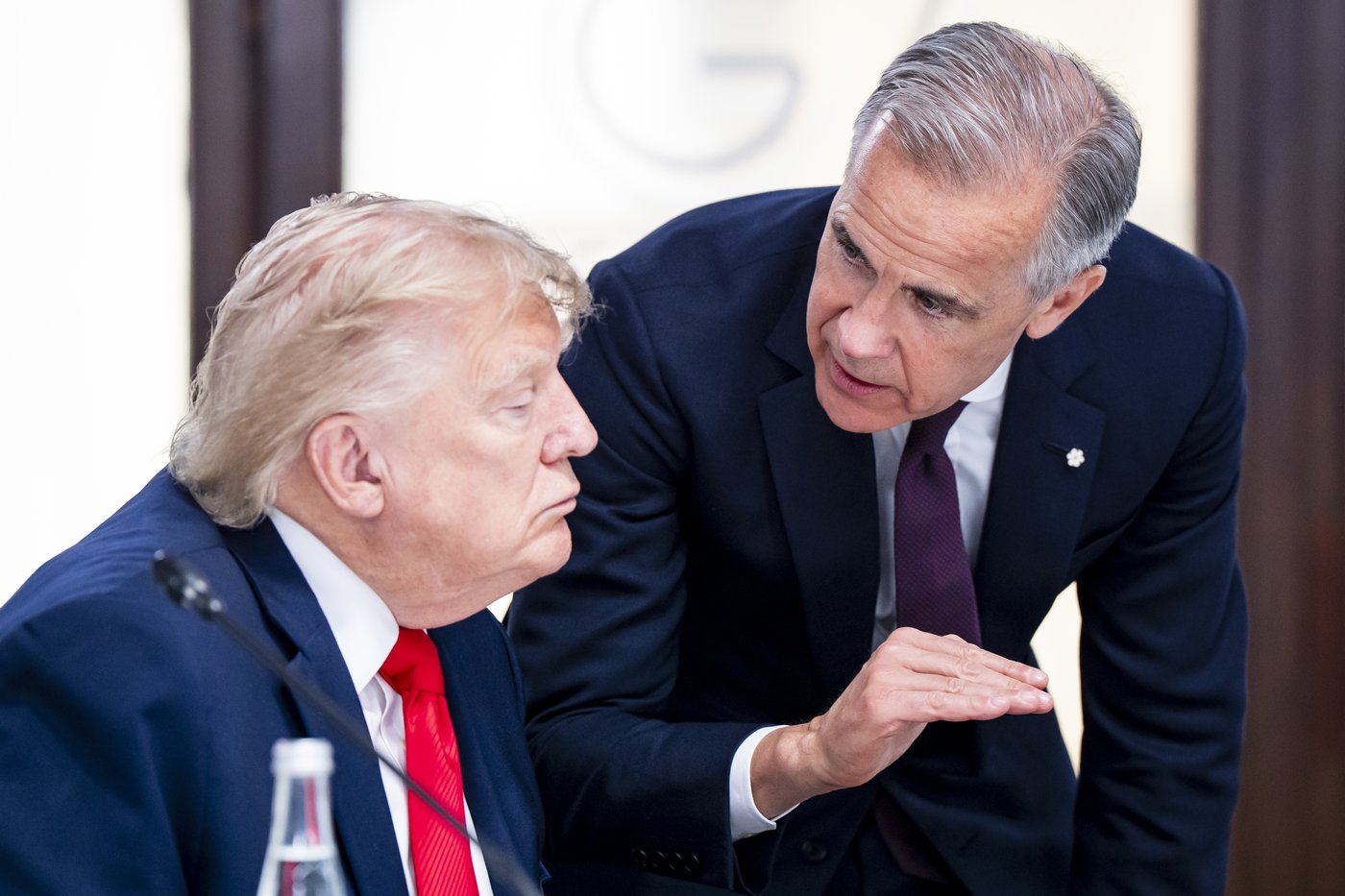
WASHINGTON — U.S. President Donald Trump announced late Tuesday a last-minute deal to delay new tariffs from slamming an array of Canadian products for three days.
Prime Minister Mark Carney said in response there’s still important work to do.
“Over the last number of weeks, Canada has engaged in intensive discussions with the United States to address outstanding trade issues and deliver greater certainty and real benefits for Canadian businesses, workers, farmers and families,” Carney said in a statement.
He said “substantial progress” has been made and Canada is focused on “building a stronger, more independent and more competitive economy at home.”
Carney’s statement came after Trump on social media said the duties were delayed “based on the fact that Canada and the U.S.A., subject to the finalization of documents, have a DEAL!”
The president pointed to the Keystone XL pipeline in his initial social media post, followed by a fictional image of him slamming an illustration of the pipeline into the ground.
“The great Keystone XL Pipeline, long ago killed by Sleepy Joe Biden, may be awoken from the grave!” Trump said in the post.
Former president Joe Biden signed an executive order to revoke the permit for the Keystone XL pipeline, which would have transferred oil from Alberta to Nebraska, over long-standing climate change concerns.
Trump was set on changing that decision upon his return to office. Earlier this year, he signed an executive order for permits to revive parts of the Keystone project.
It’s not clear how much of the trade talks between Canadian and American officials focused on the energy project. Carney spoke with Trump by phone Tuesday, hours before the U.S. was set to bring in the punishing tariffs.
The 50 per cent levies on roughly $28-billion worth of Canadian goods would have targeted a range of products from hockey sticks and honey to wine and cement.
Top trade officials from Ottawa had been in Washington to hammer out a deal with American counterparts to stop the tariffs from being imposed.
Canadian officials were also looking to see relief on existing tariffs that target steel, aluminum, lumber and autos.
It remained unclear late Tuesday what had been agreed to under the tentative agreement Trump announced.
The United States Trade Representative’s office posted on social media that the deal includes “comprehensive market access for all American goods, economic security commitments, digital trade alignment, and many important provisions that will continue to protect our market and American workers, along with our Canadian partners.”
The president in July signed an executive action to hit Canada with the new duties using a Depression-era statute under Section 338 of the Tariff Act of 1930. It had not previously been used for tariffs.
The U.S. said it was responding to a collection of irritants, such as provincial bans on American alcohol, a lack of access for U.S. dairy in Canada’s supply management system and Canadian quotas for tariff-free U.S. auto imports.
The executive declaration to delay the duties, signed by Trump Tuesday, said Canada had “expressed a commitment to remove the discriminations or unreasonable and unequal impositions.”
The two countries have been locked in a tit-for-tat trade battle since Trump took office last year. Canada imposed counter-tariffs in early 2025 in response to American tariffs on steel, aluminum and autos. Carney later rolled back many of the countermeasures.
The auto quotas and the booze bans, which are in place in all provinces except Alberta and Saskatchewan, were part of that retaliation.
In the negotiations, Canada has sought relief on existing U.S. tariffs on metals, autos and softwood lumber — a long-standing sore spot in trade relations between the two countries. The U.S. maintains Canadian lumber receives unfair government subsidies.
Carney and Trump also spoke by phone Monday, though neither Carney’s office nor the White House gave details about either call.
Before the Monday call, the prime minister told an unrelated news conference that Canada was negotiating from a place of strength and referred to the negotiations as “very delicate and intense.”
He also said his government had a plan for any situation.
U.S. Trade Representative Jamieson Greer had warned that the U.S. would not tolerate any retaliation.
Arnold Viersen, the Conservative Party’s natural resources critic, said tariffs and mill closures are causing distress in lumber towns.
“When a mill closes, the consequences extend far beyond the individual workers who lose their jobs. Local businesses suffer, families leave, municipal revenues decline and communities risk becoming ghost towns,” Viersen said in a statement Tuesday.
He called on the government to negotiate a deal with the U.S. that’s good for Canadian workers.
Bea Bruske, president of the Canadian Labour Congress, said staying strong during tense negotiations means being unafraid to walk away from a bad deal.
“Canada must be prepared to hold firm on our interests and our red lines, while also having a clear plan to support workers and communities if tariffs come into effect,” she said in a statement.
This report by The Canadian Press was first published Aug. 18, 2026.
— With files from Sarah Ritchie and David Baxter in Ottawa
News from © The Canadian Press, . All rights reserved.
This material may not be published, broadcast, rewritten or redistributed.

This site is protected by reCAPTCHA and the Google Privacy Policy and Terms of Service apply.
Want to share your thoughts, add context, or connect with others in your community?
You must be logged in to post a comment.