Elevate your local knowledge
Sign up for the iNFOnews newsletter today!
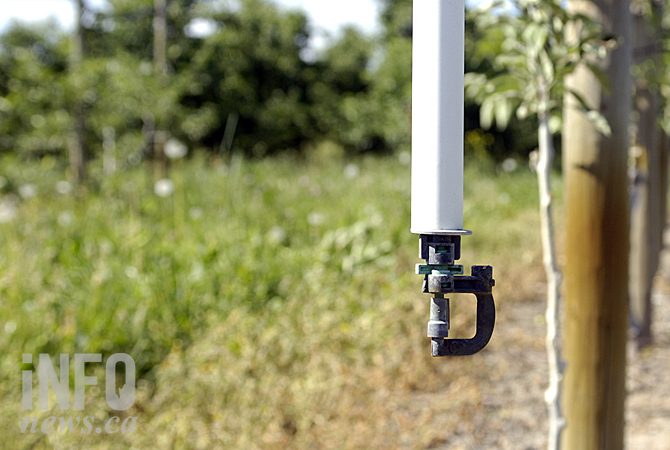
BC’s water minister has some plans to address the Okanagan’s persistent drought, but don’t expect any quick fixes.
Wildfires are the latest in a series of challenges to hit the region as water became scarce and the region is at its driest in years. Multiple cities throughout the Southern Interior have restricted water usage, lakes are at record lows and next year isn’t expected to turn the drought around.
“This year is definitely a wake-up call for a lot of people, but we know this is hard work, and it’s going to take many years to solve,” Randene Neill, Minister for Water, Land and Resource Stewardship, told iNFOnews.ca.
Vernon, where Neill was raised, imposed the harshest restrictions on water use this year, and they came in early. By June, residents couldn’t water their lawns and farmers were ordered to cut their typical water use by 70 per cent.
She didn’t parse words over the reality faced by the region.
“With climate change we’re looking at more extreme conditions. Hotter, dryer in the summer and wetter, more torrential in the winter,” she said. “The conditions are awful.”
With farmers, local governments and conservationists calling for different solutions, Neill said all those options are being explored. Some will take longer than others, but those who spoke with iNFOnews.ca aren’t hopeless when faced with the reality of a changing climate.
BC Wildlife Federation executive director Jesse Zeman said climate change exacerbates “weaknesses” in how the province manages forests and water. The organization has taken on initiatives to build man-made beaver dams, holding back water in the environment.
Neill said the ministry is working with the conservationist group in their efforts to create more wetlands with those dams.
Meanwhile, the Okanagan’s extensive system of reservoirs can help alleviate some of the pressure of droughts on people.
Bob Hrasko of the Black Mountain Irrigation District said it means the severe drought throughout the region reported by the province doesn’t always reflect how much water locals can get from their taps.
While Hrasko said logging in the watersheds that feed Black Mountain reservoirs has led to a faster snowmelt, the network of reservoirs throughout the region mean the severe drought conditions do not always reflect how much water is available.
That doesn’t mean everyone is immune, however, as the Greater Vernon Water utility has record-low reservoir levels and it’s exploring how to ensure everyone still has water.
“We’re talking to local government and producers in that area, and working really closely with the Minister of Agriculture, to see how water is stored, especially underground, throughout the year, how we can take advantage to recharge those areas during the fall and winter,” Neill said.
She said the ministry is exploring the potential for farmers to add dugouts to their properties and ways to store reclaimed water so it can be used for irrigation on golf courses and sports fields.
For Summerland orchardist Deep Brar, president of the BC Fruit Growers’ Association, he’s hopeful for water storage on farms to help alleviate the dry conditions.
“The province is telling us they will be funding a certain percentage for that,” he said. “There are solutions, but there’s no short-term solution.”
While an ease in the region’s drought is on the whim of Mother Nature to reverse, he and Neill both suggested there are realistic ways to meet the need of those competing for an increasingly scarce resource.
In the meantime, the ongoing drought, coupled with wildfire risks, prompted Neill’s ministry to reverse an irrigation shutdown in the Westwold area, where farmers draw on Salmon River to irrigate their crops. It’s a region that has seen frustrations flair between the province and farmers in the past.
“Our committment to the farmers is after the end of this season is we continue to meet all through the fall and winter to look at long-term water storage solutions, so they’re not in this situation year-after-year,” Neill said.
This year, there isn’t enough water to meet the needs of the environment and the farmers who rely on Salmon River.
The BC Wildlife Federation has since said the shutdown was working, but the reversal is putting Chinook salmon at risk. In a news release, the organization said the river is flowing at less than half what it was when the province shut off irrigation taps in 2023.
“Water levels stabilized and even increased while the order was in effect. Almost immediately after it was rescinded, flows began declining again. That’s exactly the pattern we’d expect if reduced withdrawals were leaving more water in the river for fish,” Zeman said in a news release.
News from © iNFOnews.ca, . All rights reserved.
This material may not be published, broadcast, rewritten or redistributed.

This site is protected by reCAPTCHA and the Google Privacy Policy and Terms of Service apply.
Want to share your thoughts, add context, or connect with others in your community?
You must be logged in to post a comment.