Elevate your local knowledge
Sign up for the iNFOnews newsletter today!
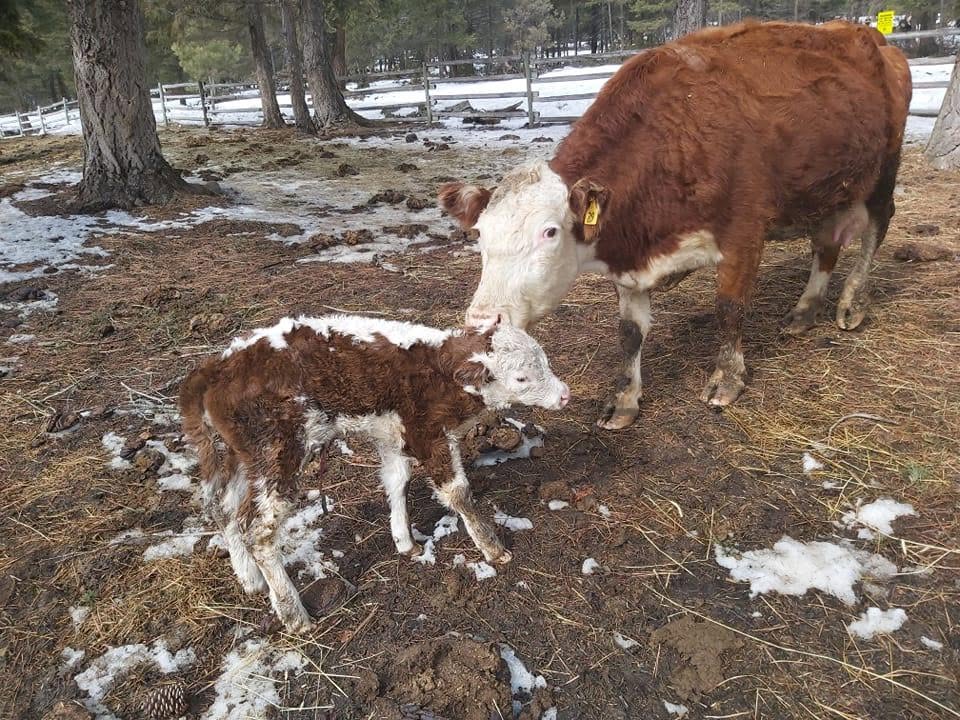
Cattle ranchers in the BC Interior are facing severe water shortages due to drought and for some the future of their livelihood is uncertain.
Suzanna Fradette owns Back Valley Ranch about an hour west of Kamloops. She is also the agriculture coordinator at the Skeetchestn Community School.
Fradette and her husband raise free-range, grass-fed cattle that roam from spring to fall on 20,000 acres of grassland.
This year, the cows have been wandering back to the ranch months before the usual time at the end of August because the natural forage is dead.
“They know its time to come home when the grass dries off but they’ve been coming home pretty much since we put them out there,” she said. “We had to take them off our range and move them around a bit.”
Ranchers typically let their herds graze and grow enough to feed them over winter, but the dry spring and summer have reduced or stopped production.
“We were looking at our records and we had a bit of wet period in 2020, but the last really wet one was in 2017,” she said. “It has been years since we had a wet June and it’s got worse.
“There are ranchers around here that cut off irrigating, and in our case, we spent double the amount of money to irrigate and got a little over half the normal yields. We’re just trying to keep the fields alive.”
Some ranchers draw water from a well or a creek. Fradette draws water from nearby Cultus Lake, which she said has dropped a lot this year, and there wasn’t the usual run-off to use this past spring. She’s one of several farms that pull from two creeks to irrigate during run-off every spring.
“We normally get six to eight weeks of free irrigation with eight sprinklers going,” she said. “This year we had four sprinklers for a couple of weeks, and one of the creeks had nothing. That has never happened.”
The farm hasn’t been able to produce enough feed crop and has to buy hay.
“This isn’t a matter of just going out and buying some hay, this is tens of thousands of dollars,” she said. “We usually only spend 60,000 on hay and we’re looking at almost twice that this year, it’s not a small thing. And that’s if you can even find the hay because it has been a bad growing season all around.”
Lavington resident Kevin Tegart is a member of the BC Cattleman’s Association who manages a program linking livestock producers with suppliers who have feed available that started up in 2023.
“If people are affected by drought and feed shortage, I can help them find supplies and trucks,” he said. “A lot of ranchers already made good contact points for feed when the program started so phone calls have died down a bit.”
Tegart drives around to listen to people on ranches and rangelands who are affected by drought.
“There’s a concern animals will be out of feed and not able to find water so they be coming off the ranges earlier,” he said. “The grass is drier and not as abundant and the water holes they use are dry.
“The smaller streams they use are dried up. We’re in a deficit situation.”
Multiple cities throughout the Southern Interior have restricted water use and lakes are at record lows. This past spring, farms in the Greater Vernon Water service area were told to cut their water use by 70%.
“Where people are normally irrigating there are more yellow fields or portions of them depending on how they manage water,” Tegart said. “Most people had the opportunity to harvest their first cut of hay but anything after that has been a challenge for their second or third cuts if they didn’t have independent water outside of that water authority.”
When a cattle farmer can’t grow crops or afford to bring in hay, they are forced to wean calves early and sell them.
“When a rancher lowers their herd because of a bad year it takes an average of three years to regrow it,” Fradette said. “You have to be able to afford to keep back heifers and they have to get old enough to have babies. It doesn’t just magically regrow the next year.”
She isn’t certain her business can withstand the drought conditions for much longer.
“I’m scared for the future,” she said. “We’re supposed to get another dry year next year and then what? If this happens next year, we’ll likely have to stop selling beef.
“If we’re going to lower our herd we’ll have to get rid of the yearlings and just have cow and calf pairs. We want to keep selling beef but I’m not sure we can, there’s only so much pasture out there.”
News from © iNFOnews.ca, . All rights reserved.
This material may not be published, broadcast, rewritten or redistributed.

This site is protected by reCAPTCHA and the Google Privacy Policy and Terms of Service apply.
Want to share your thoughts, add context, or connect with others in your community?
You must be logged in to post a comment.