Elevate your local knowledge
Sign up for the iNFOnews newsletter today!
The local election results in Kamloops and Kelowna show that there’s a right way and a wrong way to go viral.
Personal, transparent social media campaigns from Brady Rogers in Kelowna and Rob Bertrand in Kamloops outdid flashy stunts from the likes of Teresa May in Kelowna and Dennis Giesbrecht in Kamloops.
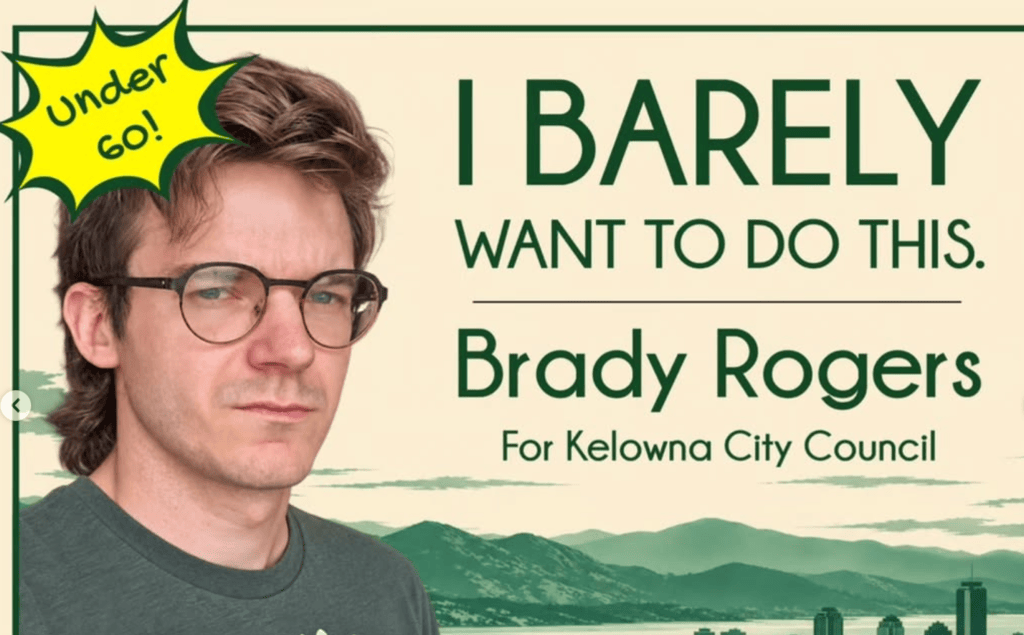
Rogers’ funny campaign signs and social media videos went viral across the country during his campaign and he came out a winner over the weekend. He won a council seat with 12,635 votes.
His campaign wasn’t all about jokes, he followed up his funny advertising with interviews with mayoral candidates where they talked about the issues and he posted videos about his platform.
Rogers previously told iNFOnews.ca that he wanted to give voters “transparency and authenticity.”
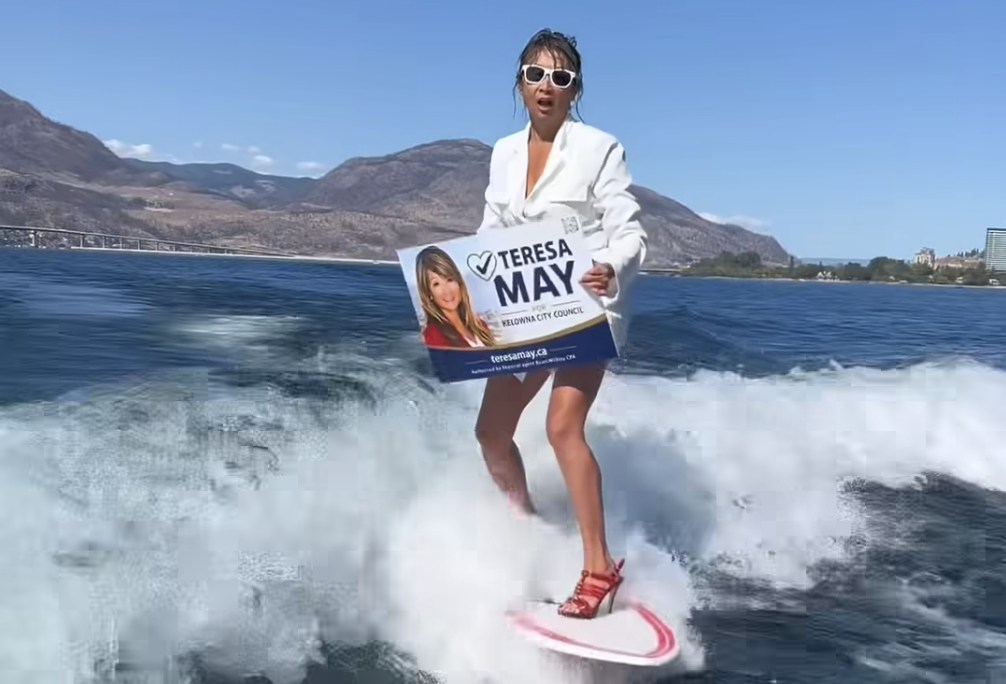
Teresa May’s wake surfing and parasailing stunts got the internet’s attention as well, but with less success. May lost with 7,172 votes which was around 4,000 shy of what she needed to win a seat.
Bertrand in Kamloops had a similar approach to Rogers and it landed him at the top of the polls with 10,932 votes. His campaign was led by his casual social media videos filmed from his vehicle where he took voters along on his day-to-day trying to get elected.
“I won’t copy the politician characteristics, I won’t answer questions vaguely, I won’t buy my views, boost my posts, who you see is who you get and I don’t even like to share my posts to other groups, I’ve only done it a couple times,” he said on social media near the beginning of his campaign.
Like Rogers, Bertrand let voters in to see his personality.
“I wanted to give a mix of content that was my life, just me talking on camera but also focused on this campaign so there wasn’t a linear view of me. I’ve had people tell me I need to focus on traditional aspects of campaigning, but I ultimately lead with my gut feeling,” he said.
Giesbrecht took a more controversial route to gaining virality with a spoof terrorist hostage video that didn’t go over well. He received 7,725 votes, around 1,000 short of what he needed to win a seat.
The races weren’t all about being social media savvy. Incumbent Kelowna councillor Rick Webber and returning Penticton mayor Dan Ashton had minimal social media presence. Ashton let his lengthy record of experience speak for itself, while Webber had name recognition from being both an incumbent councillor and long time news broadcaster in Kelowna.
Webber kept his seat with 12,512 votes and Ashton beat incumbent Julius Bloomfield by 4,477 votes.
It seems artificial intelligence wasn’t enough to push some candidates to the top of the polls.
Kelowna candidate JC Rathwell used AI for his entire campaign and he got 2,926 votes. Incumbent councillor Maxine DeHart posted an AI generated animated skit in the final days of the race and she ended up just 300 votes short of keeping her seat.
Simply being yourself online worked out for candidates like Rogers.
“Thanks everybody for voting for me. That’s pretty cool. I guess I’m on council now,” Rogers said in a video after the results came in.
“I did not start this campaign lightly, as much as it may have seemed… what interests me is not the work, but the opportunity to do some genuine good.”
News from © iNFOnews.ca, . All rights reserved.
This material may not be published, broadcast, rewritten or redistributed.

This site is protected by reCAPTCHA and the Google Privacy Policy and Terms of Service apply.
Want to share your thoughts, add context, or connect with others in your community?
You must be logged in to post a comment.