Elevate your local knowledge
Sign up for the iNFOnews newsletter today!
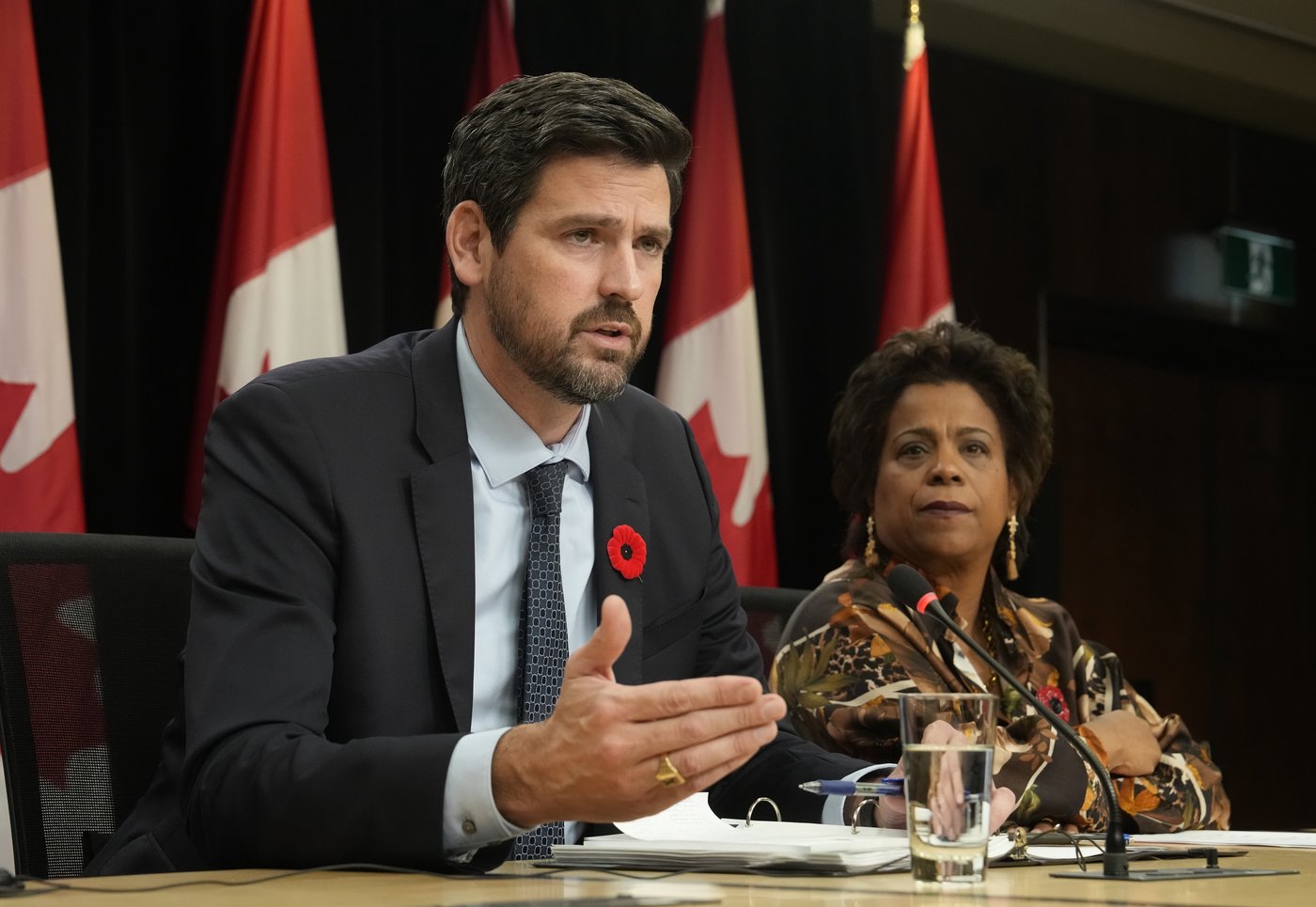
OTTAWA — A new law introduced in the House of Commons on Tuesday would allow Canadians to make advance requests for medically-assisted death — but their access is likely to vary depending on where they live.
Bill C-41 would amend the Criminal Code to allow people to make advance requests to access MAID. It would be up to provincial governments to decide whether to fulfil those requests through their own health systems, and to enact legislation.
Justice Minister Sean Fraser told reporters Tuesday he wasn’t certain how many provinces would do so. Quebec is the only province that already has an advance request regime in place. Alberta has passed legislation to bar the use of advance requests.
“I expect there will be more, but I hesitate to make announcements on behalf of provincial governments who are not here to represent themselves,” he said.
Under Canada’s current laws, a medically assisted death is available to individuals who are at least 18 years old, have a serious and incurable physical illness, disease or disability, and are in an advanced or irreversible state of decline. They also must be able to make a voluntary request and give informed consent for the procedure, including at the time it is administered.
An advance request would allow a person who suffers from a degenerative condition, such as dementia or ALS, to ask that an assisted death be carried out once they no longer have the capacity to consent.
The government said in a press release the decision to request MAID must be “voluntary, free from external pressure, and remain protected by rigorous safeguards.”
Fraser told reporters that while he’s somewhat concerned about the prospect of a patchwork of different rules across the country, he would be “more concerned about extending access without the safeguards in place, including the safeguards that must be legislated by provincial governments.”
The safeguards for advance requests included in the federal bill include a requirement that two independent medical or nurse practitioners agree the person meets the criteria.
The legislation also says the procedure will not be administered “if the person demonstrates, by words, sounds or gestures, refusal or resistance to have the substance administered to them.”
It says if the person demonstrates such refusal or resistance, “medical assistance in dying can no longer be provided to them on the basis of that request.”
Bill C-41 also would stop a scheduled expansion of MAID access to those suffering solely from a mental illness. The government said in the press release that “serious concerns remain about whether these cases can be assessed safely and consistently.”
The government has repeatedly pushed back the date when mental illness could become a qualifying factor for an assisted death and asked a special parliamentary committee to study the issue. The committee concluded in June that people suffering solely from a mental illness should be indefinitely excluded from accessing MAID.
Bill C-41 will need to pass the House of Commons and the Senate before March 17 — the date on which the law states people with a mental illness as their sole underlying condition would become eligible for MAID.
Fraser said Tuesday the consequences of not passing the bill before that deadline would be “extraordinarily serious.”
He said he wants to see the bill pass through the House of Commons before the parliamentary sitting ends in December.
Fraser said this would give “ample time for the Senate, where I know there are individuals who have unique perspectives on this issue, to raise their concern, to participate in debate, but ultimately pass this law before we face the potential consequence of the lapsing of the existing timeline.”
The group Dying with Dignity Canada called the government’s approach to the bill fundamentally flawed.
“By requiring provinces and territories to adopt further legislation before advance requests are allowed in their jurisdiction, the federal government has effectively given each province and territory a veto on advance requests,” the group said in a press release.
It said it’s also concerned that the legislation requires a subjective assessment of intolerable suffering.
“Individuals should be allowed to define what they consider to be physical and psychological intolerable suffering, as part of the advance request, and medical practitioners should base their decision on that objective standard. Any other approach risks ignoring an individual’s documented wishes,” the group said.
Conservative MP Tamara Jansen said on social media Tuesday that MAID in Canada is “already facing serious concerns about failing safeguards, weak oversight and vulnerable Canadians falling through the cracks.”
“Just 20 days ago, the Liberals voted down my bill to permanently stop this expansion. Mental illness and advance requests are separate issues, one has been extensively studied and has broad consensus, the other does not,” she said. “With the March 17 deadline approaching, the Liberals are holding Parliament ransom.”
Fraser said Tuesday the medical practitioners will use their expertise to confirm a person is living with an intolerable level of suffering.
Cardus, a Christian think-tank that opposes MAID, said in a release it was “deeply concerned” about expanding MAID to allow advance directives. It said data is limited because not many international jurisdictions allow the practice.
“Advance euthanasia requests introduce heightened risks for patients and providers, including significant risks of wrongful deaths,” it said.
Disability rights group Inclusion Canada said advance requests “allow assisted death after a person has lost the capacity to consent, leaving consequential judgments about their suffering and expressions of refusal to others.”
The group said it is worried “that discriminatory assumptions about disability, dependence and quality of life could influence those judgments.”
This report by The Canadian Press was first published Oct. 27, 2026.
— With files from Hannah Alberga in Toronto and Catherine Morrison in Ottawa
News from © The Canadian Press, . All rights reserved.
This material may not be published, broadcast, rewritten or redistributed.

This site is protected by reCAPTCHA and the Google Privacy Policy and Terms of Service apply.
Want to share your thoughts, add context, or connect with others in your community?
You must be logged in to post a comment.