Elevate your local knowledge
Sign up for the iNFOnews newsletter today!
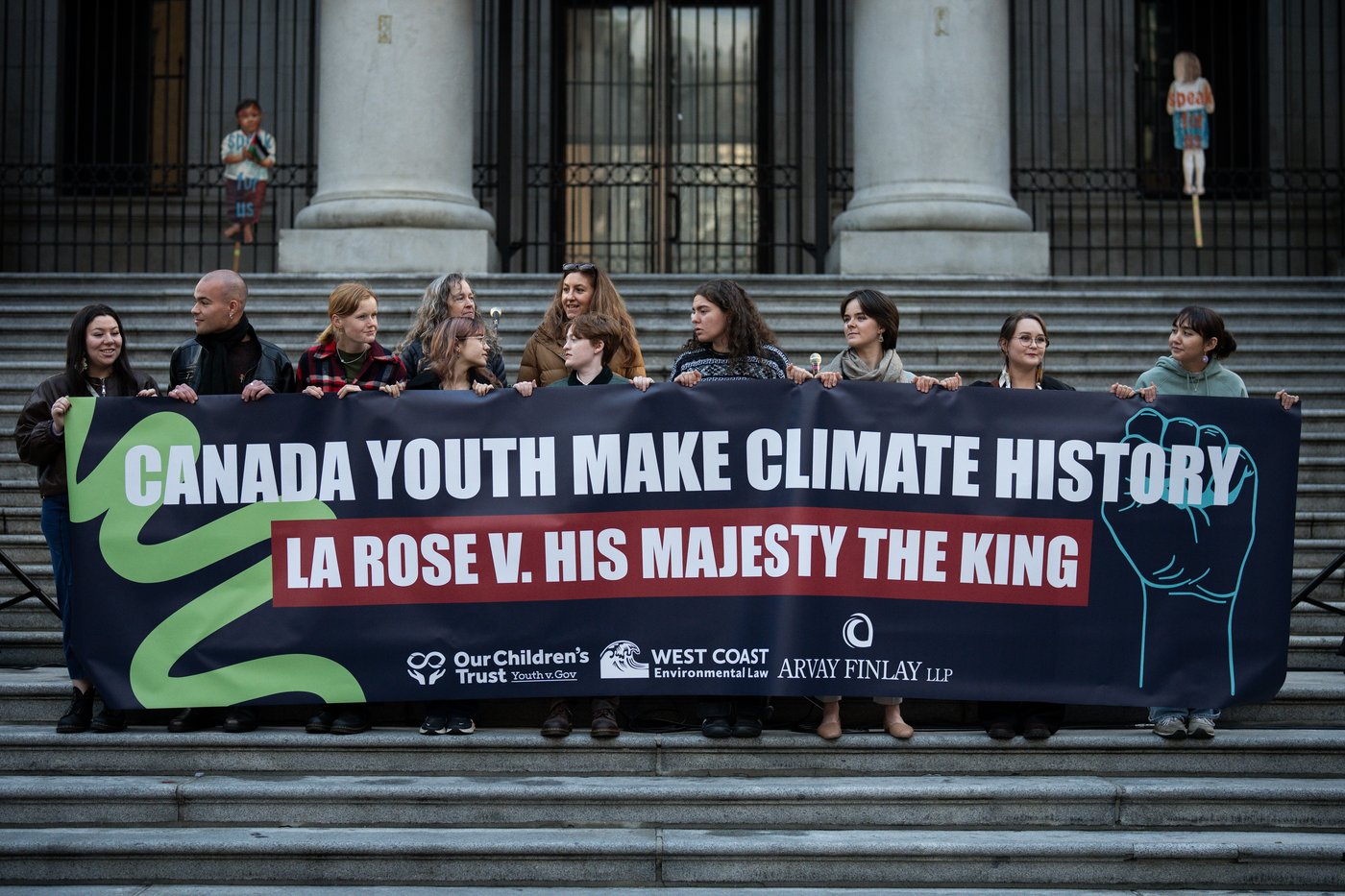
VANCOUVER — A child psychiatrist and pediatrician has described how children are disproportionately vulnerable to the effects of climate change in her testimony at Canada’s first youth-led climate trial.
Dr. Elizabeth Pinsky outlined to Federal Court in Vancouver an array of risks, from susceptibility to extreme heat, air pollution and tick-borne illness to anxiety and depression linked to climate change.
The Boston-based doctor pointed to several physiological factors, testifying that babies and very young children have immature thermoregulatory systems, diminishing their ability to regulate their internal temperature in a heat wave.
Children breathe more rapidly than adults and take in more air pollution relative to their size, said Pinsky, an assistant professor at Harvard Medical School.
There is also a “temporal reality,” she said, as younger people are “simply at increased risk” from climate hazards over the course of their lifetimes.
As climate change worsens, so too will the health harms, she testified on Thursday.
“There’s just no question left in the medical literature about whether that’s true.”
Pinsky is a witness for 15 young plaintiffs in the trial in Federal Court in Vancouver, where they’re arguing that federal legislation violates their constitutional rights by continuing Canada’s trajectory of greenhouse gas emissions.
She described the knowledge that “the people who should be protecting you and keeping you safe and safeguarding your future are not just failing to do so, but knowingly failing to do so” as a unique harm among children.
The plaintiffs’ lawyer, Catherine Boies Parker, told the court in her opening statement on Monday that the case was not about the existence of climate change.
Rather, it hinges on whether the government is “constitutionally required to stop making it worse,” she said.
“The plaintiffs are asking this court to hold Canada legally accountable for its role in continuing and worsening the climate crisis that is causing harm.”
Pinsky also described some of the mental health effects of climate change among young people, including “eco-anxiety,” saying it can include feelings of fear, sadness, grief, anger, and a sense of betrayal and powerlessness.
She explained the term “solastalgia,” meaning “the experience of feeling homesick when you are at home, but home has changed around you.”
Someone might feel a sense of solastalgia when their childhood home is now engulfed in wildfire smoke every summer, Pinsky said.
Nothing could fully protect children from climate harms other than ceasing to burn fossil fuels and halting climate change, she said.
Pinsky is set to be cross-examined by Ottawa’s lawyers on Friday.
Earlier Thursday, the court heard from Stanford University professor Mark Jacobson, an expert in environmental engineering and atmospheric science, who said it is “definitely” possible for Canada to shift to full renewable energy by 2050.
He said the transition is technically and economically feasible, and the obstacles on that course are social and political in nature.
Jacobson has developed sophisticated models and road maps to help cities, states and countries, including Canada, make the shift to renewable energy.
Canada does not need to rely on fossil fuels, he said, outlining how the country could meet its energy demands by tapping “humongous” resources and opportunities in wind, solar and geothermal, along with pre-existing hydroelectric capacity.
Combine that with the electrification of energy and transportation and “Canada can do it,” Jacobson said of transitioning to renewables by mid-century.
“Whether it actually does it by 2050 is more of a social and political question.”
Jacobson said electricity is significantly more efficient than combustion.
“By electrifying everything and providing that electricity from renewables, you use a huge amount less energy. In Canada, it’s like 60 per cent less energy,” he said.
The shift would also slash air pollution and emissions that cause global heating, he said, noting thousands of people die every year from air pollution in Canada.
Jacobson agreed under cross-examination by a lawyer for the federal government that his report prepared for the trial did not present any policy proposals for Ottawa.
He also acknowledged the study did not account for potential “bottlenecks” in Canada’s renewable transition, such as supply-chain constraints.
Jacobson had testified earlier Thursday that his study projected a net job loss for Canada in the shift to renewables, though it wasn’t a comprehensive account.
The figure excluded “the jobs that would be involved in the production of electric vehicles, electric heat pumps, other electric appliances and machines, and also some transmission distribution jobs,” he said under cross-examination.
This report by The Canadian Press was first published Oct. 29, 2026.
News from © The Canadian Press, . All rights reserved.
This material may not be published, broadcast, rewritten or redistributed.

This site is protected by reCAPTCHA and the Google Privacy Policy and Terms of Service apply.
Want to share your thoughts, add context, or connect with others in your community?
You must be logged in to post a comment.