Elevate your local knowledge
Sign up for the iNFOnews newsletter today!
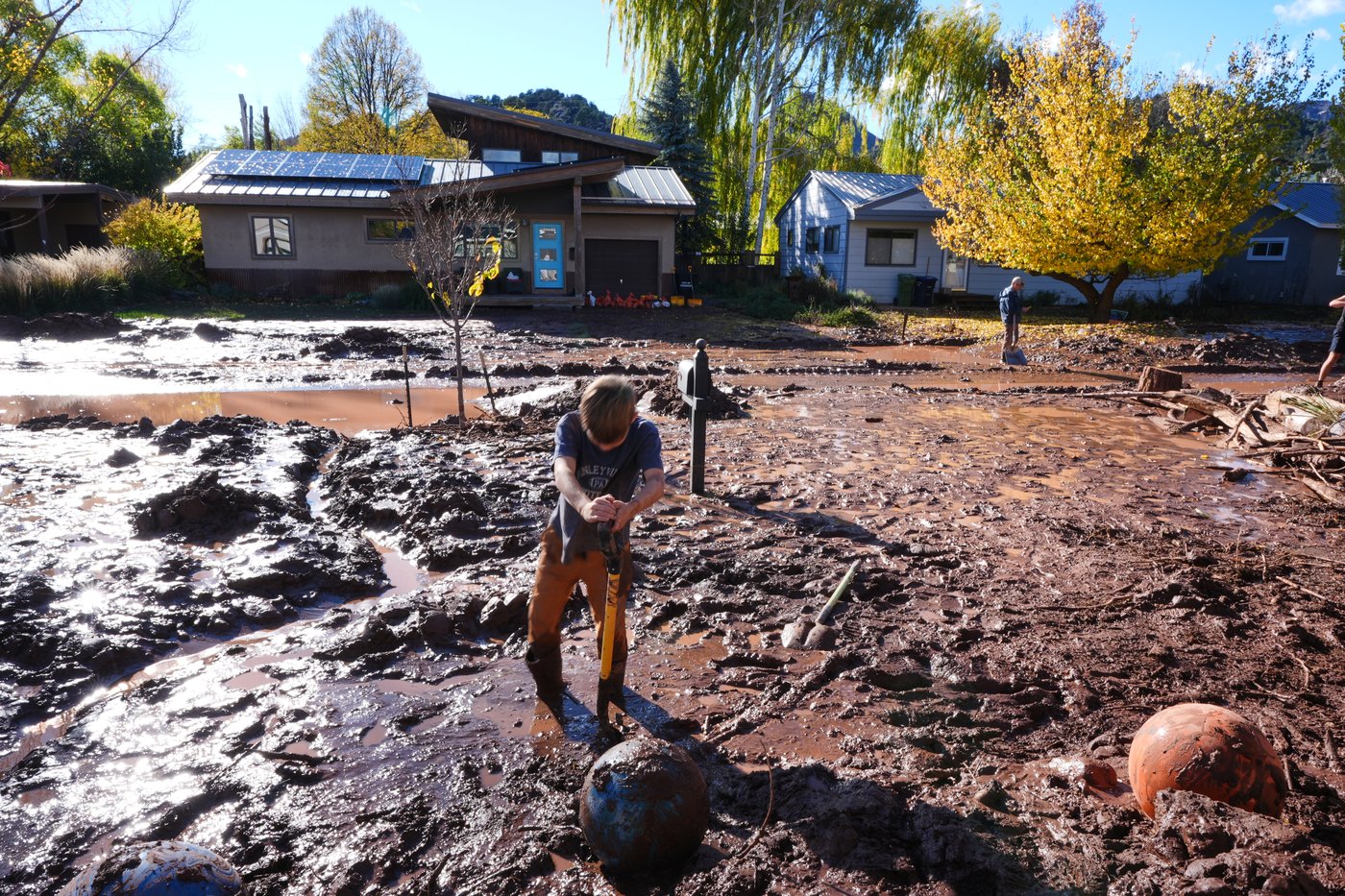
The skies were clearing, but the risk of flooding remained over parts of the U.S. Southwest after powerful downpours sent massive amounts of water surging over the usually dry landscape, forcing hundreds to evacuate and keeping swift-water rescue teams busy.
Officials said cleanup and repair efforts could take weeks. One person died in the floodwaters and police suspect a second death was weather-related.
The National Weather Service said Monday that isolated cloudbursts were still possible across the Four Corners region — where New Mexico, Arizona, Colorado and Utah meet — as the phenomenon stoked by warming Pacific waters known as El Niño disrupts weather patterns.
Damage was widespread in Pagosa Springs, Colorado, a town of about 2,000. Officials feared the San Juan River that flows through it would top a level that nearly wiped out the town in 1911. The river reached 16.81 feet (5.1 meters) Sunday — a foot lower than the historic level — flooding downtown streets before receding Monday, the weather service said.
An entire home was lifted from its foundation and floated down the river before crashing into a pedestrian bridge. A section of a road bridge west of town crumbled under raging waters, said Archuleta County Sheriff’s Office spokesperson Vicki Shaffer.
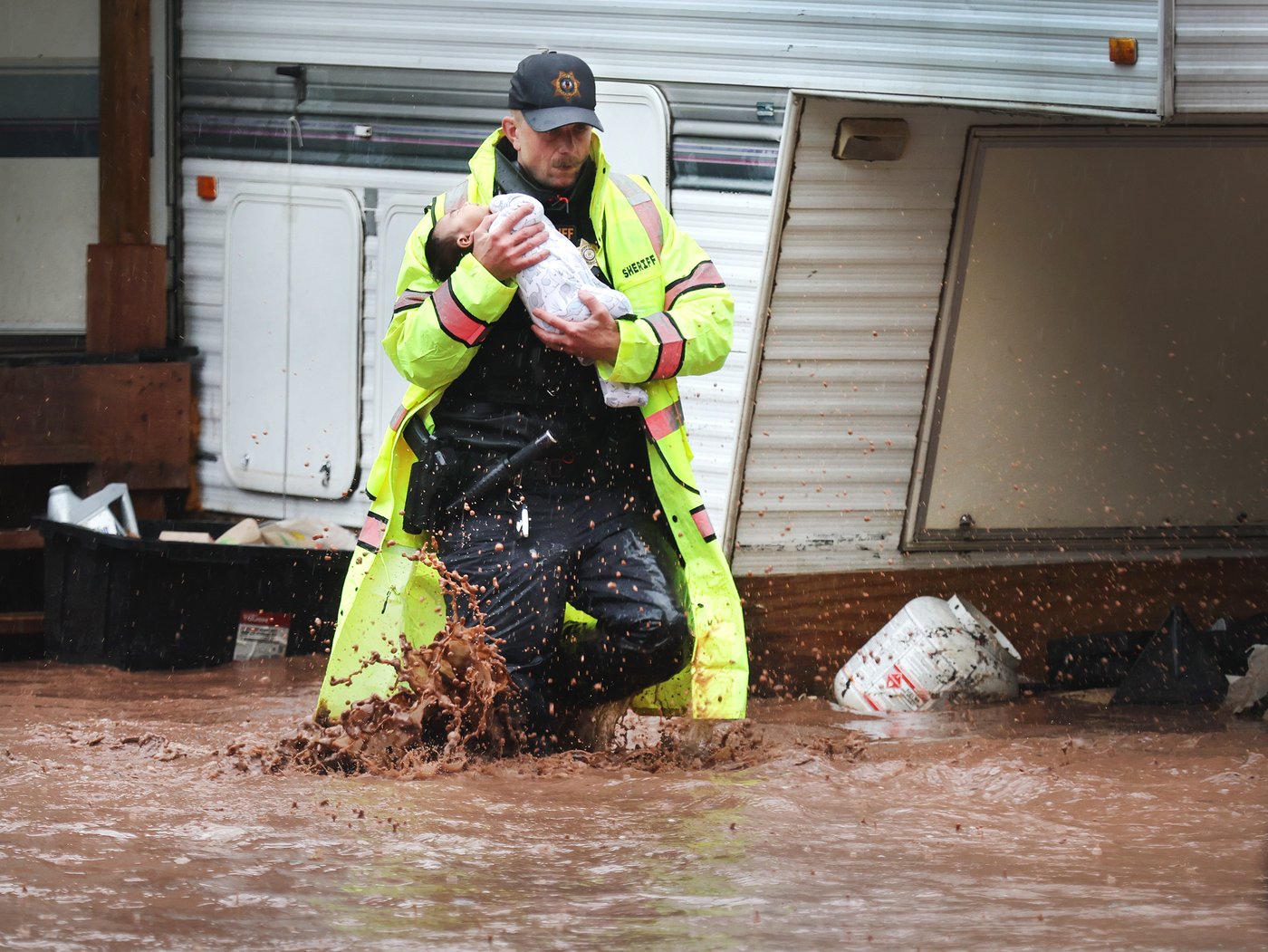
Dozens of people were rescued across the region, including some by helicopter. Shaffer said first responders were searching for people who may be stranded.
“That will continue, just like last week, until we’re sure that everybody who was trapped by the floodwaters has been rescued,” she said.
The Colorado Department of Transportation reopened several closed bridges and roadways late Monday. Shaffer said evacuation orders remain in place, though she wasn’t sure how many people were affected.
Pagosa Springs had just lifted an evacuation order from a previous storm, only to reimpose it Saturday.
More than 20 trillion gallons of rain have fallen on the Four Corners states and Nevada in the past two weeks, according to calculations by former National Oceanic and Atmospheric Administration chief scientist Ryan Maue.
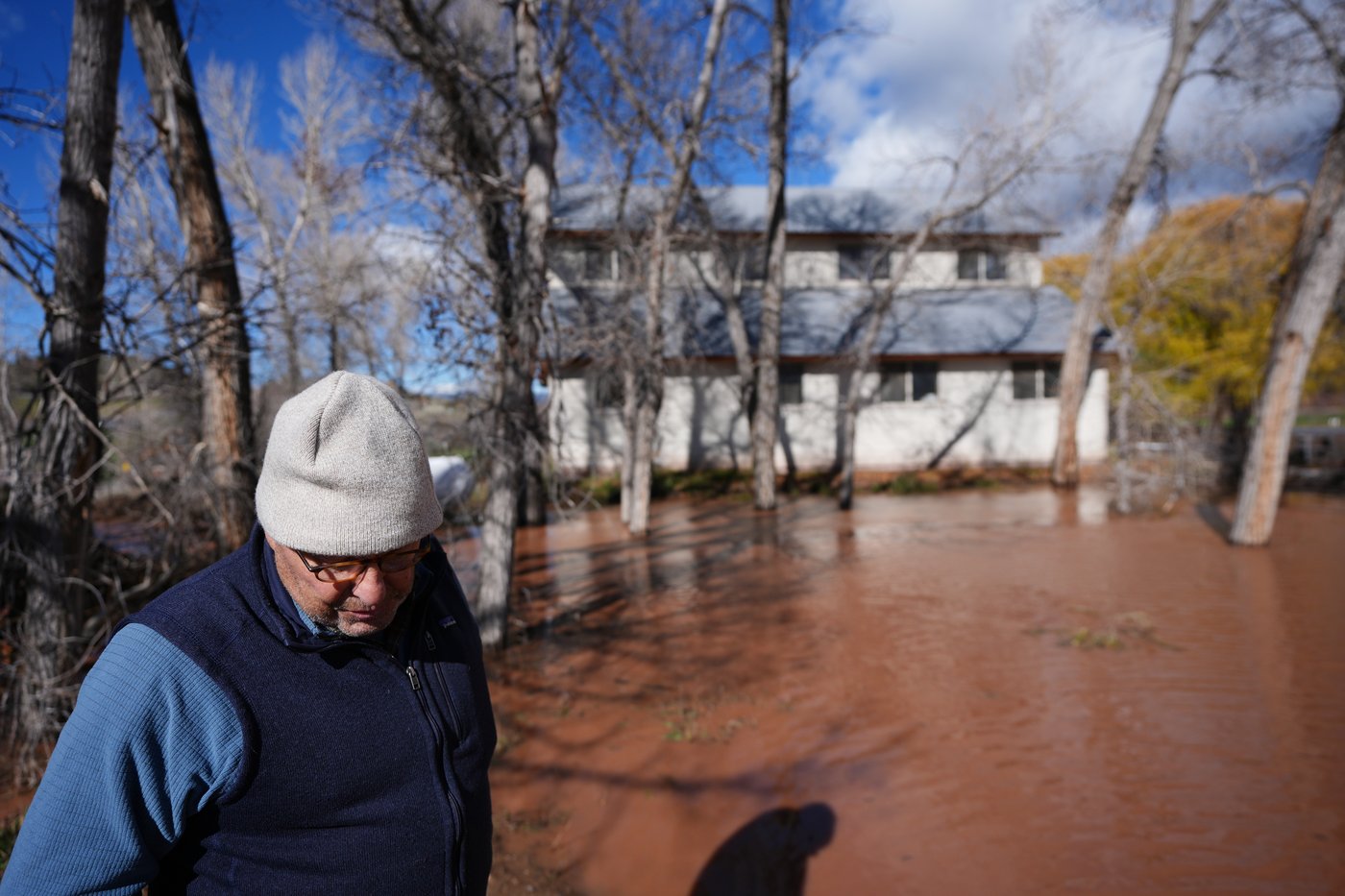
With Election Day coming, officials in Colorado and Utah arranged alternative voting plans for evacuated or stranded residents.
Utah said Monday that residents of hard-hit San Juan County will be allowed to vote electronically because some of them may not be able to reach polling places.
More rivers rise, forcing evacuations
Evacuations were ordered along the San Juan River in New Mexico, which officials warned was still rising and could crest Tuesday through Wednesday. The village of Chama, New Mexico, was also evacuated and cut off by road closures.
Residents had to leave their homes along the Animas River in southwestern Colorado, where Durango police Chief Brice Current said authorities were checking Monday on those who rode out the flooding at home.
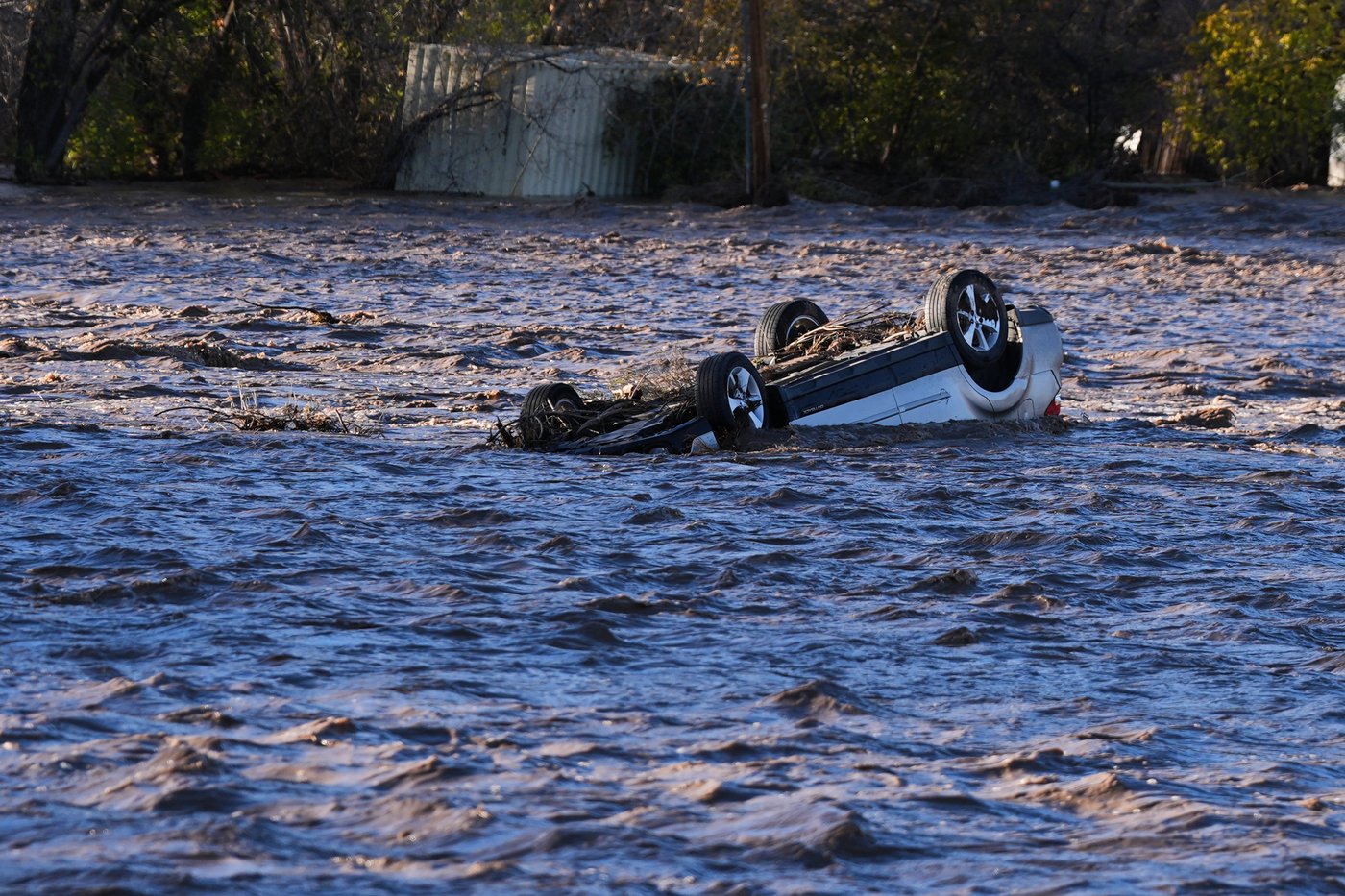
“There’s still a lot of people stranded,” Current said.
Willow Bradner and her family have been staying in a hotel since their Durango home flooded this weekend.
“We went from ‘we’re going to be safe’ to ‘pack a go-bag’ in 45 minutes,” she recalled. Her basement is now filled with water, with the house surrounded by more than 2 feet (60 centimeters) of mud.
On Monday, Greg Ewing was among some 200 community members who used shovels and skid steers to remove the mud in Bradner’s neighborhood. “That’s the cool thing about Durango. It’s a really strong community. Everyone comes together,” Ewing said.

Dry Arizona creek beds turned to raging torrents
Record rainfall was reported across Arizona, including 7.3 inches (18.5 centimeters) over two days at Workman Creek, a wilderness area near Phoenix.
Flagstaff totaled 5.15 inches (13 centimeters) over two days, contributing to its wettest Nov. 1 ever recorded. The city typically has fewer than a handful of days per year of rain exceeding 1 inch (2.5 centimeters), said meteorologist Jennifer Tate with the NWS Weather Prediction Center.
“What really stood out to me was that this wasn’t localized. It was a very broad system that brought a lot of rain to a lot of places,” Tate said.
A man was seen falling into floodwaters rushing into a drainage tunnel in Flagstaff, where rain fell nearly nonstop Sunday. Police said the body of Williams Singavarapu, 73, of New York, was discovered Monday about 15 blocks from where he disappeared.
A second man was found dead Monday in a drainage area, Flagstaff police said, adding it appeared to be weather-related, pending an official determination on the cause of death.
In Sedona, floodwaters trapped several people in their homes, and heavy rain washed out part of a highway.
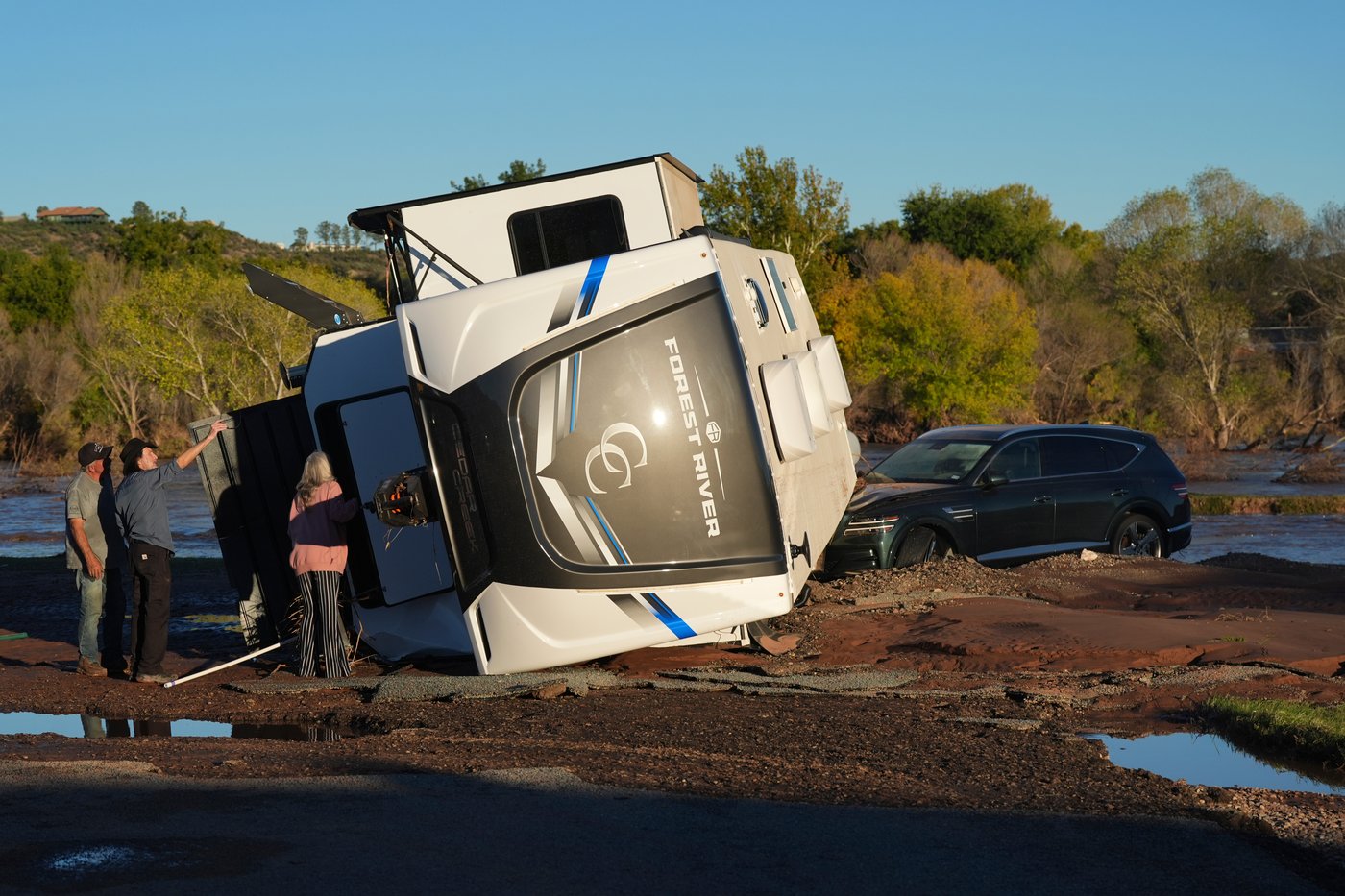
Nearby in Camp Verde, Doug Michaels was cooking dinner at an RV park when he saw people evacuating as water rose. He was able to get himself, his wife, cat and valuables to safety and raise his camper higher off the ground. But he said others fared much worse.
“It’s devastating,” he said. “People lost their homes. The one lady doesn’t even know where her camper is. It went down the river.”
Swift-water rescues also were conducted in Tucson, where weather service meteorologist Aaron Hardin said “we are getting two or three months of rain in a span of a couple of days.”
Arizona Gov. Katie Hobbs issued a statewide emergency declaration on Monday after recently issuing an emergency for Navajo and Coconino counties. The governors of New Mexico and Colorado asked President Donald Trump to declare a major disaster to receive federal funding assistance.
Swaths of southern Utah are inundated
Ryan Benally spent the weekend building dirt berms to divert floodwaters from his parents’ home on the Navajo Nation near Montezuma Creek, Utah. So far, the barriers have held, though parts of their small cattle ranch were under water.
Benally, an assistant professor at Utah State University, has been coordinating deliveries of bottled water, waterproof boots, toiletries and other supplies to shelters. Families who stayed at home were increasingly difficult to reach, he said, because access routes for some remote residents washed out.
Benally said his parents, both in their 60s, have lived in the area all their lives and have never seen flooding this severe.
“These storms have been one after another after another,” Benally said. “It’s compounding in ways people out here just weren’t prepared for.”
___
AP journalists Kathy McCormack in Concord, New Hampshire; Sarah Raza in Sioux Falls, South Dakota; Savannah Peters in Santa Fe, New Mexico; Gregory Bull in Durango, Colorado; Ross D. Franklin in Camp Verde, Arizona; and Jessica Hill in Las Vegas contributed.
News from © The Associated Press, . All rights reserved.
This material may not be published, broadcast, rewritten or redistributed.

This site is protected by reCAPTCHA and the Google Privacy Policy and Terms of Service apply.
Want to share your thoughts, add context, or connect with others in your community?
You must be logged in to post a comment.