Elevate your local knowledge
Sign up for the iNFOnews newsletter today!
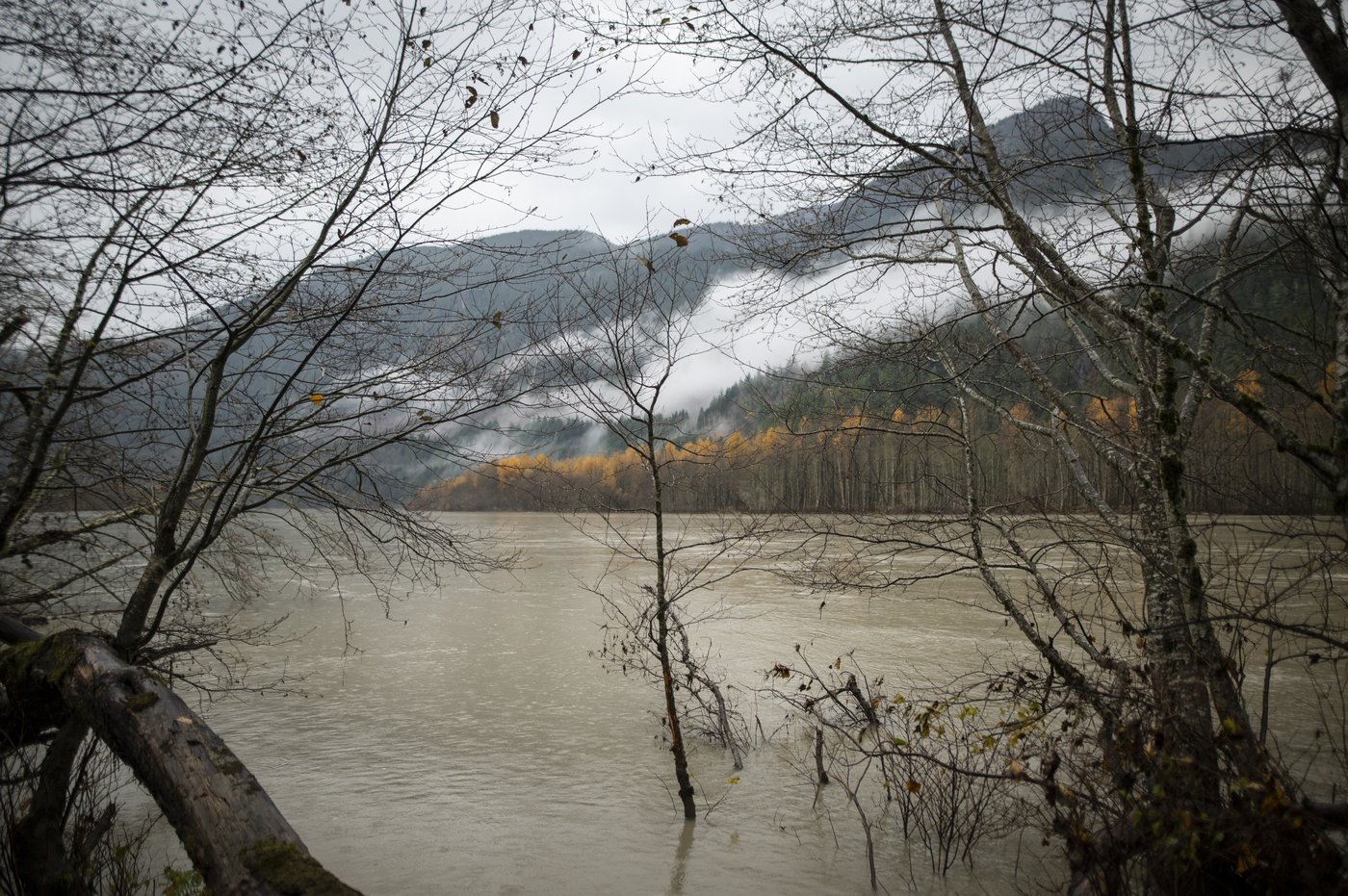
VANCOUVER — Nicalena Chidley’s dock was swept away this week as a storm surge, king tides and strong winds pounded it into bits on her oceanfront property on northwestern Vancouver Island.
She lives in the small community of Kyuquot, a remote settlement that has no roads and is accessible only by boat or plane.
With no dock, she’s been stranded since Tuesday.
November has “kicked our butts,” Chidley said, referring to back-to-back storms and long stretches of power outages and being marooned.
Video taken by Chidley shows her son in an orange waterproof suit standing on the shoreline, assessing the destruction.
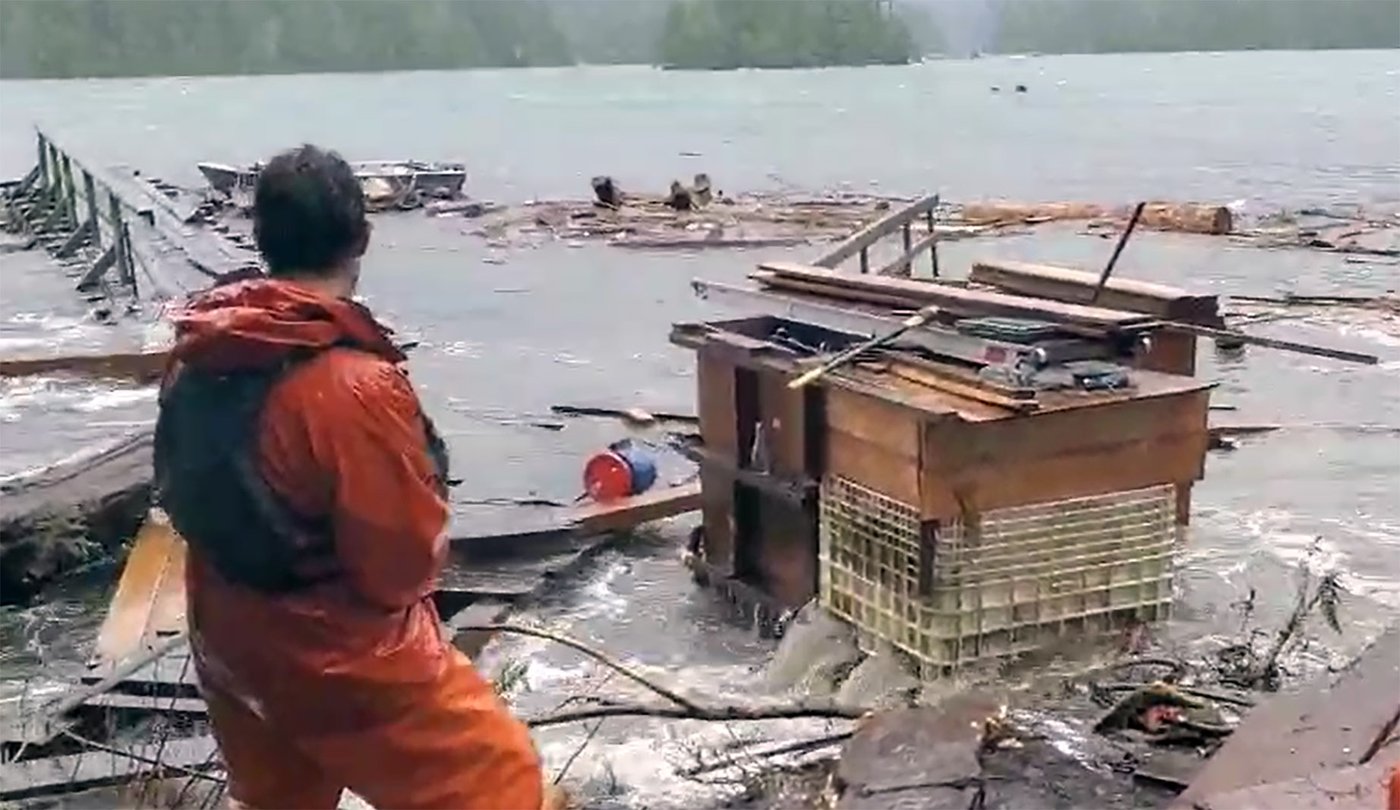
The walkway to the dock is gone, the front section has also disappeared, but two boats, bucking in the strong waves, are still attached to the end of the stranded structure.
“God sakes, what a frikin’ disaster,” she said behind the camera.
Wood debris and other building material are scattered along the waterfront.
“It pulled out our whole platform and our first ramp that goes down to our bigger ramp to our dock. So, we were stranded on the island,” Chidley said, describing the damage.
“It was just incredibly rough in there.”
Her family is one of many cleaning up after days of relentless rain along coastal B.C., made worse by strong winds and king tides that prevented storm surges from washing out.
Environment Canada dropped its rain and wind warnings late Thursday, while alerts from the B.C. River Forecast Centre were lifted Friday for all but central Vancouver Island where a high-streamflow advisory remains posted.
The weather agency has also lifted all coastal flood warnings and statements, which at the peak covered almost the whole B.C. coast.
Residents of Parksville, on the east coast of Vancouver Island, who live on low-lying or coastal properties were put on evacuation alert earlier this week due to rising water levels. Those have since been rescinded and a spokesman for the city said “minimal cleanup has been identified.”

“The only part from the storm that needs monitoring is waiting for the fields and parks to begin drying up, as there’s a lot of sitting water in those areas,” the statement said.
“There might be some work required to move debris and logs from some beach areas, but that’s done in partnership with (fisheries departments) on the provincial and federal government side of things.”
The weather agency said the storms between Monday and Thursday dropped 734 millimetres of rain on Effingham Island off western Vancouver Island, which is about 160 kilometres south of Chidley’s home.
Chidley said she has been living in Kyuquot since 1988 — her parents were long-serving lightkeepers on B.C.’s coast, so the area is “in her DNA.” While she has seen storms before, this has “been quite a week.”
The sound of the storm made itself known on Tuesday.
“I was taking a nap and I woke up to a huge thud of water against my window side. Scared the daylights out of me,” said Chidley.
The B.C. River Forecast Centre said the king tides coinciding with the full moon made the coastal flooding situation worse, but that influence was also diminishing.
The District of Squamish, which declared a state of local emergency over high tides and flood risk earlier this week, has asked residents to limit indoor water use until further notice to help manage sewer flows, adding that more rainfall will impact the system.
The district said flood protection measures it took have succeeded in mitigating the effects of localized flooding.
Environment Canada said Squamish received 147 millimetres of rain since Monday, among the highest totals recorded on B.C.’s mainland in the weather event.
Peak winds were recorded in Comox at 89 km/h and Tofino at 82 km/h.
While it’s been a difficult time, Chidley said she has been overwhelmed with the support from people in her tight-knit community.
“I’ve done a lot of crying the last couple of days, everybody’s been pitching in and helping in any way they can. So, that’s fantastic and amazing. I’m very proud of our community on the receiving end instead of being the giving end.”
This report by The Canadian Press was first published Nov. 27, 2026.
News from © The Canadian Press, . All rights reserved.
This material may not be published, broadcast, rewritten or redistributed.

This site is protected by reCAPTCHA and the Google Privacy Policy and Terms of Service apply.
Want to share your thoughts, add context, or connect with others in your community?
You must be logged in to post a comment.