Elevate your local knowledge
Sign up for the iNFOnews newsletter today!
The hills are alive with blooming wild flowers and plants in the Thompson-Okanagan region and while they are beautiful, some of them are toxic to humans or their pets.
Some species like poison ivy are more commonly known and some species are easier to identify than others.
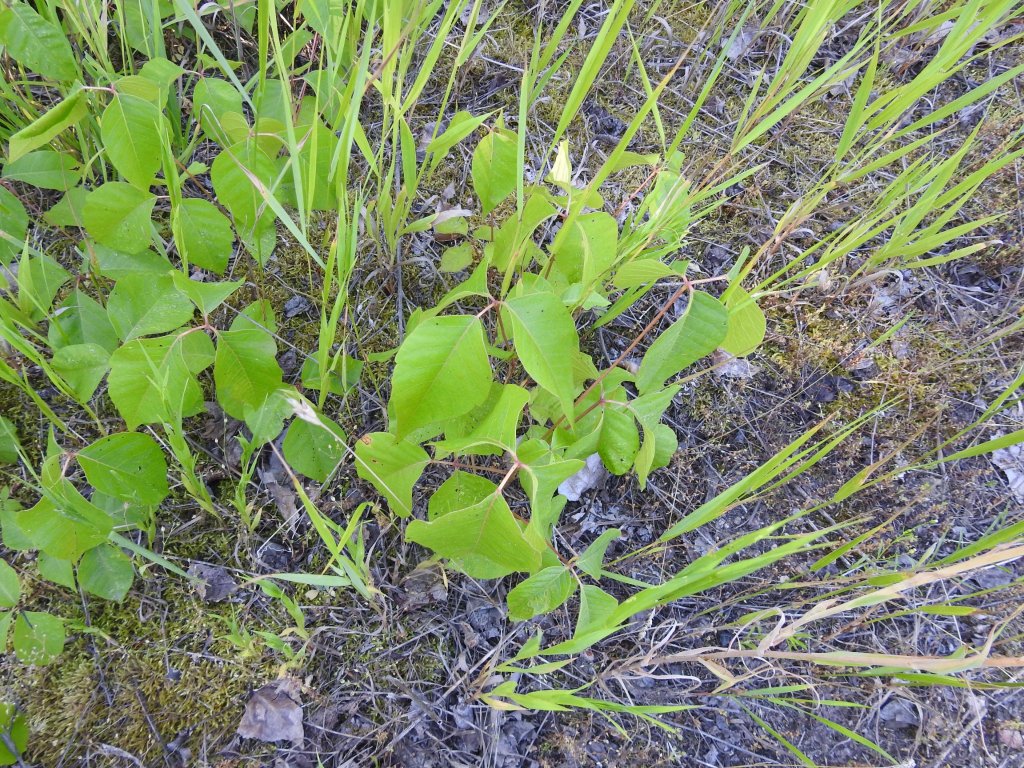
Poison Ivy is a native deciduous shrub that grows across Canada and is most abundant in the Okanagan Basin, frequently found in moist gullies, along lakeshores and at the base of talus slopes, according to the Okanagan and Similkameen Invasives Society. The plant is common along walking and biking trails in the Okanagan region.
These toxic plants are usually less than a metre tall with woody stems and three long-stalked, shiny green leaves at the top. In the fall, the leaves are red and the plant has milky white coloured fruits on it.
The plants have an oil called urushiol that is released when the plant is damaged and can cause a red, blistering rash on the skin when touched. Exposed skin can be washed with rubbing alcohol, then rinsed with water, and then washed with soap and warm water.
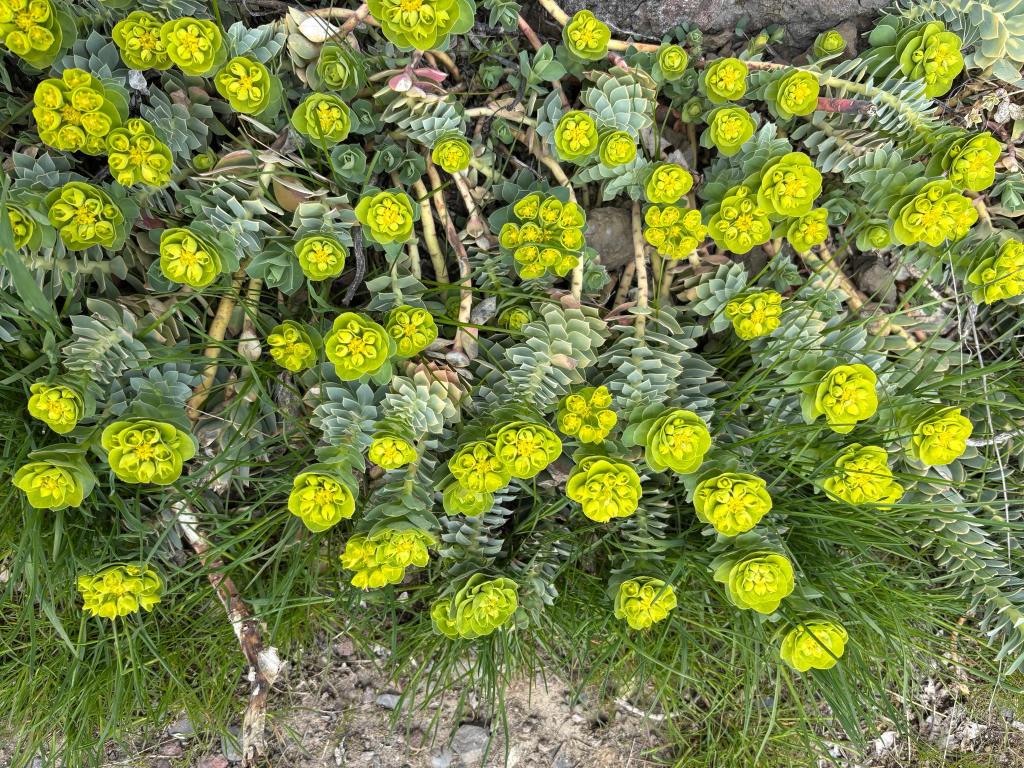
Myrtle Spurge is a perennial that originates in the Mediterranean used for rock gardens that has escaped and become a highly aggressive invasive species in the Thompson-Okanagan, according to Invasive Species Online Okanagan. It is found in dry, well drained soils in fields, rangelands and along roadsides.
The plants are roughly 15 centimetres tall and grow in clumps. Their leaves are blue and green and spiral around the stem and the leaves. Stems and roots contain a milky white sap that is toxic to humans and animals causing blotching, blistering, swelling and burns to the skin when touched. The sap can cause temporary blindness if it comes in contact with the eyes.
Anyone removing the plants should wear protective gear.
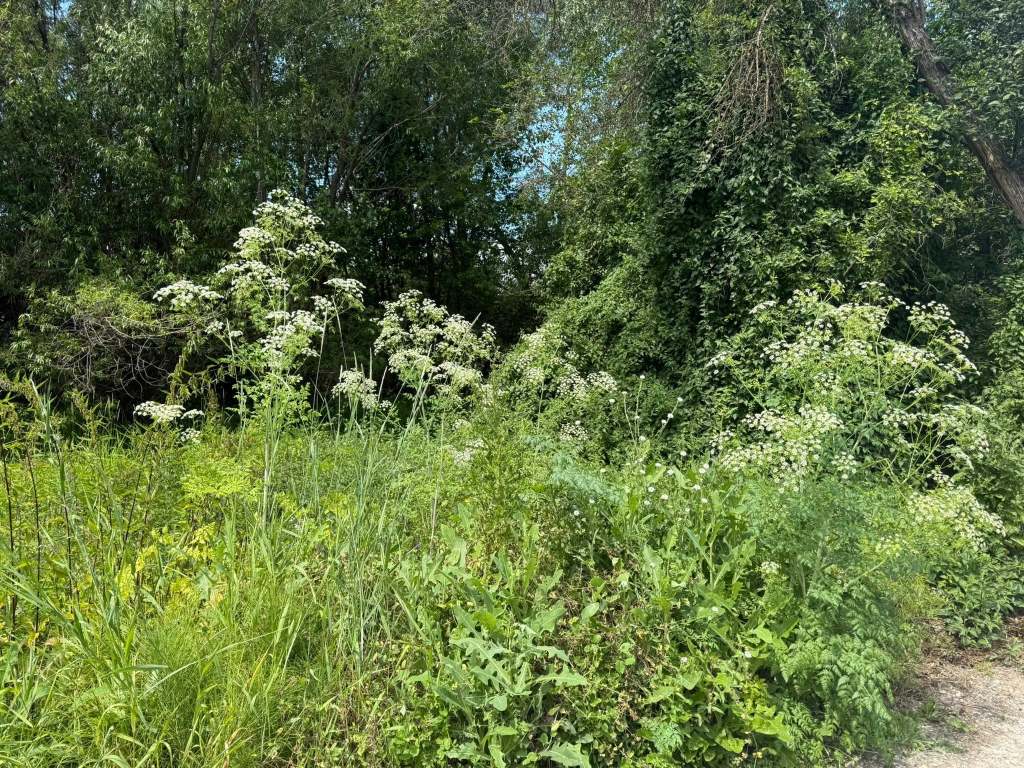
Poison Hemlock is a biennial herb that originates in Europe and is found in moist places along roadsides, creeks and on the edges of cultivated fields, according to the Thompson-Nicola Regional District. These plants are roughly two metres tall with bright green leaves and branching stems with small clusters of white flowers on the tops.
The plants are highly toxic to humans and animals if ingested and can cause dermatitis for those with sensitive skin when touched. Anyone removing the plants should wear protective gear.
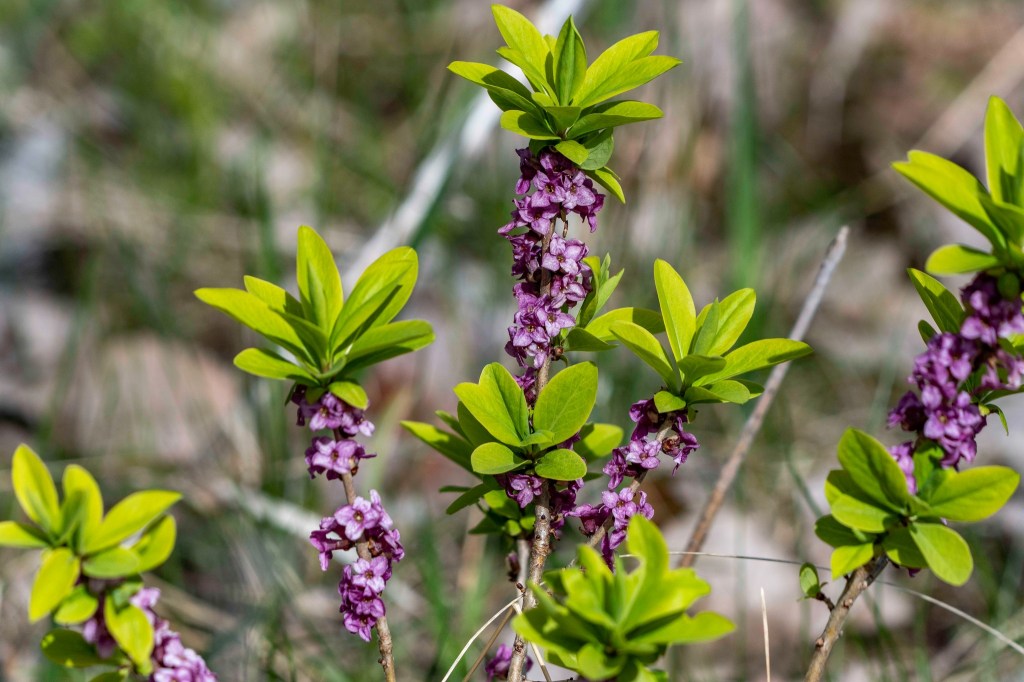
Daphne Mezereum is a plant that was introduced from Europe and Northern Africa as an ornamental but has since taken over native vegetation in BC, according to the Invasive Species Council of BC.
The plant grows to 1.5 metres on either a single stem or as a shrub with many branches. It has dark green leaves at the top that are glossy and grow in a spiral pattern. This plant forms dense thickets in both sunny and shady areas, including in forest understories.
Its toxic sap can cause skin rashes, nausea, swelling of the tongue, and coma. Removal should be done by a professional.
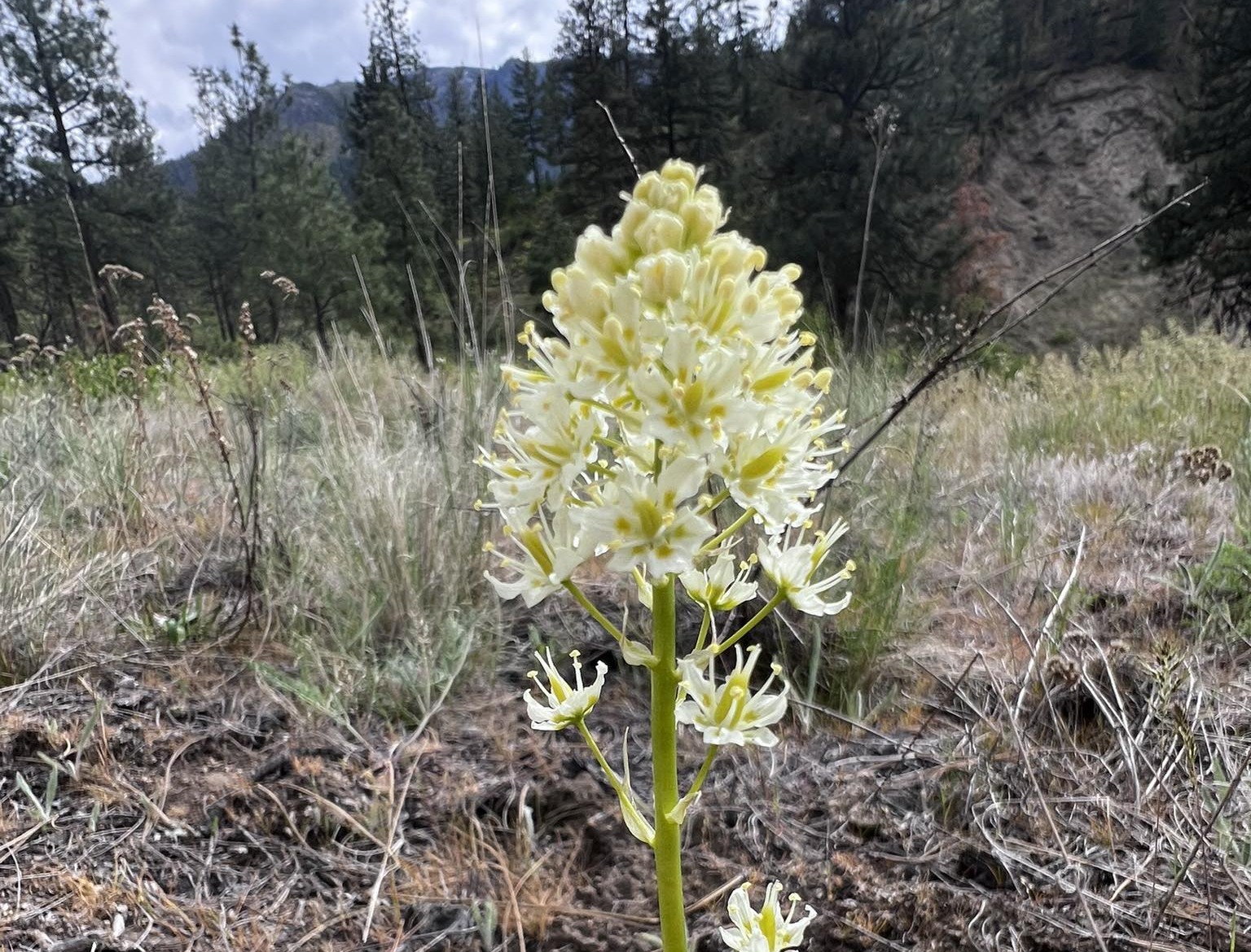
Death Camas is a highly toxic wildflower found in areas of western North America, including the Thompson-Okanagan.
The plant sprouts from a bulb in spring as flat leaves with parallel veins and grows clusters of small white or pale green flowers, according to biologyinsights.com.
Ingesting any part of this plant can be lethal for both humans and livestock as it contains compounds that interfere with the nervous and cardiovascular system. The first symptoms include excessive salivation, severe nausea, vomiting, abdominal pain and diarrhea. Muscle weakness, tremors and staggering can happen along with slowed heart rate, severe hypotension and possible shock and coma.
News from © iNFOnews.ca, . All rights reserved.
This material may not be published, broadcast, rewritten or redistributed.

This site is protected by reCAPTCHA and the Google Privacy Policy and Terms of Service apply.
Want to share your thoughts, add context, or connect with others in your community?
You must be logged in to post a comment.